

What Is Ferrofluid? The Magnetic Liquid Science Explained
Imagine a liquid that comes alive in the presence of a magnet, sprouting sharp, elegant spikes and flowing in mesmerizing patterns that seem to defy the laws of nature. Ferrofluid is one of the most visually stunning materials ever engineered by science, and yet its inner workings are elegantly simple once you understand the physics at play. Born from NASA research in the 1960s, this remarkable magnetic liquid has since found its way into hard drives, medical treatments, audio speakers, and even your desktop. In this article, we break down exactly what ferrofluid is, how it works, and why it continues to captivate scientists and curious minds alike.
What Exactly Is Ferrofluid?

Ferrofluid is a colloidal suspension of nanoscale magnetic particles dispersed in a liquid carrier, typically water or an organic solvent such as kerosene or mineral oil. The magnetic particles, most commonly magnetite (Fe₃O₄), are extraordinarily small, measuring between 3 and 15 nanometers in diameter. To put that in perspective, a single human hair is roughly 80,000 nanometers wide, meaning these particles are invisible to the naked eye and even to most standard microscopes.
Because the particles are so tiny, they remain permanently suspended in the liquid rather than sinking to the bottom under gravity. A chemical coating called a surfactant is applied to each particle to prevent them from clumping together through magnetic attraction. This surfactant acts like a molecular bumper, keeping each particle isolated so the fluid retains its liquid properties even while behaving magnetically. The result is a substance that is simultaneously a true liquid and a responsive magnetic material, something that simply does not exist in nature.
It is important to note that ferrofluid is not the same as a magnetorheological fluid, which contains larger particles and solidifies under a magnetic field. Ferrofluid remains liquid at all times, even when strongly magnetized. This distinction is what makes it so uniquely useful in engineering and so hypnotically beautiful as a visual phenomenon.
The Origins of Ferrofluid: A NASA Innovation

Ferrofluid was invented in the early 1960s by NASA engineer Steve Papell, who was searching for a way to move rocket fuel in zero-gravity environments. In the vacuum of space, conventional pumps that rely on gravity or pressure differentials become unreliable. Papell's ingenious solution was to make the fuel itself magnetic, so it could be drawn toward an engine using magnetic fields rather than mechanical pumps. His 1963 patent described the process of grinding magnetite particles to nanoscale dimensions and suspending them in a carrier fluid, the birth of modern ferrofluid.
Although NASA's original fuel application never made it into widespread use, the material itself proved to be extraordinarily versatile. Researchers quickly recognized that a liquid with controllable magnetic properties could solve problems in many fields of engineering. Throughout the 1970s and 1980s, ferrofluid technology was refined and commercialized, leading to a wave of practical applications that we will explore later in this article. The fundamental formula Papell developed has remained largely unchanged for over 60 years, a testament to the elegance of the original invention.
How Does Ferrofluid Work? The Physics of Magnetic Liquids
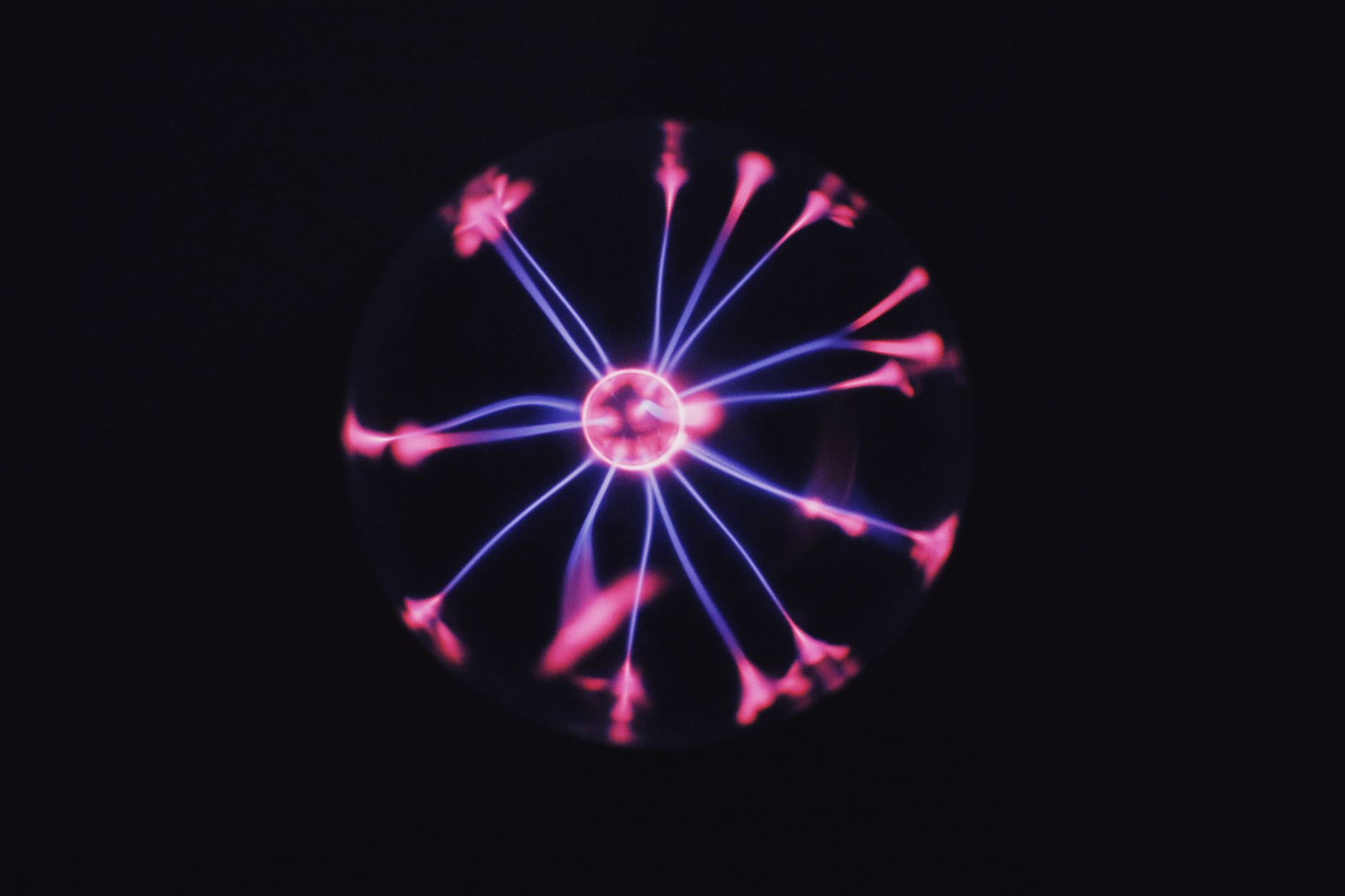
To understand how ferrofluid work, one must appreciate the interplay between magnetic force, surface tension, and gravity. Each nanoscale particle inside the fluid behaves like a tiny permanent magnet, possessing a north and south pole. When an external magnetic field is applied, say, from a bar magnet or a neodymium magnet, all of these microscopic magnets align with the field simultaneously. Because there are billions of them packed into every milliliter of fluid, their combined magnetic response is powerful enough to move the entire liquid toward the source of the field.
This behavior is called superparamagnetism. Unlike ordinary ferromagnetic materials such as iron, which retain their magnetization after a field is removed, ferrofluid loses its magnetic alignment almost instantly once the external field disappears. This is because the thermal energy of the fluid constantly jostles the nanoparticles, randomizing their orientation. The result is a material that is magnetically responsive on demand but completely inert the moment the magnet is taken away, making it both controllable and safe to handle.
The interaction between the magnetic force pulling the fluid outward and the surface tension pulling it inward creates a dynamic equilibrium that produces the fluid's most iconic visual feature: the spike pattern. When a magnet is brought close to a pool of ferrofluid, these competing forces sculpt the surface into a series of sharp, evenly spaced peaks. This phenomenon has a name in physics, and it deserves its own dedicated section.
The Rosensweig Instability: Why Ferrofluid Forms Spikes

The spike-forming behavior of ferrofluid is formally known as the Rosensweig instability, named after physicist Ronald Rosensweig, who first described and mathematically modeled it in the 1960s. The instability occurs when the magnetic pressure acting on the fluid's surface exceeds a critical threshold, at which point the flat surface becomes unstable and spontaneously reorganizes itself into a regular pattern of peaks and valleys. This is a classic example of a pattern-forming instability, a type of phenomenon also seen in sand dunes, cloud formations, and animal coat markings.
What makes the Rosensweig instability particularly elegant is the regularity of the spikes it produces. The distance between spikes is determined by the balance between magnetic energy, surface tension, and gravitational potential energy, and this balance produces a surprisingly uniform hexagonal lattice of peaks when viewed from above. The geometry is not random; it is a physical optimization, with the fluid finding the configuration that minimizes total energy across all three competing forces. Physicists and mathematicians find this self-organizing behavior deeply fascinating as a model system for studying pattern formation in nature.
The height and sharpness of the spikes depend on the strength of the magnetic field and the properties of the specific ferrofluid being used. Stronger magnets produce taller, more dramatic spikes, while weaker fields create softer, rounded undulations. This tunability is part of what makes ferrofluid such a rich subject for both scientific study and artistic display. If you are curious about the broader world of magnetic science and decoration, we invite you to explore our magnetism collection, which brings together some of the most visually compelling magnetic phenomena available for your home or office.
Ferrofluid in the Real World: From Hard Drives to Medicine

Beyond its visual appeal, ferrofluid has become a quietly essential material in modern technology. One of its most widespread applications is in computer hard drives, where it is used as a rotary seal. A thin ring of ferrofluid is held in place around the drive's spindle by a magnetic field, creating an airtight seal that prevents dust and contaminants from entering the drive's sensitive interior. This seal is frictionless, since the fluid flows rather than rubs, and it is extraordinarily reliable, millions of hard drives have depended on ferrofluid seals for decades.
In audio engineering, ferrofluid is used inside high-performance loudspeakers to cool the voice coil, the component that vibrates to produce sound. The fluid is held in place by the speaker's own magnetic field and acts as a highly efficient thermal conductor, drawing heat away from the coil and allowing the speaker to handle significantly more power without distortion or damage. Many of the world's finest audio speakers quietly rely on ferrofluid nanotechnology to deliver their exceptional performance, even though most listeners are completely unaware of it.
In medicine, researchers have explored ferrofluid as a vehicle for targeted drug delivery. By attaching therapeutic molecules to the magnetic nanoparticles and then using an external magnetic field to guide them to a specific location in the body, such as a tumor, doctors could potentially deliver high concentrations of medication exactly where they are needed while minimizing side effects elsewhere. Ferrofluid is also used in magnetic hyperthermia cancer therapy, where nanoparticles are injected into a tumor and then heated by an alternating magnetic field to destroy cancer cells. These medical applications remain an active and promising area of ferrofluid nanotechnology research.
The Ferrofluid Magnetic Hourglass: Science as Art

Of all the ways ferrofluid has crossed from laboratory curiosity into everyday life, the ferrofluid magnetic hourglass is perhaps the most beautiful. In this device, ferrofluid replaces the sand of a traditional hourglass, flowing from the upper chamber to the lower one in a slow, hypnotic cascade. Embedded magnets at the base of each chamber cause the fluid to form its characteristic spikes as it collects, creating a living sculpture that changes shape with every passing moment. The result is a desk object that is simultaneously a timepiece, a physics demonstration, and a work of art.
The magnetic hourglass works because the ferrofluid responds to the magnets in the base of the hourglass, pooling and spiking as it accumulates. The narrow neck of the hourglass controls the flow rate, just as in a conventional hourglass, but the magnetic spikes that form in the collecting chamber add a dimension of visual drama that ordinary sand simply cannot match. Watching a ferrofluid hourglass is watching the Rosensweig instability in slow motion, a real physics phenomenon unfolding on your desk every time you flip it over. We are proud to offer a carefully curated selection of these objects; discover our magnetic hourglass collection to find the perfect piece for your space.
For those who want to go even further, our ferrofluid display bottle with neodymium magnet offers a hands-on experience with the raw material itself. Simply move the included magnet around the sealed glass bottle to sculpt the ferrofluid into spikes, waves, and flowing shapes in real time. It is one of the most direct and tactile ways to explore magnetic liquid science, and it never fails to spark conversation and wonder in anyone who encounters it.
Why Ferrofluid Continues to Fascinate Scientists and Decorators Alike

Ferrofluid occupies a rare position at the intersection of rigorous science and pure aesthetic wonder. For physicists, it remains a rich model system for studying fluid dynamics, magnetic phenomena, and pattern formation, papers on ferrofluid behavior are still being published regularly in leading scientific journals. For engineers, it continues to inspire new applications in robotics, microfluidics, and energy harvesting. The material is deceptively simple in its composition but extraordinarily complex in its behavior, which is precisely why it has sustained scientific interest for more than six decades.
For artists and designers, ferrofluid has become a medium in its own right. Artists such as Sachiko Kodama have created large-scale ferrofluid sculptures that respond to music and movement, transforming the physics of the Rosensweig instability into breathtaking kinetic art. The fluid's deep black color, its liquid sheen, and its ability to form organic, almost biological shapes make it visually unlike anything else in the world. It is a material that makes physics visible, turning invisible magnetic fields into tangible, sculptural forms that anyone can appreciate regardless of their scientific background.
At Science Decor, we believe that the most powerful scientific objects are those that make abstract principles concrete and beautiful. Ferrofluid does this better than almost anything else we know, it takes the invisible architecture of magnetic fields and renders it in flowing, three-dimensional form right before your eyes. Whether you are a physicist, a designer, or simply someone who finds the natural world endlessly surprising, ferrofluid has something remarkable to offer you.
Conclusion
Ferrofluid is far more than a visual novelty, it is a window into some of the most elegant physics our universe has to offer, from the quantum-scale behavior of superparamagnetic nanoparticles to the self-organizing geometry of the Rosensweig instability. Invented by NASA, refined by engineers, and embraced by artists, it stands as one of the most versatile and captivating materials of the modern age. Whether it is quietly sealing a hard drive, cooling a speaker, guiding medicine to a tumor, or forming hypnotic spikes in a magnetic hourglass on your desk, ferrofluid continues to surprise and inspire. We encourage you to bring a piece of this extraordinary science into your own space, explore our collections and let the physics speak for itself.



Leave a comment
All comments are moderated before being published.
This site is protected by hCaptcha and the hCaptcha Privacy Policy and Terms of Service apply.