


How Does an Optical Prism Work? Light, Refraction & Dispersion
Few objects in science are as visually stunning and intellectually rich as the optical prism. Place one in a beam of sunlight, and something almost magical happens: a shaft of white light enters one face and emerges as a full rainbow of color on the other side. But this is no trick, it is pure physics, elegantly revealed. In this article, we explore the science behind optical prisms, from Newton's groundbreaking experiments to the cutting-edge applications that shape modern technology.
What Is an Optical Prism?
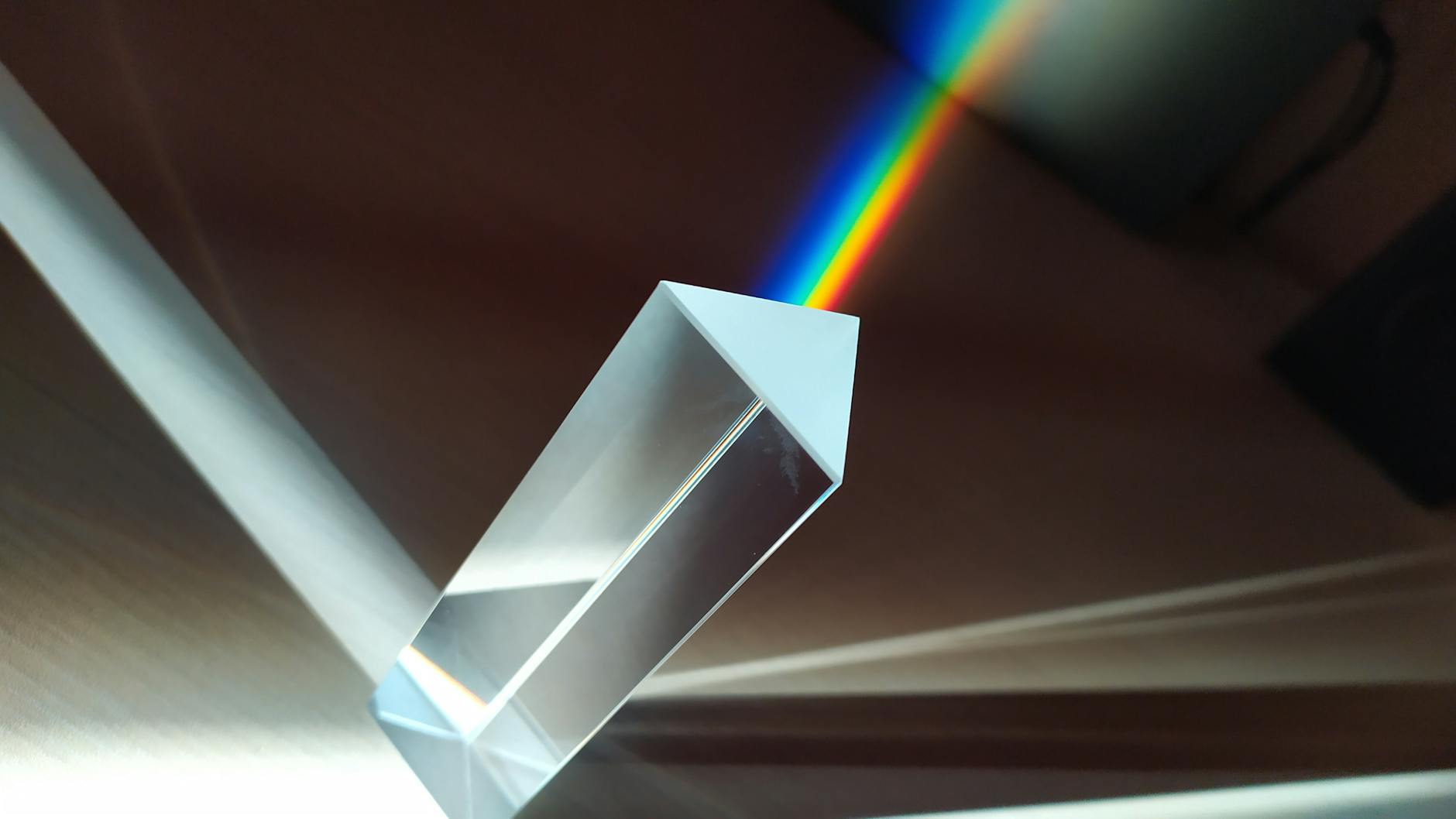
An optical prism is a transparent solid object, typically made of glass or crystal, with flat, polished surfaces that refract light. Unlike a lens, which uses curved surfaces to focus or diverge light, a prism uses the angle between its flat faces to bend and separate light into its component wavelengths. The most iconic form is the triangular prism, but optical prisms come in a wide variety of shapes designed for specific scientific and engineering purposes.
The material from which a prism is made plays a crucial role in how it behaves. Common materials include borosilicate glass, fused silica, and optical-grade crystal, each with a different refractive index that determines how strongly the prism bends light. High-quality optical prisms are ground and polished to extremely tight tolerances, ensuring that the surfaces are flat and the angles are precise. This precision is what makes them indispensable tools in laboratories, cameras, telescopes, and laser systems.
Beyond their scientific utility, optical prisms have become beloved decorative objects. Their ability to cast rainbow patterns across a room transforms any space into a living display of physics in action. If you are looking to bring this phenomenon into your home or workspace, explore our collection of optical prisms, curated for both scientific enthusiasts and design-minded decorators.
The Science of Refraction: Why Light Bends

Refraction is the fundamental phenomenon that makes optical prisms work. When a ray of light travels from one medium to another, say, from air into glass, it changes speed. Light travels more slowly in denser materials, and this change in speed causes the ray to change direction at the boundary between the two media. The greater the difference in density between the two materials, the more dramatically the light bends. This bending at the surface is what we call refraction.
The precise relationship between the angle of the incoming light and the angle of the refracted light is described by Snell's Law, formulated in the early 17th century. Snell's Law states that the product of the refractive index and the sine of the angle of incidence in one medium equals the same product in the second medium. In practical terms, this means that scientists and engineers can predict exactly how much a prism will bend a given ray of light, knowing only the refractive indices of the two materials involved. This predictability is what makes optical prisms so powerful and reliable in precision instruments.
The refractive index of a material is not a single fixed number, it varies slightly depending on the wavelength of the light passing through it. This property, known as dispersion, is the key to understanding why a prism can split white light into a rainbow. Shorter wavelengths (violet and blue light) are slowed more than longer wavelengths (red and orange light), so they bend at a greater angle. The result is that different colors of light emerge from the prism at different angles, spreading out into a spectrum.
Newton's Prism Experiment: A Turning Point in Science

In 1666, Isaac Newton conducted one of the most influential experiments in the history of science. Working in a darkened room at Trinity College, Cambridge, he allowed a narrow beam of sunlight to pass through a glass prism and observed that it spread into a band of colors: red, orange, yellow, green, blue, indigo, and violet. This was not, in itself, a new observation, but Newton's interpretation of it was revolutionary. He proposed that white light was not a pure, simple entity, but rather a mixture of all the colors of the spectrum combined.
To prove his point, Newton performed a second experiment: he used a second, inverted prism to recombine the dispersed colors back into white light. This elegant demonstration showed conclusively that the prism was not adding color to the light, as many had previously believed, but was simply separating colors that were already present within it. Newton's prism experiments laid the foundation for the modern science of spectroscopy and fundamentally changed our understanding of the nature of light and color.
Newton's work also introduced the concept of the visible spectrum, the range of wavelengths detectable by the human eye, spanning roughly 380 nanometers (violet) to 700 nanometers (red). Everything we know about color, from the pigments in paint to the pixels on your screen, traces back to the insights Newton gained from a simple glass prism. It is a remarkable reminder that some of the most profound discoveries in science begin with careful observation of everyday phenomena.
Types of Optical Prisms and Their Functions

Not all optical prisms are designed to disperse light into a rainbow. In fact, the world of optical prisms is remarkably diverse, with each type engineered for a specific function. The three principal categories are dispersive prisms, reflective prisms, and beam splitter prisms, and understanding the distinction between them reveals just how versatile these simple geometric objects can be.
Dispersive prisms, such as the classic triangular prism, are designed to separate light into its constituent wavelengths. They are the workhorses of spectroscopy and are used in instruments that analyze the chemical composition of materials by examining the light they emit or absorb. Reflective prisms, by contrast, use the principle of total internal reflection to redirect beams of light without any loss of intensity. The Porro prism used in binoculars is a classic example: it flips and rotates the image so that what you see through the eyepiece is correctly oriented. Dove prisms, Amici prisms, and roof prisms are other well-known members of this family, each with a unique geometry tailored to a specific optical task.
The optical beam splitter prism deserves special mention. As its name suggests, a beam splitter prism divides a single incoming beam of light into two separate beams. This is achieved either by partial reflection at a coated internal surface or by exploiting the polarization properties of light. Beam splitter prisms are essential components in cameras, interferometers, and a wide range of laser systems. Whether you are capturing a photograph, measuring the thickness of a thin film, or aligning a laser beam with nanometer precision, there is likely a beam splitter prism at the heart of the instrument.
Laser Optical Prisms: Precision at the Speed of Light

The rise of laser technology in the second half of the 20th century opened up an entirely new domain of applications for optical prisms. A laser optical prism must meet far more demanding specifications than a decorative or even a standard laboratory prism. Because laser light is coherent, monochromatic, and highly collimated, any imperfection in the prism's surface or geometry will cause measurable degradation of the beam. This is why laser-grade prisms are manufactured with surface flatness tolerances measured in fractions of a wavelength of light.
In laser systems, prisms serve several critical functions. Dispersive prisms are used in tunable laser cavities to select a specific wavelength from a gain medium that could otherwise emit across a broad range. Beam expanders using pairs of prisms can widen or narrow a laser beam without the losses associated with lens-based systems. Retroreflecting prisms, such as the corner-cube prism, reflect a laser beam back along exactly its original path regardless of the angle of incidence, making them invaluable in distance-measurement systems like LIDAR and laser rangefinders.
The integration of prisms into laser technology illustrates a broader truth about optical science: the same fundamental principles, refraction, reflection, and dispersion, that Newton explored with a candle and a glass wedge are now being applied at the cutting edge of telecommunications, medical imaging, and quantum computing. The geometry may be more complex and the tolerances far tighter, but the underlying physics remains beautifully unchanged.
Real-World Applications: From Telescopes to Spectroscopy
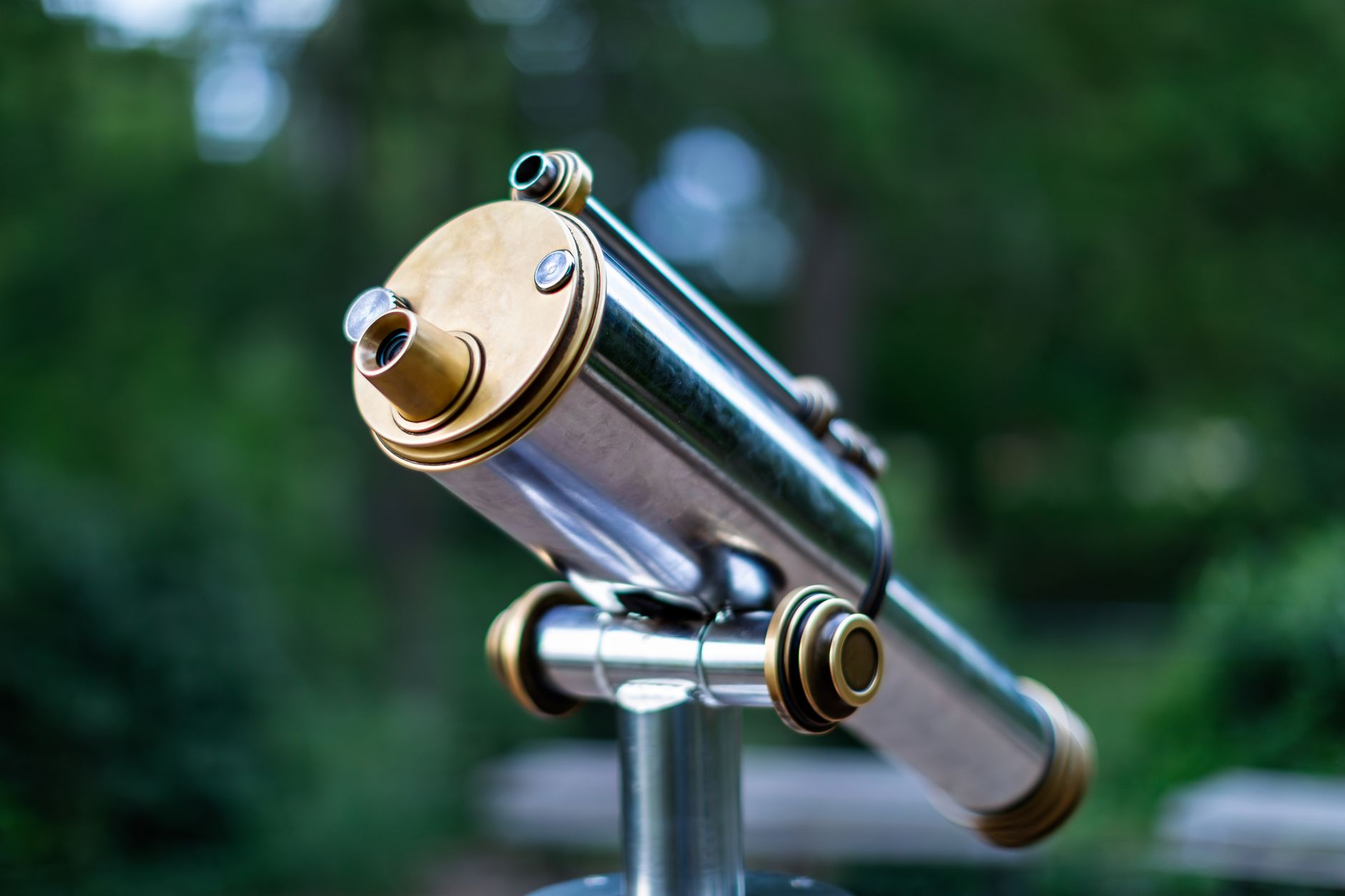
Optical prisms are woven into the fabric of modern science and technology in ways that most people never notice. In astronomy, prisms and diffraction gratings are used in spectrographs attached to telescopes to analyze the light from distant stars and galaxies. By spreading starlight into a spectrum, astronomers can determine a star's temperature, chemical composition, velocity, and even whether it hosts orbiting planets, all from a beam of light that has traveled billions of light-years to reach us. This technique, known as astronomical spectroscopy, is one of the most powerful tools in the astrophysicist's toolkit.
In the field of photography and cinematography, prisms play a less glamorous but equally important role. The beam splitter prism inside a three-chip camera divides incoming light into red, green, and blue channels, each captured by a separate image sensor. This produces images of exceptional color fidelity and is the standard technology used in professional broadcast cameras. Similarly, the viewfinder of a single-lens reflex (SLR) camera uses a pentaprism to redirect the image from the mirror to the eyepiece, allowing photographers to see exactly what the lens sees. For those who appreciate the intersection of physics and aesthetics, the physics ambiance collection on our site offers a curated selection of objects that celebrate this kind of elegant scientific design.
Beyond astronomy and photography, prisms are found in medical endoscopes, fiber-optic communication systems, military rangefinders, and industrial quality-control instruments. Spectroscopy, the analysis of light spectra, is used to identify substances in fields as diverse as forensic science, pharmaceutical manufacturing, environmental monitoring, and food safety. Every time a technician uses a spectrometer to verify the purity of a drug or the composition of a water sample, they are relying on the same principle of light dispersion that Newton demonstrated with a triangular piece of glass more than three centuries ago. For a beautiful decorative tribute to this science, consider our triangular glass optical prism, a stunning piece that brings the physics of light into any living space.
Conclusion
The optical prism is one of science's most elegant instruments: a simple geometric object that unlocks the hidden structure of light and reveals the full spectrum of color concealed within a beam of white sunlight. From Newton's landmark 1666 experiment to the laser systems and spectrographs of today, optical prisms have been at the forefront of scientific discovery for over three centuries. Understanding how they work, through refraction, dispersion, and the precise geometry of their surfaces, deepens our appreciation for both the beauty and the rigor of physics. Whether you are a scientist, a student, or simply someone who loves the interplay of light and color, an optical prism is a window into the fundamental nature of the universe. We invite you to explore our full range of optical prisms and scientific decorations, and to let the science of light brighten your world.


Leave a comment
All comments are moderated before being published.
This site is protected by hCaptcha and the hCaptcha Privacy Policy and Terms of Service apply.