

How Does a Musical Tesla Coil Work? The Science of Lightning Music
Imagine watching bolts of man-made lightning dance through the air, and then realizing those bolts are playing your favorite song. The musical Tesla coil is one of the most spectacular intersections of science and art ever created, transforming raw electrical power into audible music through nothing but ionized air. No speakers, no membranes, no vibrating strings, just pure plasma and physics. In this article, we explore the remarkable science behind how a singing Tesla coil works, where it came from, and how modern miniaturized versions bring this phenomenon to your desktop.
What Is a Musical Tesla Coil?
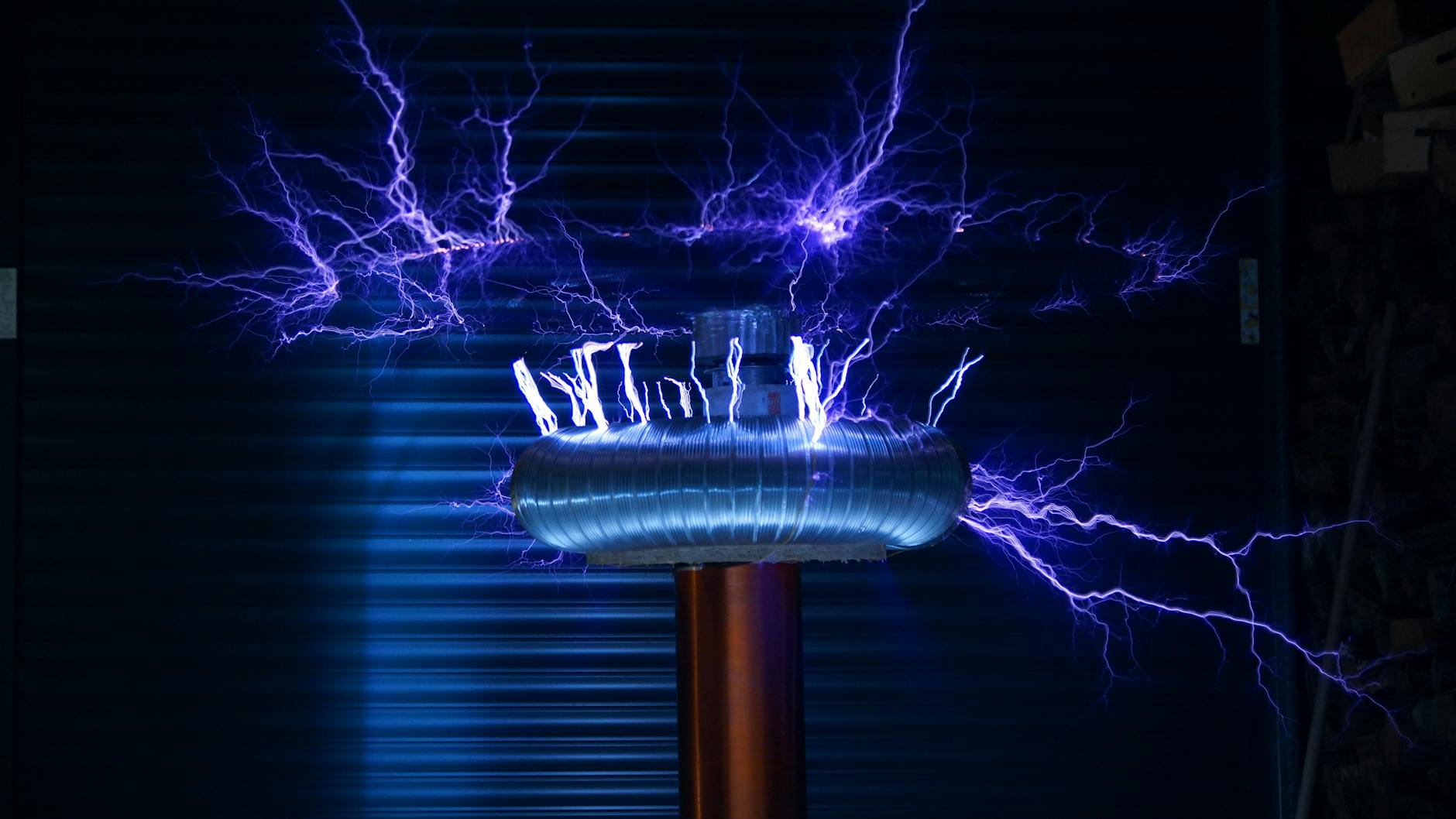
A musical Tesla coil, also known as a singing Tesla coil or a zeusaphone, is a high-voltage resonant transformer that has been engineered to produce audible musical tones directly from its electrical discharge. Unlike a standard Tesla coil, which simply generates a continuous stream of high-frequency sparks, a musical version modulates the timing and duration of those sparks to create specific sound frequencies. The result is a device that appears to conjure music from thin air, accompanied by dramatic arcs of visible plasma.
The concept builds on the original work of Nikola Tesla, who invented the Tesla coil in 1891 as a means of studying high-frequency electricity and wireless power transmission. Tesla himself never designed his coil to produce music, but he did note that the rapid electrical discharges created audible noise. It would take more than a century before engineers and enthusiasts would harness that property deliberately and turn it into a fully controllable music tesla coil capable of playing entire melodies.
Today, musical Tesla coils range in scale from room-filling theatrical installations that shoot lightning bolts several feet long, to compact desktop devices small enough to sit on a bookshelf. Whether you are watching a large-scale performance or admiring a miniature Tesla coil speaker on your desk, the underlying physics at work is exactly the same, and it is genuinely fascinating.
The Physics of Sound: How Sparks Become Music
To understand how a Tesla coil produces sound, we must first understand how sound itself works. Sound is a pressure wave, a series of compressions and rarefactions traveling through a medium such as air. When something vibrates, it pushes and pulls the surrounding air molecules in rapid succession, creating these waves. Your eardrum detects them, your brain interprets the frequency, and you perceive a musical pitch.
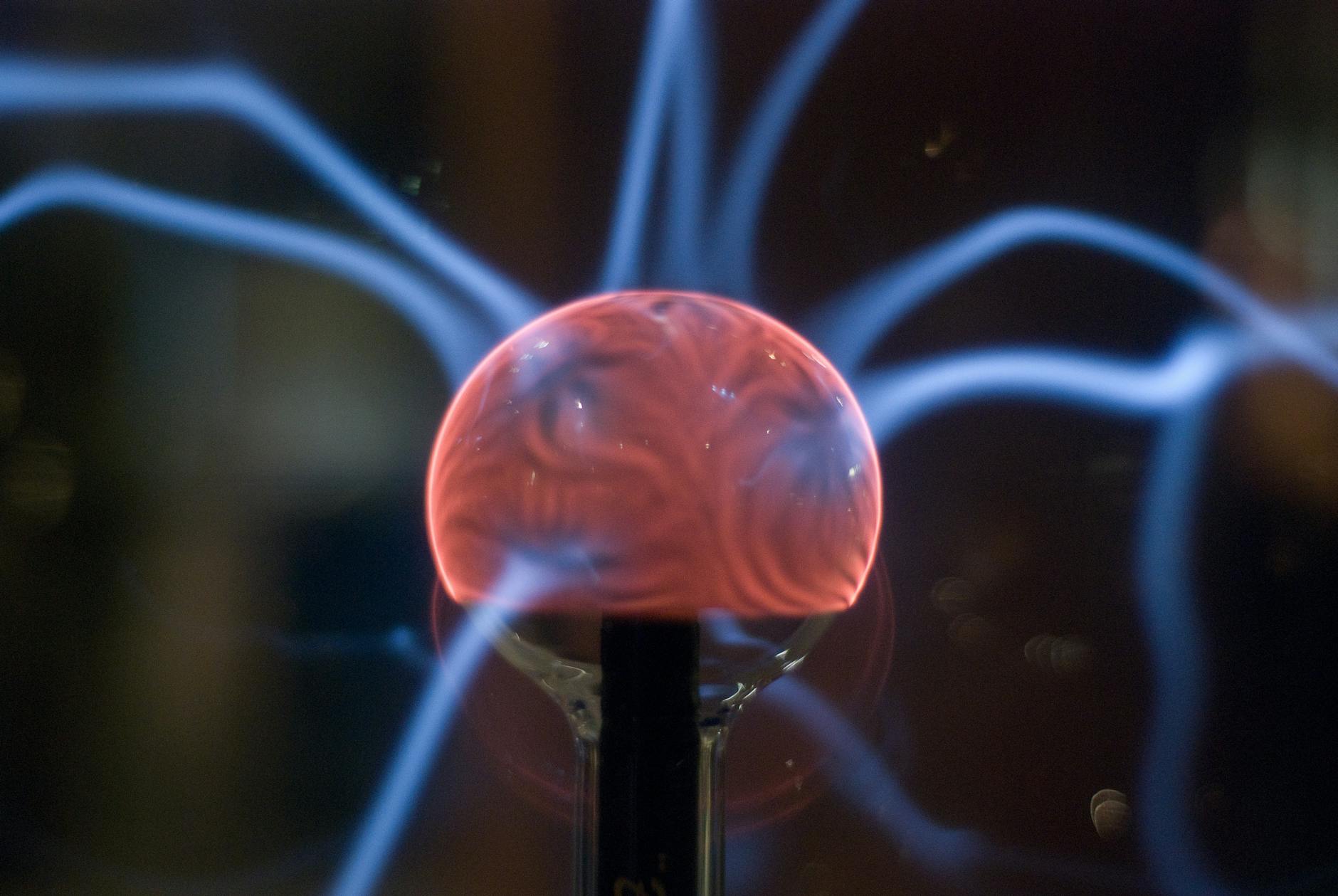
In a musical Tesla coil, the "something vibrating" is not a physical object but rather a rapidly expanding column of plasma. When a high-voltage spark leaps through the air, it superheats the surrounding gas almost instantaneously to temperatures that can reach tens of thousands of degrees Kelvin. This extreme heating causes the air to expand outward at tremendous speed, generating a sharp pressure pulse, essentially a miniature sonic boom. If these pulses are repeated at a frequency within the human hearing range (roughly 20 Hz to 20,000 Hz), the ear perceives them as a continuous tone.
This is the fundamental trick of the singing Tesla coil: by controlling how frequently the sparks fire, the device controls the frequency of the pressure waves it generates, and therefore the pitch of the sound. Fire sparks 440 times per second, and you produce the musical note A4, the standard tuning reference used by orchestras worldwide. The relationship between spark repetition rate and perceived pitch is direct, predictable, and fully exploitable for musical performance.
Solid-State Technology and Pulse-Width Modulation

Modern musical Tesla coils are almost exclusively solid-state Tesla coils (SSTCs), meaning they use high-speed semiconductor switches, typically insulated-gate bipolar transistors, or IGBTs, rather than the mechanical spark gaps used in older designs. These transistors can switch millions of times per second with extraordinary precision, giving engineers complete digital control over the timing and duration of each high-voltage discharge. This precision is what makes accurate musical reproduction possible.
The key technique is called pulse-width modulation (PWM). Rather than simply turning the coil on and off at audio frequency, the controller modulates the width, or duration, of each high-frequency switching cycle in a pattern that corresponds to the desired audio signal. At any given moment, the coil is firing a rapid burst of high-frequency pulses, but the envelope of that burst is shaped by the audio information. The human ear integrates the resulting pressure waves and hears a clear, distinct musical tone, even though the underlying electricity is oscillating at radio frequencies far above the range of hearing.
This approach allows a plasma speaker, which is effectively what a musical Tesla coil is, to reproduce not only simple sine-wave tones but also complex chords, harmonics, and even recognizable musical timbre. The characteristic "buzzy" or "electric" quality of Tesla coil music comes from the richness of harmonics generated by the sharp, non-sinusoidal shape of each pressure pulse. It is a sound unlike anything produced by a conventional loudspeaker, and it is entirely a product of the physics of plasma.
MIDI Control and Bluetooth: Playing Melodies on Demand

The ability to play specific melodies requires a way to translate musical information into precise spark-timing commands. For larger performance-grade coils, this is typically accomplished using the MIDI protocol (Musical Instrument Digital Interface), the industry-standard digital communication format used by synthesizers, keyboards, and digital audio workstations since the 1980s. A MIDI signal carries note-on and note-off commands along with pitch and velocity data, which a dedicated controller board translates into corresponding PWM commands for the coil's switching transistors.
In compact modern devices, the kind designed as desktop science decor, the approach is even more accessible. A Tesla coil Bluetooth speaker incorporates a Bluetooth receiver chip that accepts audio signals wirelessly from a smartphone or computer. The incoming audio stream is processed in real time: the controller extracts frequency and amplitude information and converts it into PWM commands that drive the coil. This means you can stream any piece of music from your phone and the coil will attempt to reproduce it as plasma-generated sound, complete with visible arcs of lightning dancing in time with the beat.
The integration of Bluetooth technology represents a remarkable democratization of what was once an exotic, highly technical apparatus. Where early musical Tesla coils required deep electrical engineering knowledge to build and operate safely, a modern mini Bluetooth Tesla coil speaker can be unboxed, paired with a smartphone in seconds, and placed on a desk as a conversation-starting piece of functional science art. The physics inside is no less sophisticated, it has simply been packaged for everyday enjoyment.
The History of the Singing Tesla Coil: The Zeusaphone

The deliberate use of a Tesla coil to produce music is a relatively recent innovation. The concept is generally credited to a community of high-voltage hobbyists and engineers who began experimenting with solid-state coil designs in the early 2000s. The most historically significant milestone came around 2005 to 2007, when Steve Ward and Jeff Larson, American engineers working independently and collaboratively, developed solid-state Tesla coils capable of precisely controlled musical output. Their work was widely shared online and sparked a global wave of interest in the technology.
The name "zeusaphone" was coined as a playful reference to Zeus, the Greek god of lightning, combined with the suffix "-phone" (from the Greek for voice or sound). The term captured both the visual drama of the device and its musical function. Around the same time, the term "singing Tesla coil" entered common usage, and the phenomenon began appearing at science festivals, maker fairs, and theatrical performances. Groups such as ArcAttack, who famously performed inside a Faraday cage while their coils played music around them, brought the singing Tesla coil to mainstream public attention.
The cultural impact of the zeusaphone has been significant. It demonstrated that high-voltage electricity, long associated exclusively with danger and industrial applications, could be harnessed as a creative medium. For the broader world of physics-inspired art and decor, it opened a new category of objects that are simultaneously scientific instruments, musical instruments, and aesthetic experiences, a combination that continues to captivate audiences worldwide.
Modern Miniature Tesla Coils as Desktop Science Decor

The miniaturization of musical Tesla coil technology over the past decade has produced a category of desktop objects that are genuinely unique in the world of science decoration. Modern compact coils typically stand between 15 and 40 centimeters tall and operate at voltages safe enough for indoor use when handled responsibly. They produce visible plasma arcs, audible music, and a faint smell of ozone, the same sharp, clean scent associated with thunderstorms, creating a multi-sensory experience that no other desk object can replicate.
These devices serve multiple purposes simultaneously. As a tesla coil music player, they can stream audio from any Bluetooth-enabled device and reproduce melodies as visible lightning. As a scientific demonstration tool, they illustrate principles of electromagnetic induction, resonance, plasma physics, and acoustic wave generation in a single compact package. As a decorative object, they are visually arresting in both operation and repose, combining the aesthetic of Victorian scientific apparatus with thoroughly modern electronics.
For those who appreciate the intersection of science and beauty, a miniature singing Tesla coil represents something genuinely special: a device that makes the invisible forces of electromagnetism visible, audible, and tangible. It is the kind of object that prompts questions, sparks curiosity, and reminds everyone in the room that the physical world is far stranger and more wonderful than it first appears. If you are drawn to objects that carry that kind of intellectual and aesthetic weight, we invite you to explore the full range of remarkable scientific instruments available in our Tesla coil speaker collection.
Conclusion
The musical Tesla coil is a triumph of applied physics, a device that transforms high-voltage electricity into music through nothing more than the rapid ionization of air. From the solid-state switching circuits that modulate spark timing, to the pressure waves that your ear interprets as melody, every element of its operation is grounded in well-understood science made extraordinary by creative engineering. What began as a curiosity among high-voltage hobbyists in the mid-2000s has evolved into a category of desktop science art that brings genuine wonder into everyday spaces. Whether you are a physicist, a music lover, or simply someone who appreciates beautiful and unusual objects, a singing Tesla coil has something remarkable to offer, and we encourage you to experience one for yourself.


Leave a comment
All comments are moderated before being published.
This site is protected by hCaptcha and the hCaptcha Privacy Policy and Terms of Service apply.