

Storm Glass Crystals Explained: What Each Pattern Means
Few objects on a scientist's desk are as hypnotic, or as mysterious, as a storm glass. Sealed inside its elegant glass vessel, a swirling landscape of crystals appears to shift and evolve on its own, responding to invisible forces in the surrounding environment. For over two centuries, sailors and naturalists believed this strange bottle could predict the weather before it arrived. But what is actually happening inside, and does the science hold up to modern scrutiny? We are about to take a deep dive into the chemistry, the crystal patterns, and the honest truth about what a storm glass can and cannot tell you.
What Is a Storm Glass and Where Did It Come From?

A storm glass, sometimes called a storm bottle or Fitzroy's storm barometer, is a sealed glass container filled with a carefully prepared chemical solution. The device gained widespread fame in the mid-nineteenth century when Admiral Robert FitzRoy, the captain of HMS Beagle and a pioneering meteorologist, began distributing them to fishing villages along the British coast. He believed, with genuine conviction, that the crystal formations inside could warn fishermen of approaching storms, calm weather, or sudden temperature drops before conventional instruments detected any change.
The original formula attributed to FitzRoy contained a mixture of several compounds dissolved together in a water-alcohol solution. The key ingredients are camphor, ammonium chloride, potassium nitrate, water, and ethanol. Each of these chemicals plays a distinct role in the crystallization behavior of the final mixture. Camphor, a waxy organic compound derived from the camphor tree, is particularly important because it is highly sensitive to temperature changes and drives much of the visual drama you observe inside the glass.
Today, storm glasses are cherished far more as beautiful scientific curiosities and decorative objects than as reliable meteorological instruments. If you are looking to add one to your home or office, browsing our collection of storm glasses is an excellent place to start. They make a compelling conversation piece that bridges the worlds of art, history, and chemistry in a single elegant form.
The Chemistry Behind the Crystals: Supersaturation and Solubility

To understand why a storm glass produces such varied and beautiful crystal patterns, you need to grasp two fundamental chemical concepts: solubility and supersaturation. Solubility refers to how much of a solid substance can dissolve in a liquid at a given temperature. Most solids become more soluble as temperature increases, meaning warmer liquid can hold more dissolved material than cooler liquid. When a warm solution cools down, it may contain more dissolved substance than it can stably hold at the new temperature, creating what chemists call a supersaturated solution.
A supersaturated solution is inherently unstable. Given the right trigger, a tiny vibration, a microscopic impurity, or simply enough time, the excess dissolved material will begin to precipitate out of solution and form solid crystals. This is precisely what happens inside a storm glass. The sealed solution is carefully prepared so that it sits near the boundary between dissolved and crystallized states at room temperature. Even a small shift in temperature pushes the system across that boundary, causing crystals to grow, dissolve, or reorganize into entirely new shapes.
Camphor is the most visually dramatic contributor to this process because it has an unusually steep temperature-solubility curve in the ethanol-water mixture used in the glass. Small temperature changes cause large shifts in how much camphor can remain dissolved, which is why camphor crystals are the first to appear and the most responsive to environmental changes. Ammonium chloride and potassium nitrate contribute their own crystalline structures at different temperature ranges, layering complexity into the patterns you observe.
A Visual Guide to Storm Glass Crystal Patterns

One of the most delightful aspects of owning a storm glass is learning to read its ever-changing interior like a living diagram of chemistry in action. While interpretations vary between historical sources, certain patterns are consistently associated with specific thermal and environmental conditions. Understanding what each formation represents transforms the storm glass from a decorative novelty into a genuine window onto physical chemistry. Below is a catalogue of the most commonly observed storm glass crystal patterns and the science behind each one.
- Clear liquid with no crystals: The solution is warm enough that all compounds remain fully dissolved. This typically occurs when ambient temperatures are relatively high, keeping the mixture well below its supersaturation threshold.
- Small floating flakes or specks: As temperature drops slightly, camphor begins to precipitate in tiny, loosely organized particles. The solution has crossed into mild supersaturation, but thermal energy is still too high to allow large, ordered crystals to grow.
- Feathery or fern-like crystals: This is one of the most visually striking patterns. Feathery dendrite crystals form when camphor precipitates rapidly under moderate cooling. The branching, fern-like structure is a classic example of dendritic crystal growth, where molecules attach faster than the crystal lattice can organize into a compact shape.
- Large, starlike or snowflake crystals: When cooling is slower and more uniform, camphor and potassium nitrate have time to organize into more symmetrical, star-shaped structures. These tend to appear when temperatures are steadily cool rather than rapidly changing.
- Cloudy or milky appearance throughout: A uniformly cloudy storm glass indicates that very fine crystals are distributed throughout the entire solution volume. This happens when supersaturation occurs rapidly and simultaneously throughout the liquid, leaving no time for large crystal formation.
- Crystals settled at the bottom only: When the solution is cool at the base but warmer higher up, crystals precipitate and sink, forming a sediment layer while the upper portion remains clear. This thermal gradient within the glass itself produces the layered look.
It is worth noting that the specific shapes also depend on the exact chemical ratios used by the manufacturer. No two storm glasses are perfectly identical, which means your glass may display subtle variations on these classic patterns. This individuality is part of what makes each storm glass genuinely unique as both a scientific instrument and a decorative object.
Temperature as the Master Variable
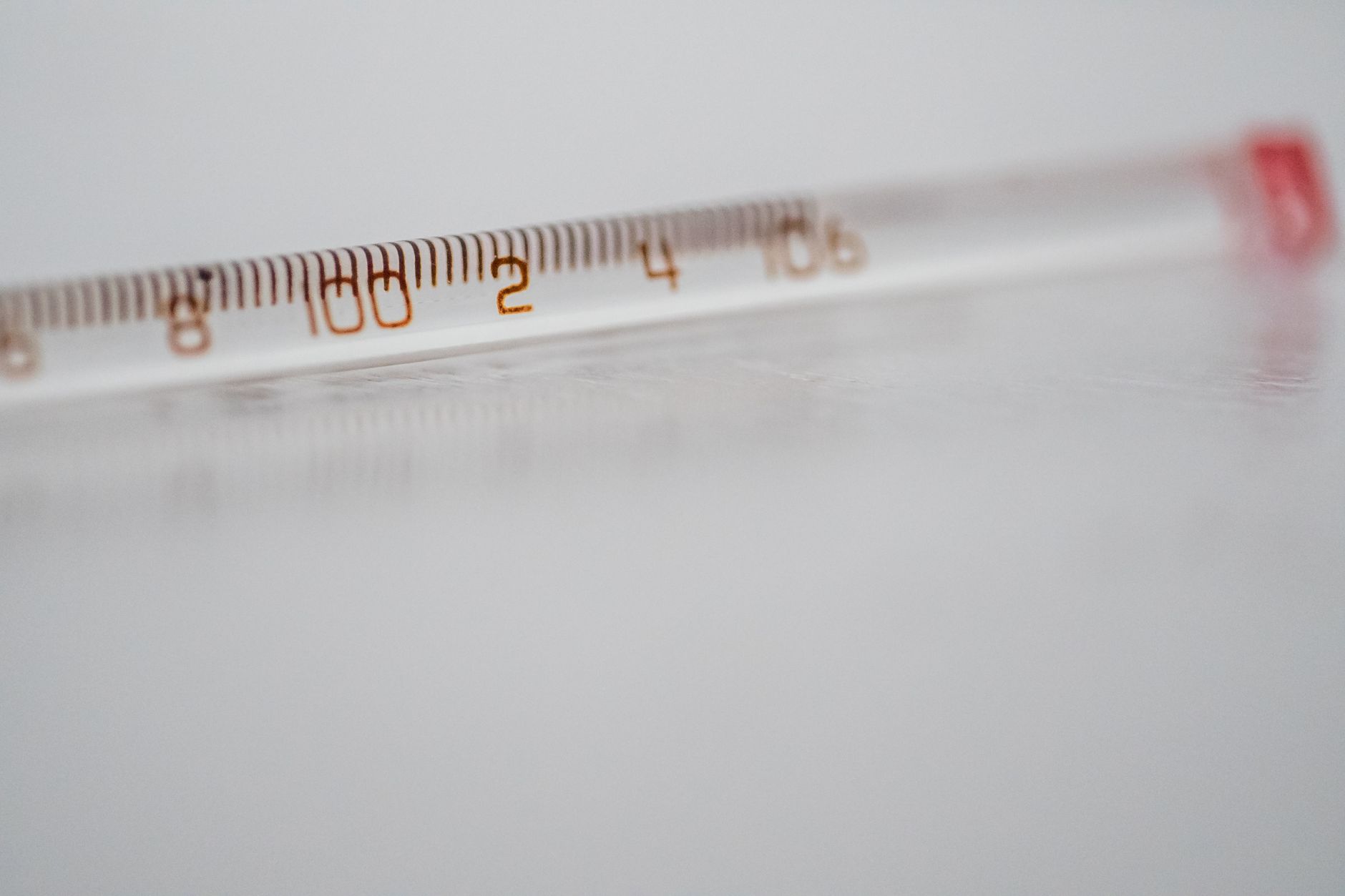
If there is one takeaway from studying storm glass chemistry, it is that temperature is the dominant variable governing everything you observe inside the glass. The relationship between temperature and crystal state is not linear, it is complex, nonlinear, and highly sensitive to even small fluctuations. This is why a storm glass placed near a window, an air conditioning vent, or a radiator will behave very differently from one placed on a central shelf away from direct thermal sources.
Research into storm glass behavior has consistently confirmed that the crystals respond primarily to the temperature of the glass itself, rather than to atmospheric pressure or humidity as the Victorian-era believers supposed. When you cool a storm glass in a refrigerator and then bring it back to room temperature, you will witness a dramatic and beautiful reorganization of crystals that mirrors what happens naturally over the course of a day as temperatures shift. The speed of temperature change matters as much as the absolute temperature, rapid cooling produces chaotic, feathery growth, while slow cooling produces ordered, geometric forms.
This temperature sensitivity is also why storm glasses are so satisfying to keep in a living space. A room that experiences natural temperature cycles through the day, warming in the morning sunlight and cooling at night, will animate the storm glass in a continuous, slow-motion crystal ballet. For those who enjoy exploring the intersection of chemistry and home aesthetics, pairing a storm glass with other chemistry-themed décor creates a beautifully coherent scientific atmosphere in any room.
Does a Storm Glass Actually Predict the Weather?

This is the question that has fascinated and frustrated scientists for nearly two centuries. Admiral FitzRoy and his contemporaries genuinely believed the storm glass was a reliable weather predictor, and anecdotal reports from the nineteenth century seemed to support this view. The traditional interpretation held that feathery crystals rising high in the glass predicted wind and storms, clear liquid predicted sunny weather, and cloudy solutions warned of overcast skies. These associations were taken seriously enough that FitzRoy distributed storm glasses widely as practical safety tools for coastal communities.
Modern scientific investigation has been considerably less generous to this interpretation. Controlled studies, including a notable analysis published in the journal Weather, found that the correlation between storm glass crystal patterns and actual weather outcomes was no better than chance. Because the glass is sealed and cannot interact with atmospheric pressure or humidity, there is no known physical mechanism by which it could sense approaching weather systems. The crystals respond to local temperature, not to barometric pressure or distant storm fronts. When a storm glass appears to predict rain, it is most likely responding to the same temperature drop that the weather system itself is causing, a correlation, not a prediction.
That said, dismissing the storm glass entirely would be both scientifically unfair and aesthetically ungenerous. It remains a genuinely accurate and real-time display of physical chemistry, specifically of temperature-dependent crystallization. As a demonstration of supersaturation, solubility, and dendritic crystal growth, it is extraordinary. As a weather forecaster, it is best appreciated as a charming piece of scientific history rather than a reliable tool. Understanding this distinction makes owning a storm glass even more interesting, because you can appreciate what it is actually doing rather than being disappointed by what it cannot do.
Storm Glass as a Decorative Science Object

Beyond its scientific interest, the storm glass has earned a permanent place in the world of scientific decoration. Its tall, elegant silhouette, typically a teardrop or diamond shape sealed at the top, gives it a timeless aesthetic quality that suits both modern minimalist interiors and more traditional, library-style spaces. The ever-changing crystal formations inside mean that the object never looks quite the same twice, giving it a living quality that static decorative objects simply cannot replicate. A storm glass is, in essence, a self-renewing piece of art driven by chemistry.
When choosing placement for a storm glass in your home, consider positioning it somewhere that receives gentle, indirect light and experiences natural temperature variation throughout the day. A windowsill that receives morning light but not harsh afternoon sun is ideal, you will observe the crystals dissolving as the glass warms and reforming beautifully as it cools toward evening. Avoid placing it near heating vents or air conditioning units, as extreme or artificial temperature swings will push the chemistry into less interesting states and may keep the solution perpetually clear or perpetually cloudy.
For those who want to go deeper into the science of crystal formation as a decorative theme, our large diamond storm glass, FitzRoy edition offers a particularly dramatic display of crystal growth in a beautifully proportioned vessel. The larger volume of solution means more complex, layered crystal formations and a more visually impressive display of the chemistry at work. It makes an ideal gift for anyone who appreciates the point where science and beauty intersect.
Caring for Your Storm Glass and Maximizing Crystal Display

A storm glass requires very little maintenance, but a few simple practices will help you get the most out of its crystal displays. First and most importantly, never shake or tip a storm glass. The sealed solution is calibrated to behave in a specific way under gravitational conditions, and agitating it disrupts the slow, temperature-driven crystallization process that creates the most beautiful patterns. If you find your storm glass has become permanently clear or permanently cloudy, try moving it to a different location with a more moderate and variable temperature before concluding that anything is wrong.
Cleaning the exterior of the glass with a soft, dry cloth is all that is typically needed to keep it looking its best. Because the vessel is completely sealed, the interior never needs cleaning and should never be opened, doing so would expose the solution to atmospheric moisture and contaminants that would permanently alter its chemistry. The sealed nature of the storm glass is not just a manufacturing choice; it is fundamental to how the chemistry works. The precise ratios of camphor, ammonium chloride, potassium nitrate, water, and ethanol inside are balanced to operate within a specific temperature range, and any contamination would disrupt that balance irreversibly.
Over many years, it is possible for a storm glass to gradually lose some of its reactivity as the chemical equilibrium shifts slowly inside the sealed environment. This is a natural process and does not mean the glass is broken, it simply reflects the passage of time in the chemistry. Many collectors find that older storm glasses with more subdued crystal activity have their own quiet beauty, displaying subtle formations that reward patient, close observation rather than dramatic daily changes. In this way, a storm glass ages gracefully, much like the best scientific instruments always do.
Conclusion
The storm glass is one of those rare objects that rewards curiosity on multiple levels simultaneously, as a piece of Victorian scientific history, as a live chemistry demonstration, and as a genuinely beautiful decorative object. Its crystals form and dissolve in direct response to temperature-driven changes in solubility and supersaturation, producing patterns that range from delicate feathery dendrites to bold geometric stars depending on the speed and degree of thermal change. While modern research has established that it cannot truly predict the weather, understanding the real science behind it makes it far more fascinating, not less. We invite you to explore a storm glass for yourself, place it somewhere it will catch the light, watch it change through the seasons, and let it remind you every day that chemistry is happening all around us, whether we can see it or not.


Leave a comment
All comments are moderated before being published.
This site is protected by hCaptcha and the hCaptcha Privacy Policy and Terms of Service apply.