

Fitzroy's Storm Glass: History, Chemistry & How It Works
Few objects on a scientist's desk inspire more curiosity than the storm glass, a sealed, liquid-filled vessel that seems to conjure crystals from thin air in response to the weather. It is part instrument, part mystery, and entirely captivating. The Fitzroy storm glass has fascinated sailors, scientists, and decorators alike for nearly two centuries, and its elegant silhouette remains one of the most recognizable symbols of scientific curiosity. In this article, we explore its remarkable history, decode the chemistry inside the glass, and examine what modern science has to say about its predictive powers.
The Origins of the Storm Glass: An 18th-Century Mystery

The storm glass did not emerge from a single inventor's workshop but rather evolved gradually through European maritime culture during the late 18th century. Early versions of the device were used by sailors and coastal communities who believed that the crystalline formations inside the sealed tube could warn them of approaching storms before the skies gave any visible sign. These early storm bottles were passed between fishermen and naval officers as practical tools of survival, long before any formal scientific explanation was offered for the phenomena they displayed.
The device gained widespread credibility and recognition through the work of the British naval officer and meteorologist Admiral Robert FitzRoy, who is perhaps best known as the captain of HMS Beagle, the ship that carried Charles Darwin on his world-changing voyage of natural discovery. FitzRoy was a passionate advocate for weather science and spent much of his career attempting to make weather forecasting a legitimate discipline. He championed the storm glass as a practical forecasting tool and distributed versions of it to fishing communities along the British coastline, earning it the enduring name "Fitzroy's storm glass."
FitzRoy went on to found what would eventually become the UK Met Office, and he published detailed guidelines for interpreting the crystal patterns inside the storm glass. His belief in the device was sincere and scientifically motivated, even if later generations would question the rigor of his conclusions. Today, the storm glass stands as a beautiful artifact of the history of meteorology, a reminder that the drive to understand and predict the natural world is as old as human civilization itself.
What Is a Storm Glass? Understanding the Sealed Vessel

At its most basic level, a storm glass is a sealed glass container filled with a mixture of chemical compounds dissolved in a liquid solution. Unlike a traditional barometer, which measures atmospheric pressure through the movement of mercury or fluid in an open system, the storm glass is completely sealed from the outside environment. This is one of the most puzzling aspects of the device, if it is sealed, how can it possibly respond to external weather conditions?
The classic storm glass takes the form of a teardrop or elongated flask shape, often mounted on a decorative wooden or metal base. The liquid inside is typically clear or slightly cloudy, and under the right conditions, it fills with dramatic feathery crystals, dense sediment, or floating star-shaped formations. The visual transformation is genuinely striking, and it is easy to understand why generations of observers attributed almost magical properties to the object. The beauty of the crystal formations has also made the storm glass a beloved piece of scientific décor in homes and offices around the world.
If you are looking to own one of these remarkable objects, our collection of storm glasses offers a curated selection of beautifully crafted models that make stunning display pieces as well as conversation starters. Whether you are drawn to the science or the aesthetics, the storm glass rewards close attention and daily observation.
The Chemistry Inside: What Is the Storm Glass Mixture?
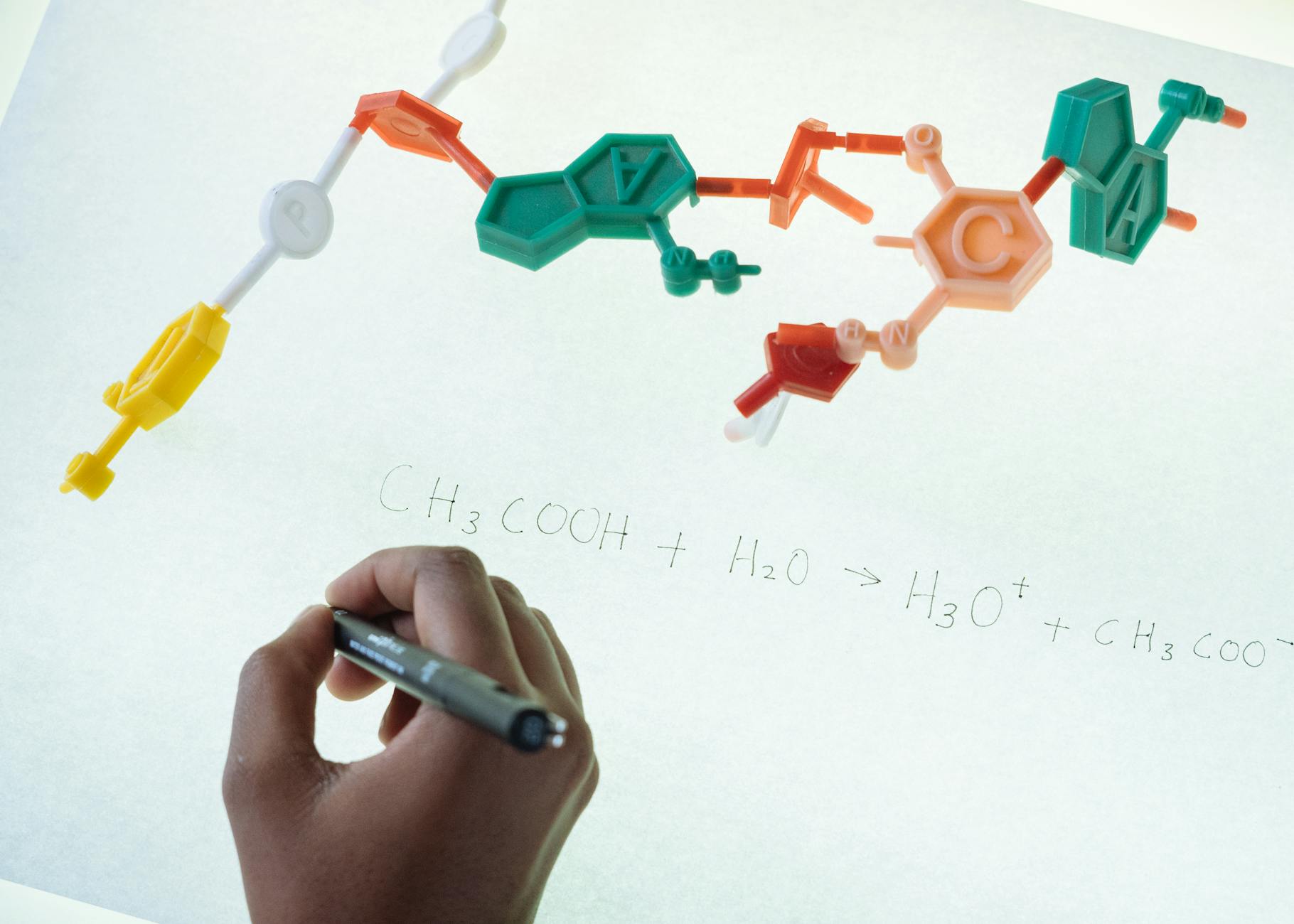
The solution sealed inside a traditional Fitzroy storm glass is a carefully proportioned mixture of five key ingredients: camphor, potassium nitrate, ammonium chloride, ethanol, and distilled water. Each component plays a specific role in the chemical behavior of the system. Camphor, a waxy white substance derived from the camphor tree, is the primary solid that forms the visible crystals. It is dissolved in ethanol, which acts as the solvent and carries the other compounds in solution.
Potassium nitrate and ammonium chloride are both salts that dissolve in the water portion of the mixture. The interaction between the alcohol-soluble camphor and the water-soluble salts creates a delicate chemical equilibrium that is highly sensitive to changes in temperature. When conditions shift, the solubility of camphor in the ethanol-water mixture changes, causing it to precipitate out of solution and form solid crystals. The rate, shape, and density of these crystals vary depending on how quickly and dramatically the temperature changes.
The precise ratios of the ingredients matter enormously. A well-made storm glass uses a formulation that keeps the system near its saturation point at typical room temperatures, meaning that even small fluctuations will trigger visible crystallization. This sensitivity is what gives the storm glass its apparent responsiveness to environmental change. The chemistry is genuinely elegant, a finely tuned system that sits perpetually on the edge of transformation, waiting for the conditions to tip it one way or another. For those who appreciate the beauty of chemistry in physical form, exploring our chemistry-themed décor collection offers many more ways to bring the science of matter and transformation into your living space.
How Does the Storm Glass Work? The Science of Crystal Formation

The central mechanism behind the storm glass is a well-understood chemical process called recrystallization driven by temperature-dependent solubility. Most solid substances dissolve more readily in a liquid solvent as the temperature increases, and they precipitate back out of solution as the temperature falls. Camphor in an ethanol-water solution follows this principle closely. When the temperature drops, camphor molecules lose the kinetic energy they need to remain dispersed in the liquid, and they begin to bond together into solid crystal structures.
The shape and distribution of the resulting crystals depend on the speed of the temperature change and the specific chemical environment inside the glass. Slow, gradual cooling tends to produce large, well-formed feathery crystals, while rapid drops in temperature can cause a more chaotic precipitation of fine particles throughout the liquid. The presence of potassium nitrate and ammonium chloride influences the crystal growth process, acting as nucleation sites and affecting the overall texture of the formations. This is why different storm glasses, even those with the same basic formula, can look remarkably different from one another.
One important point that is often misunderstood is that the storm glass does not respond to atmospheric pressure in the way that a traditional barometer does. Because the vessel is sealed, changes in external air pressure cannot directly affect the liquid inside. The primary driver of crystal formation is temperature, though some researchers have proposed that other factors, including electromagnetic fields or subtle thermal gradients, may also play a role. The exact mechanism remains an area of genuine scientific interest and some debate.
Decoding the Crystals: What Each Pattern Is Said to Mean
Over the centuries, observers developed a detailed system for interpreting the various crystal formations that appear inside the storm glass. Admiral FitzRoy himself published one of the most influential guides to reading the glass, and his interpretations became widely adopted among mariners and weather enthusiasts. The basic interpretive framework associates different crystal patterns with specific weather conditions, giving the storm glass its identity as a weather predictor.
According to the traditional reading system, the following patterns carry specific meanings:
- Clear liquid with no crystals: Bright, fair weather is expected.
- Crystals at the bottom of the glass: Frost may be coming, or the weather will be thick and overcast.
- Dim, cloudy liquid: Rain or unsettled weather is likely in the near future.
- Large feathery crystals throughout the glass: Overcast skies and possible snow in winter, or heavy cloud cover in other seasons.
- Small dots or star-shaped crystals near the top: Humid or foggy conditions, particularly in summer.
- Crystals rising up the sides of the glass: Wind is expected; the higher the crystals, the stronger the wind.
These interpretations have a certain poetic logic to them, and many owners of storm glasses report that they do seem to notice changes in the crystals before the weather shifts. Whether this is genuine predictive power or the human tendency to find patterns in ambiguous data is a question we will explore shortly. Regardless of their scientific accuracy, these crystal readings have given the storm glass a rich interpretive tradition that adds to its charm and cultural significance. You can explore a beautifully crafted example with our Fitzroy Admiral Teardrop Storm Glass, which faithfully recreates the classic design used by FitzRoy himself.
The Modern Scientific Verdict: Can the Storm Glass Really Predict Weather?

Modern science has examined the claims of the storm glass with considerable skepticism, and the results are humbling for those who hoped for a simple vindication. The scientific consensus today is that the storm glass cannot reliably predict weather in the way that FitzRoy and his contemporaries believed. The primary reason is straightforward: because the glass is sealed, it cannot respond to changes in atmospheric pressure, which is the most important variable in short-term weather forecasting. A barometer works precisely because it is open to the atmosphere; the storm glass is not.
Several controlled studies have attempted to correlate crystal formations in storm glasses with actual weather events, and the results have been inconsistent at best. Temperature changes inside a room, caused by heating systems, sunlight, or proximity to windows, appear to be the dominant driver of crystal behavior, rather than outdoor weather conditions. This means that a storm glass placed near a sunny window may show dramatic crystal changes simply because the glass is warming up in the afternoon sun, with no connection to what is happening in the sky outside. The device is, in this sense, more of an indoor thermometer than a weather forecaster.
That said, dismissing the storm glass entirely would be ungenerous. Temperature and weather are genuinely linked, cold fronts bring falling temperatures, and warm fronts bring rising ones, so there may be a loose, indirect correlation between crystal behavior and approaching weather systems under the right conditions. More importantly, the storm glass remains a beautiful and scientifically meaningful object regardless of its forecasting limitations. It demonstrates real chemistry, inspires genuine curiosity, and connects its owner to a rich tradition of scientific inquiry. In that sense, it is every bit as valuable as it ever was.
Conclusion
The Fitzroy storm glass is one of the most enduring and enchanting objects in the history of scientific instruments. From its origins in maritime folklore to its championship by Admiral Robert FitzRoy, and from the elegant chemistry of camphor crystallization to the ongoing scientific debate about its predictive powers, the storm glass tells a story that is rich in history, chemistry, and human curiosity. It may not be the infallible weather oracle that sailors once hoped for, but it is something arguably more interesting: a beautiful, dynamic object that brings real science into everyday life. We invite you to explore our collection and discover how a storm glass can transform any space into a celebration of scientific wonder, because the best décor does not just look beautiful, it makes you think.

Leave a comment
All comments are moderated before being published.
This site is protected by hCaptcha and the hCaptcha Privacy Policy and Terms of Service apply.