

How Does a Plasma Tube Work? The Science of Glowing Gas
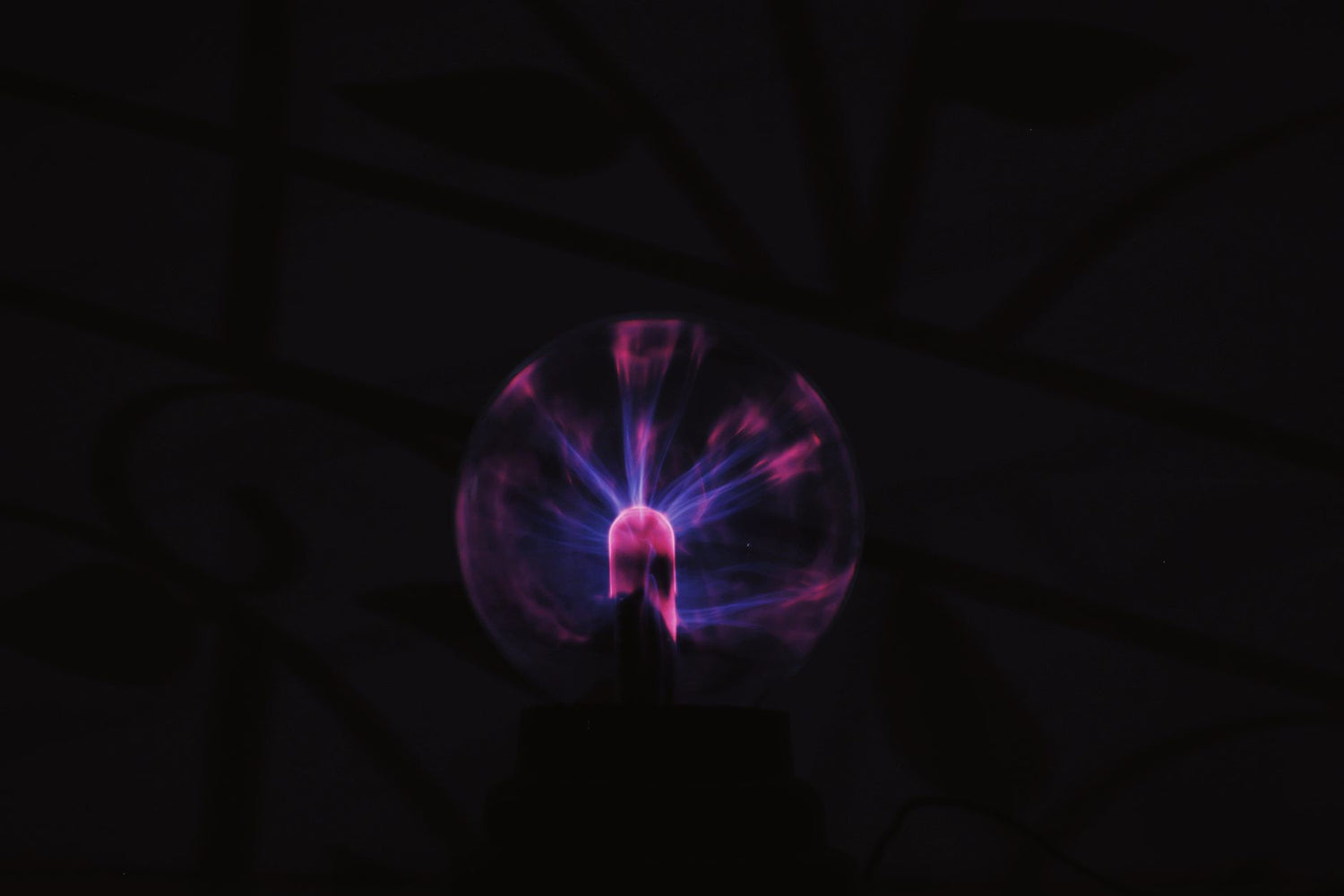
Few objects capture the imagination quite like a glowing plasma tube, a sealed glass vessel filled with swirling, luminous filaments that seem almost alive. Whether encountered in a science museum, a laboratory, or on a stylish desk, these devices produce a visual spectacle that feels simultaneously ancient and futuristic. Yet behind the mesmerizing display lies a set of elegant physical principles that any curious mind can appreciate. In this article, we break down exactly how a plasma tube works, from the vacuum inside the glass to the photons of colored light that reach your eyes.
What Is Plasma? Understanding the Fourth State of Matter
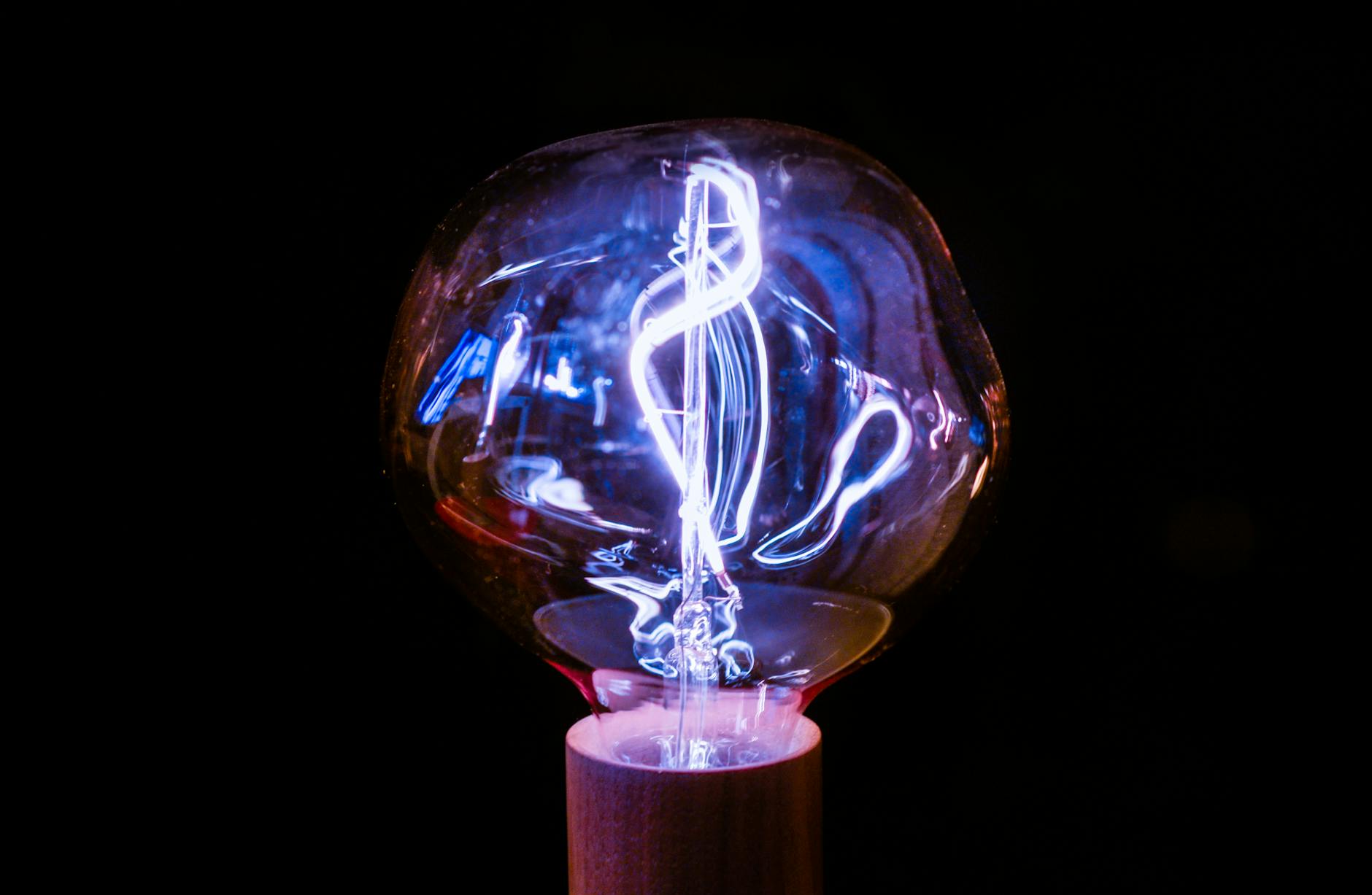
Most of us grow up learning about three states of matter: solid, liquid, and gas. However, plasma is recognized by physicists as the fourth state of matter, and it is actually the most abundant form of visible matter in the entire universe. Stars, lightning bolts, and the aurora borealis are all examples of plasma occurring naturally. Despite its cosmic prevalence, many people have never encountered a formal explanation of what plasma actually is at the atomic level.
At its core, plasma is a gas that has been energized to the point where electrons are stripped away from their parent atoms, creating a mixture of free electrons and positively charged ions. This process is called ionization, and it fundamentally changes the electrical and optical properties of the gas. Unlike a neutral gas, plasma conducts electricity and responds to electromagnetic fields, which is precisely what makes it so visually dynamic inside a sealed tube. The resulting soup of charged particles is neither a conventional gas nor a liquid, it is something entirely its own.
Understanding plasma as the fourth state of matter is essential to appreciating why a plasma tube behaves the way it does. The gas inside the tube does not simply glow because it is hot; it glows because its electrons have been excited into higher energy states and then release that energy as visible light when they fall back down. This quantum mechanical process, known as photon emission, is the fundamental engine behind all plasma lighting. Every color you see in a plasma tube is a direct signature of the specific gas or gas mixture sealed inside.
The Role of the Partial Vacuum in a Plasma Tube

One of the most critical, and often overlooked, components of a plasma tube is the near-vacuum environment inside the glass. The tube is not completely empty, nor is it filled with gas at normal atmospheric pressure. Instead, it contains a noble gas such as neon, argon, krypton, or xenon at a pressure far below that of the surrounding air, typically between one and ten torr. This low-pressure environment is absolutely essential for the device to function as intended.
At normal atmospheric pressure, gas molecules are packed so tightly together that free electrons collide with them almost immediately after being accelerated by an electric field. These frequent collisions dissipate energy before it can build up enough to sustain ionization across a meaningful distance. By reducing the pressure dramatically, the mean free path of electrons, the average distance they travel between collisions, increases substantially. This longer free path allows electrons to gain enough kinetic energy from the electric field to ionize the gas atoms they eventually strike, triggering a cascade of further ionizations.
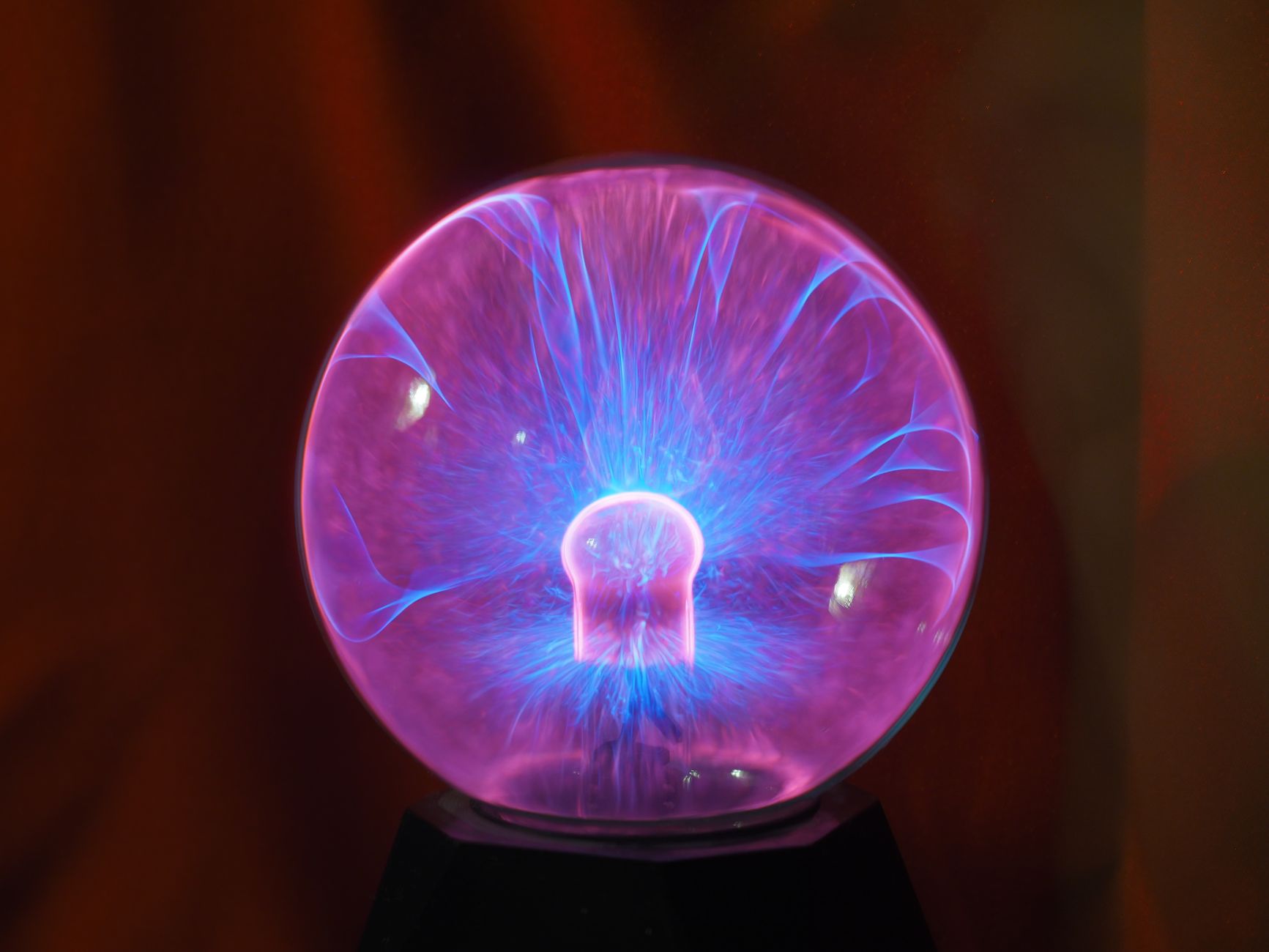
The partial vacuum also plays a role in shaping the visual character of the plasma. At lower pressures, the discharge tends to form distinct, thread-like filaments rather than a uniform glow, because the ionization cascade follows specific paths of least resistance through the gas. These filaments are the dramatic, branching streamers that make plasma tubes so visually compelling. The exact pressure chosen by the manufacturer determines whether the display is diffuse and cloud-like or sharp and filamentary, a deliberate aesthetic and scientific choice.
High-Voltage Electricity and the Gas Discharge Process
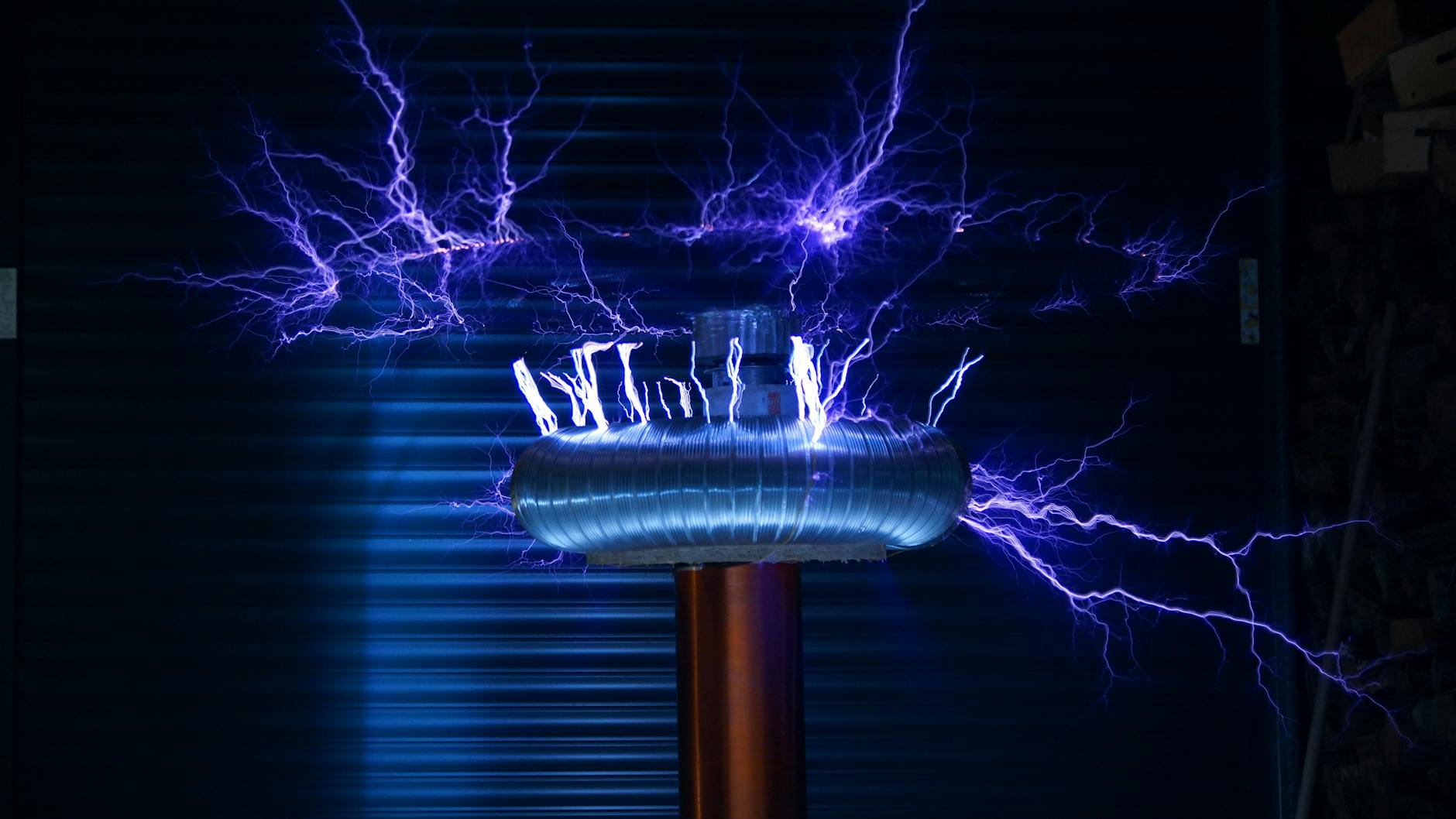
The energy source that drives a plasma tube is a high-frequency, high-voltage electrical signal, typically generated by an oscillating circuit connected to one or more electrodes inside the tube. Voltages ranging from several hundred to several thousand volts are applied across the electrodes, creating an intense electric field throughout the low-pressure gas. This field accelerates any free electrons that happen to be present, even the tiny number produced by natural background radiation, giving them enough energy to begin the ionization process.
Once the first ionization events occur, the process becomes self-sustaining through a mechanism called a gas discharge. Each ionization event releases additional free electrons, which are themselves accelerated by the electric field and go on to ionize more gas atoms. The result is an avalanche of charged particles that forms a conducting plasma channel between the electrodes. This is why plasma tubes appear to "ignite" almost instantaneously when powered on, the discharge builds from near-zero to full intensity in a fraction of a second.
The frequency of the alternating voltage also matters considerably. Most modern plasma tubes use high-frequency signals in the radio frequency range, which allows the plasma to remain continuously ionized rather than flickering at the frequency of standard mains electricity. High-frequency excitation produces a smoother, more stable glow and allows the filaments to respond dynamically to external stimuli such as touch or sound. This is why placing a hand on the glass of a plasma tube causes the filaments to reach toward the point of contact, the human body acts as a grounding conductor, locally modifying the electric field.
Electron Excitation and the Colors of Plasma Light
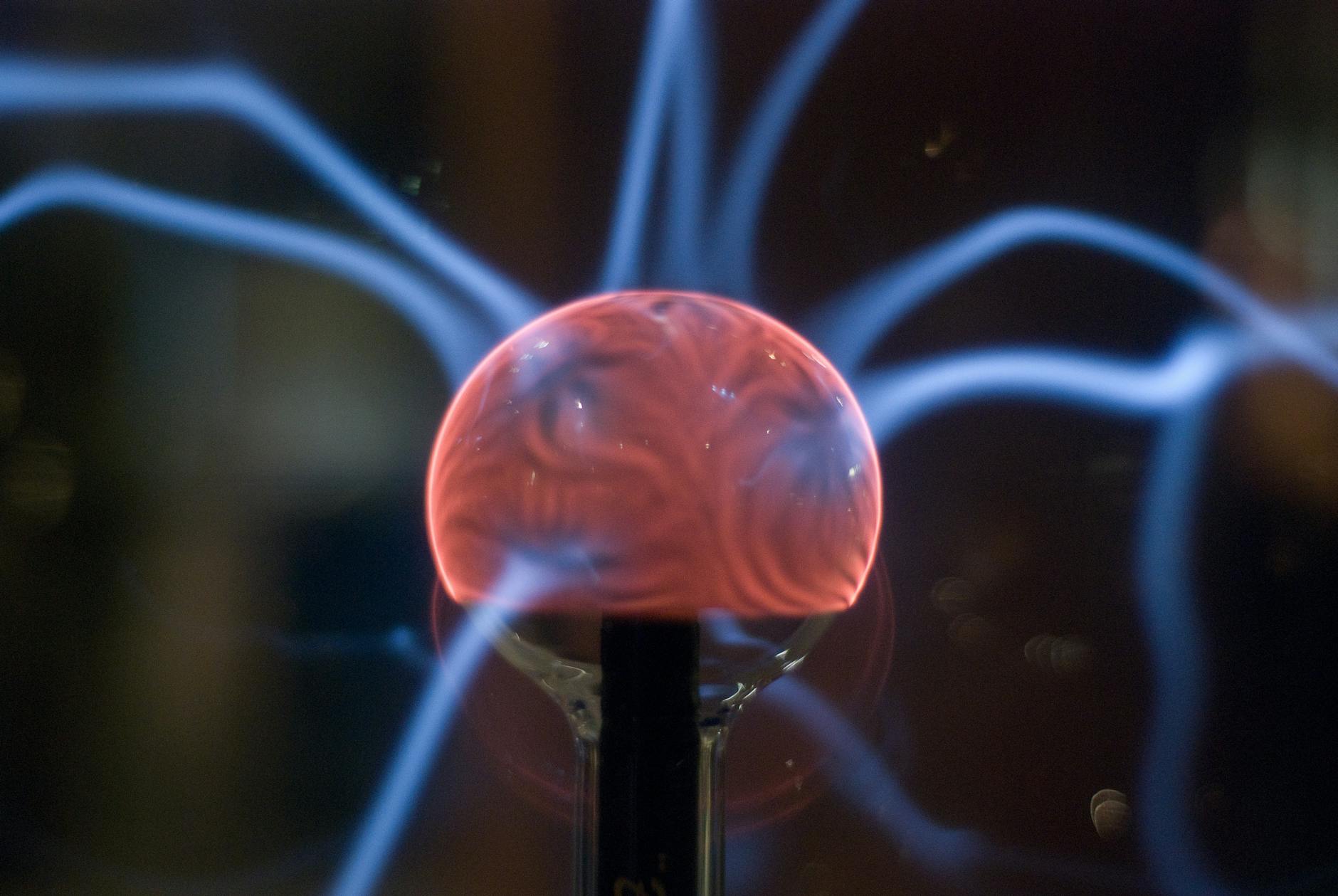
The specific colors produced by a plasma tube are not arbitrary, they are determined by the quantum energy levels of the gas atoms inside. When a free electron collides with a gas atom, it can transfer some of its kinetic energy to one of the atom's bound electrons, pushing it into a higher energy orbital. This is called electron excitation, and it is an inherently temporary state. The excited electron rapidly falls back to its ground state, releasing the absorbed energy as a photon of light with a very precise wavelength.
Because each element has a unique set of allowable energy levels, each element emits a unique set of wavelengths, its own spectral fingerprint. Neon produces the familiar red-orange glow, argon emits a soft blue-violet light, krypton glows with a pale white or greenish hue, and xenon produces a bright blue-white discharge. By mixing gases in carefully chosen proportions, manufacturers can create plasma tubes that display a wide range of colors or shift gradually between hues. This is the same principle that underlies neon signs, fluorescent lamps, and the aurora borealis.
It is worth noting that plasma tube light differs from the light produced by an incandescent bulb in a fundamental way. An incandescent bulb produces light by heating a filament until it glows, a thermal process that generates a broad, continuous spectrum. A plasma tube, by contrast, produces light through discrete quantum transitions, resulting in a spectrum made up of specific bright lines rather than a smooth continuum. This line emission spectrum is not only more energy-efficient but also more visually vibrant, which is why plasma lighting has such a distinctive, otherworldly quality compared to conventional light sources.
From Nikola Tesla to Modern Plasma Lighting
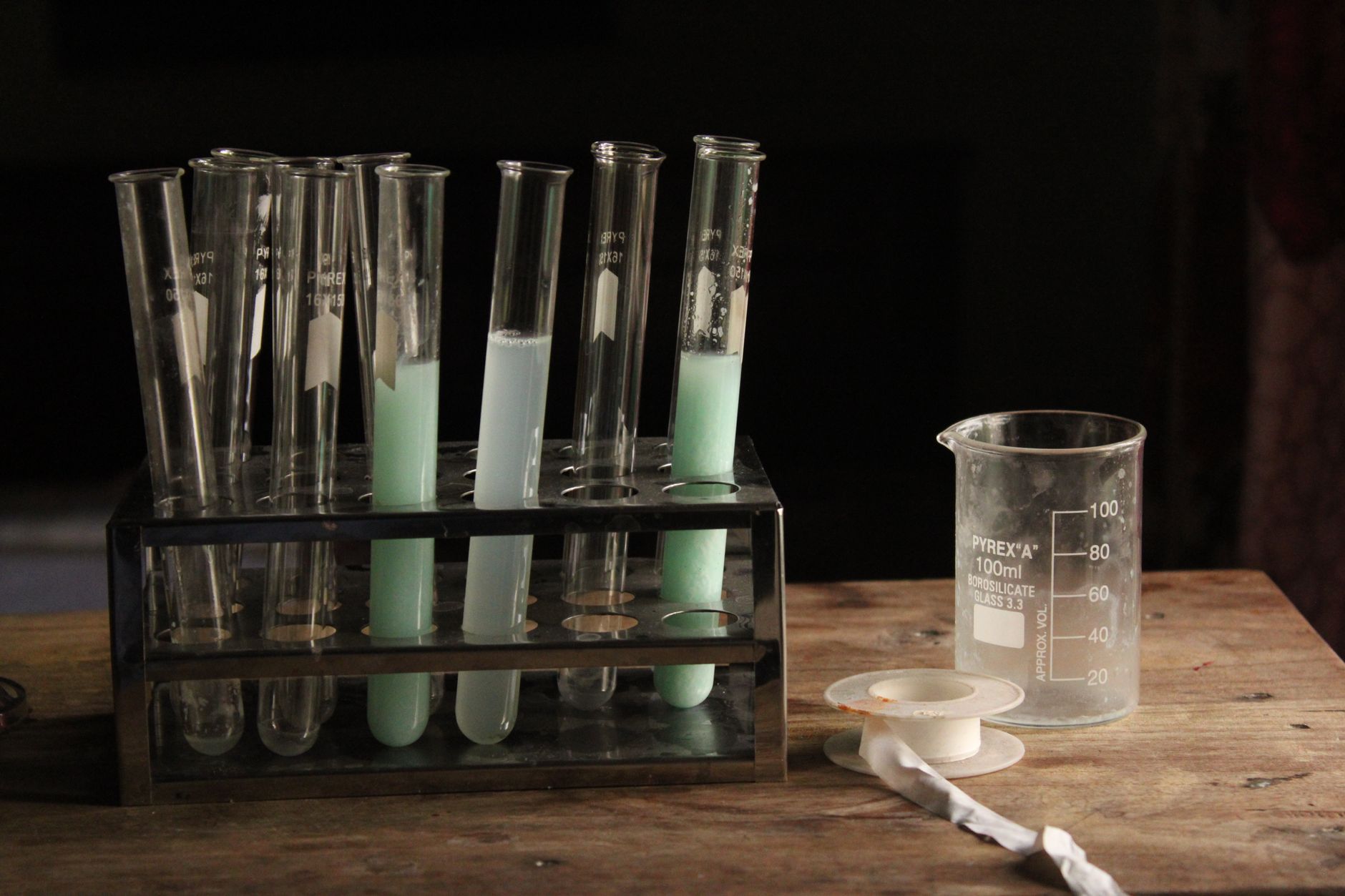
The history of the plasma tube is inseparable from the pioneering work of Nikola Tesla, who experimented extensively with evacuated glass tubes and high-frequency electrical discharges in the late nineteenth century. Tesla demonstrated that sealed glass tubes containing rarefied gas could be made to glow brilliantly without any internal electrodes, simply by placing them in a strong alternating electromagnetic field. His public demonstrations of these glowing tubes were considered almost magical by contemporary audiences and helped establish the scientific foundation for all subsequent plasma lighting technology.
Tesla's experiments were not merely theatrical, they were rigorous scientific investigations into the behavior of electrical discharges in low-pressure environments. He recognized that the interaction between high-frequency fields and ionized gas opened up entirely new possibilities for both lighting and wireless energy transmission. His work directly inspired later inventors, including Peter Casson, who developed the modern plasma globe in the 1970s, and the broader field of gas discharge lighting that encompasses neon signs, fluorescent tubes, and plasma arc lamps used in cinema and industrial applications. If you are fascinated by Tesla's legacy, exploring our collection of Tesla coil speakers offers another beautiful intersection of science and aesthetics.
Today, plasma lighting technology has evolved far beyond Tesla's original glass tubes. Plasma arc lamps, for instance, are used in professional cinema projectors, searchlights, and solar simulators because they produce an extraordinarily intense, spectrally rich light output. Meanwhile, decorative plasma tubes and plasma globes have found a permanent place in science education, interior design, and popular culture. The fundamental physics, however, remains exactly as Tesla observed it: high-frequency electricity, a partial vacuum, and the right noble gas are all that is needed to conjure the fourth state of matter from thin air.
Plasma Tubes vs. Plasma Globes vs. Neon Lighting

Although plasma tubes, plasma globes, and neon signs all rely on ionized gas to produce light, they differ meaningfully in their construction, operating principles, and visual character. A plasma globe, the familiar spherical device with a central electrode and branching filaments, uses a single central high-voltage electrode and a surrounding glass sphere, creating a radially symmetric electric field. A plasma tube, by contrast, is typically elongated and may have electrodes at both ends or rely on an external electromagnetic field, producing a more directional and often more complex discharge pattern.
Neon lighting, while superficially similar, operates on a different electrical regime. Traditional neon signs use a low-frequency, high-voltage alternating current applied directly to electrodes sealed within the tube, and they operate at pressures and voltages optimized for steady, uniform illumination rather than dynamic filament formation. The gas in a neon sign is fully ionized along the entire tube length in a relatively uniform manner, whereas a plasma tube produces the characteristic branching filaments that move and respond to external stimuli. This responsiveness is one of the defining features of plasma tube light as a decorative and educational object.
From a decorative standpoint, plasma tubes occupy a unique niche because they combine genuine scientific function with striking visual drama. Unlike a neon sign, which is essentially static, a plasma tube is interactive and alive-feeling. Unlike a plasma globe, a plasma tube can take on a wide variety of forms, straight cylinders, spirals, or custom shapes, making it a versatile element in both laboratory and home settings. For those who appreciate the intersection of physical science and visual design, plasma tubes represent one of the most compelling examples of functional scientific art available today. You can explore a striking example in our plasma tube neon glow lamp, which brings this science directly to your space.
Why Plasma Tubes Belong in Every Science Enthusiast's Space

Beyond their scientific significance, plasma tubes have earned their place as objects of genuine aesthetic beauty. The swirling, color-shifting filaments of ionized gas create an ambiance that is simultaneously calming and intellectually stimulating, a rare combination in home décor. Owning a plasma tube is not merely decorative; it is a daily reminder of the extraordinary physics that governs the universe, from the plasma cores of distant stars to the charged particles of Earth's own magnetosphere. Few objects so elegantly bridge the gap between scientific instrument and art object.
Plasma tubes are also outstanding educational tools. Observing how the filaments respond to the touch of a finger, how the color changes with different gas mixtures, or how the discharge pattern shifts with varying voltage provides immediate, tangible insight into concepts like ionization, electric fields, and photon emission that can otherwise feel abstract. For students, educators, and curious minds of all ages, a plasma tube makes the fourth state of matter directly observable and personally engaging. This hands-on quality is something that no textbook diagram or digital simulation can fully replicate.
Whether you are furnishing a home office, a classroom, or a personal laboratory, a plasma tube brings a level of scientific authenticity and visual drama that few other objects can match. The combination of historical heritage, genuine physical complexity, and raw visual appeal makes plasma lighting one of the most rewarding areas of scientific decoration to explore. From Tesla's nineteenth-century experiments to the glowing tubes on contemporary desks, the plasma tube remains one of humanity's most beautiful demonstrations of physics in action.
We invite you to discover the full range of plasma lighting options available in our Plasma Lamp collection, where science and design come together in every glowing filament. Whether you are a seasoned physicist or simply someone who finds beauty in the natural world, a plasma tube is a purchase that will reward your curiosity every single day. Bring the fourth state of matter into your home, and let the science speak for itself.

Leave a comment
All comments are moderated before being published.
This site is protected by hCaptcha and the hCaptcha Privacy Policy and Terms of Service apply.