

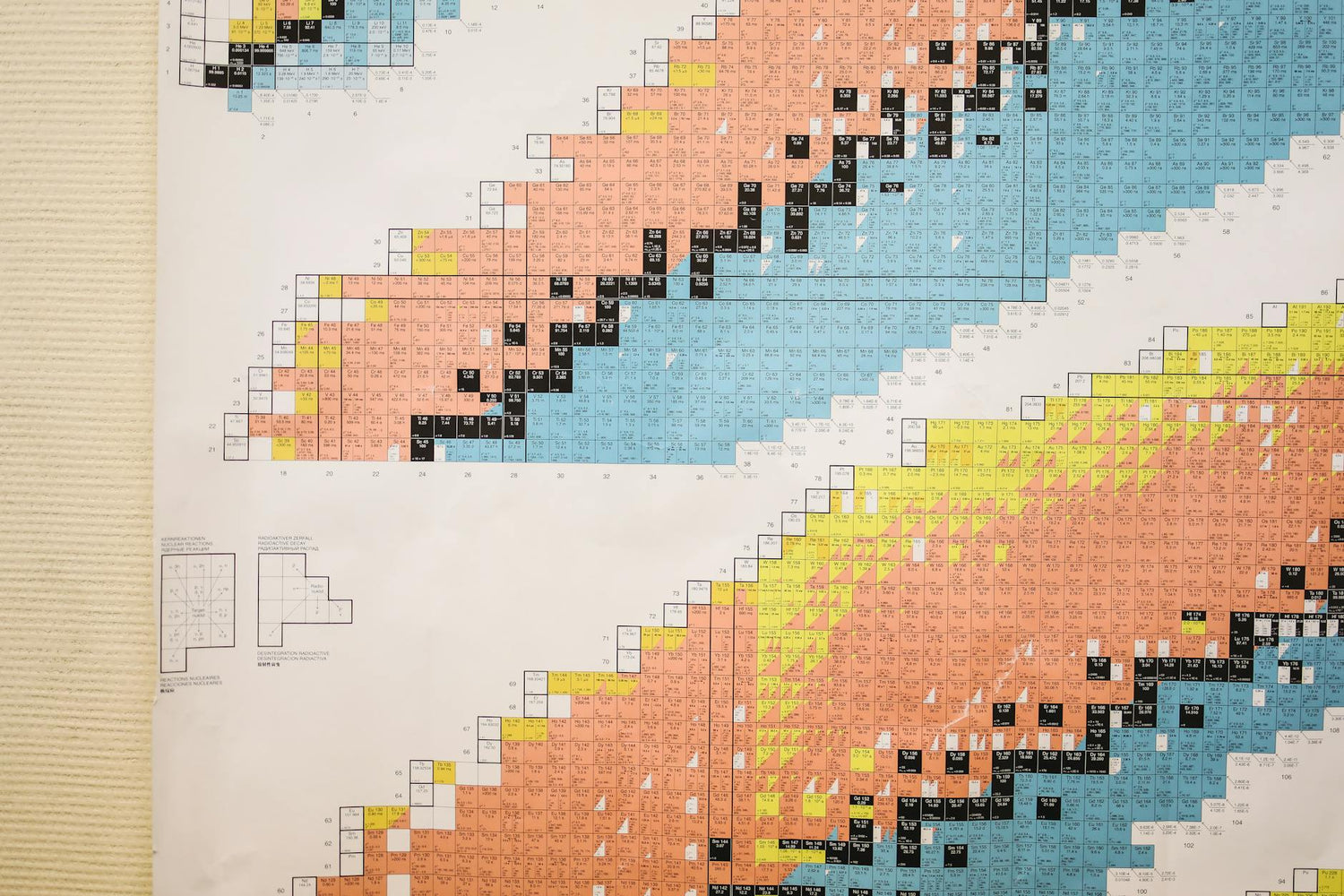
The History of Scientific Illustration: Art Meets Science
Long before the invention of photography, the only way to capture the wonders of the natural world was through the careful, skilled hand of an artist. Scientific illustration stands at one of the most fascinating crossroads in human history, where curiosity meets creativity, and where knowledge is made visible. From the anatomical drawings of Renaissance masters to the bold, graphic posters of the Space Age, the history of science posters and scientific imagery is a story of collaboration, discovery, and enduring beauty. These works were not merely decorative; they were the engines of intellectual progress.
The Renaissance Origins: When Artists Became Scientists

The story of scientific illustration begins in earnest during the Renaissance, a period when the boundaries between art and science were gloriously blurred. Leonardo da Vinci is perhaps the most celebrated example of this fusion, producing thousands of anatomical sketches that combined extraordinary artistic precision with a scientist's insatiable need to understand. His drawings of the human heart, musculature, and skeletal system were not simply beautiful, they were revelatory, offering insights that would not be surpassed for generations. Da Vinci's notebooks remind us that the act of drawing something carefully is itself a form of deep scientific thinking.
Alongside da Vinci, the Flemish anatomist Andreas Vesalius transformed medicine forever with his landmark 1543 publication De Humani Corporis Fabrica. This monumental work featured breathtaking woodcut illustrations, likely produced in collaboration with artists from the workshop of Titian, depicting the human body with unprecedented accuracy and artistic grandeur. Vesalius understood that illustration was not a luxury but a necessity, without images, the complexity of human anatomy simply could not be communicated to students and physicians across Europe. These early scientific prints set a standard for clarity, detail, and aesthetic ambition that would define the field for centuries to come.
What made these Renaissance works so enduring was the understanding that a great scientific illustration must do two things simultaneously: it must be accurate enough to teach, and compelling enough to inspire. The artists who produced these images were not passive recorders; they made interpretive decisions about perspective, shading, and composition that shaped how entire generations understood the natural world. In many ways, the science posters history we celebrate today begins right here, in the candlelit studios of sixteenth-century Europe.
The Age of Exploration: Cataloguing a New World

As European explorers ventured into previously uncharted territories during the sixteenth, seventeenth, and eighteenth centuries, they brought artists with them as essential members of their expeditions. The natural world they encountered, tropical plants, exotic animals, unfamiliar geological formations, was so strange and varied that words alone could never do it justice. Botanical and zoological illustration became a critical scientific discipline, with artists like Maria Sibylla Merian producing work of such extraordinary quality that it remains scientifically valuable to this day. Her 1705 masterpiece documenting the insects and plants of Suriname is a landmark in both scientific illustration history and the history of art.
These expeditionary illustrations were often published in lavish folio volumes that circulated among scientists, aristocrats, and curious minds across Europe. Works such as John James Audubon's Birds of America achieved a scale and ambition that was almost theatrical, with life-sized depictions of North American birds rendered in dynamic, almost cinematic compositions. Audubon's prints are among the finest examples of antique science posters in existence, blending scientific rigor with a painterly sensibility that has never been equaled. These images did not simply document nature, they celebrated it, turning the act of scientific observation into something approaching worship.
The economic and cultural significance of these illustrated volumes cannot be overstated. They were expensive to produce and eagerly sought by collectors, establishing a tradition of scientific imagery as both an intellectual resource and a prestige object. This dual identity, educational tool and aesthetic treasure, is one that the finest vintage science posters have carried ever since, and it is precisely what makes them so compelling as objects to display in the home today.
Victorian Diagrams: Science for the People

The nineteenth century brought with it a democratizing impulse in science communication, driven by the rapid expansion of public education, the growth of scientific societies, and a general enthusiasm for what the Victorians called "natural philosophy." Large-format educational diagrams began appearing in schools, lecture halls, and public institutions across Britain, Europe, and North America, designed to make the principles of biology, chemistry, physics, and geology accessible to ordinary people. These charts were bold, clear, and visually striking, they had to be readable from the back of a crowded classroom, which gave them a graphic directness that feels remarkably modern.
Publishers such as Deyrolle in France and various German educational houses produced thousands of these wall charts, covering subjects from the anatomy of the frog to the structure of the cosmos. The illustrations were often produced using chromolithography, a printing technique that allowed for rich, layered colors and fine detail at a relatively affordable cost. These Victorian-era educational prints are among the most sought-after antique science posters in the collector's market today, prized for their combination of scientific content and graphic beauty. They represent a moment when the ambition to educate the public and the desire to create something visually magnificent were perfectly aligned.
The Victorian enthusiasm for science as a public good also produced a remarkable variety of popular science publications, from illustrated magazines to pocket-sized field guides, all of which relied on skilled illustrators to bring their content to life. This period firmly established the idea that scientific knowledge should be visually engaging as well as intellectually rigorous, a principle that continues to shape the way we think about aesthetic science posters and science-inspired decoration today. If you are drawn to the world of scientific decoration, exploring our biology-themed ambiance collection offers a wonderful way to bring this Victorian spirit into your own space.
The Golden Age of Scientific Atlases and Anatomical Art

Between the seventeenth and early twentieth centuries, the scientific atlas reached its fullest expression as a form of illustrated knowledge. These were not merely books, they were monuments to human curiosity, produced with extraordinary care and expense, intended to serve as definitive references for entire fields of study. Anatomical atlases in particular represent some of the most visually stunning achievements in the entire history of scientific illustration, combining meticulous observation with compositions of almost theatrical drama. Works such as Bernhard Albinus's Tabulae Sceleti et Musculorum Corporis Humani placed dissected human figures against elaborate pastoral backgrounds, creating images that were simultaneously scientific documents and baroque works of art.
The tradition of the scientific atlas extended far beyond anatomy. Geological atlases mapped the hidden strata of the earth; astronomical atlases charted the stars and planets with painstaking precision; botanical atlases catalogued the plant kingdoms of the world in volumes of breathtaking scope. Ernst Haeckel's Kunstformen der Natur, published between 1899 and 1904, remains one of the most celebrated works in scientific illustration history, depicting radiolarians, jellyfish, and other organisms with a symmetrical, almost psychedelic beauty that directly influenced the Art Nouveau movement. Haeckel's plates are among the most recognizable examples of cool science posters from this era, reproduced and displayed in homes and galleries around the world to this day.
What united all of these great atlases was the belief that the act of looking carefully at the natural world, and rendering what one saw with skill and honesty, was a form of reverence. The illustrators who produced these works were not simply craftspeople executing instructions; they were interpreters, translating the raw data of observation into images that could move, inspire, and educate. This is a tradition we are proud to honor at Science Decor, and it is one reason why our Ernst Haeckel Radiolaria art print has become one of our most beloved offerings.
The Space Age and the Rise of the Modern Science Poster

The mid-twentieth century brought a dramatic new chapter to the science posters history, one defined by bold graphic design, vibrant color, and the collective excitement of the Space Age. NASA's illustrated mission posters and space exploration graphics became some of the most iconic images of the twentieth century, combining scientific information with the visual language of commercial advertising to create works of extraordinary popular appeal. The Jet Propulsion Laboratory's "Visions of the Future" series, released in 2016 as a tribute to this golden era, imagined interplanetary travel in the style of vintage WPA travel posters and instantly became a cultural phenomenon, downloaded millions of times and displayed in homes, offices, and schools worldwide.
The appeal of these Space Age science posters lies in their ability to make the vast and abstract feel immediate and personal. By depicting distant planets and galaxies in the warm, inviting style of a holiday brochure, they invited viewers to imagine themselves as participants in the great adventure of space exploration rather than passive observers. This transformation of scientific imagery into aspirational art is one of the defining characteristics of the modern science poster, and it explains why vintage science posters from this era continue to command such enthusiasm among collectors and decorators alike. For those who share this passion for the cosmos, our science posters collection brings together some of the finest examples of this tradition.
The Space Age also coincided with major advances in printing technology that made high-quality color reproduction more accessible than ever before, allowing science posters to reach a truly mass audience for the first time. This democratization of scientific imagery meant that a beautiful, accurate depiction of the solar system or the periodic table could hang in any classroom, any home, any office, no longer confined to the libraries of the wealthy or the walls of institutions. The modern science poster had arrived, and it brought with it a new understanding of the relationship between scientific knowledge and everyday life.
Scientific Illustration Today: A Living Tradition

Far from being a relic of the past, scientific illustration is a thriving discipline in the twenty-first century, practiced by a new generation of artists who combine traditional draftsmanship with digital tools to produce work of remarkable sophistication. Medical illustrators, natural history artists, and science communicators continue to create images that explain, inspire, and delight, working for publishers, museums, universities, and research institutions around the world. The fundamental challenge remains the same as it was for da Vinci or Haeckel: how do you make the invisible visible, and how do you make the complex comprehensible, without sacrificing accuracy or beauty?
The cultural appetite for scientific imagery has never been greater, driven in part by a renewed public interest in science and in part by the rise of aesthetic movements that celebrate the beauty of knowledge. Cool science posters and aesthetic science posters have become a significant trend in interior decoration, with many people choosing to display scientific prints as a way of expressing their values, their curiosity, and their sense of style simultaneously. This is not a superficial trend, it reflects a deep and genuine appreciation for the tradition of scientific illustration that stretches back five centuries, and for the idea that learning and beauty are not opposites but natural companions.
At Science Decor, we believe that surrounding yourself with scientific imagery is a way of keeping curiosity alive in everyday life. Whether you are drawn to the dramatic anatomical engravings of the Renaissance, the lush botanical plates of the Age of Exploration, the crisp educational diagrams of the Victorian era, or the bold graphic energy of Space Age illustration, there is a science poster that speaks to your particular sense of wonder. The history of scientific illustration is, at its heart, a history of human beings trying to understand their world and share that understanding with others, and that is a story that never grows old.
Bringing Scientific Art Into Your Home

Displaying scientific illustration in the home is a practice with a long and distinguished history, one that connects you to a tradition of intellectual curiosity and aesthetic appreciation stretching back to the Renaissance. In the great houses of Europe, natural history prints and anatomical engravings were displayed alongside paintings and sculptures as evidence of their owners' education and refinement. Today, science posters serve a similar function, they signal a love of knowledge, a respect for the natural world, and an eye for beauty that goes beyond the merely decorative. They are conversation starters, teaching tools, and works of art all at once.
When selecting science posters for your home, it is worth thinking about the tradition behind the image you choose. A reproduction of a Haeckel plate carries with it the full weight of nineteenth-century natural philosophy; a NASA space poster connects you to one of the greatest collective adventures in human history; a vintage anatomical diagram speaks to centuries of medical inquiry and artistic dedication. The best science posters are those that reward repeated looking, images that reveal new details, provoke new questions, and deepen your appreciation of the subject with every glance. Pairing a striking science poster with complementary objects, such as a carefully curated astronomy-themed collection, can transform a wall into a genuine statement of intellectual identity.
The history of scientific illustration teaches us that art and science have always needed each other. Without art, science remains locked in the minds of specialists; without science, art can lose its connection to the world as it actually is. The finest scientific illustrations, from da Vinci's anatomical studies to NASA's interplanetary travel posters, are proof that these two great human endeavors are most powerful when they work together. We invite you to explore our collections and find the image that brings your own sense of scientific wonder to life.
We hope this journey through the history of scientific illustration has deepened your appreciation for these extraordinary works and the tradition they represent. Whether you are a lifelong science enthusiast or simply someone who appreciates beautiful, meaningful art, there has never been a better time to bring the legacy of scientific illustration into your home. Browse our full range of science posters and scientific decoration at Science Decor, and discover the piece that speaks to your curiosity, because the best decoration is always the kind that makes you think.



Leave a comment
All comments are moderated before being published.
This site is protected by hCaptcha and the hCaptcha Privacy Policy and Terms of Service apply.