

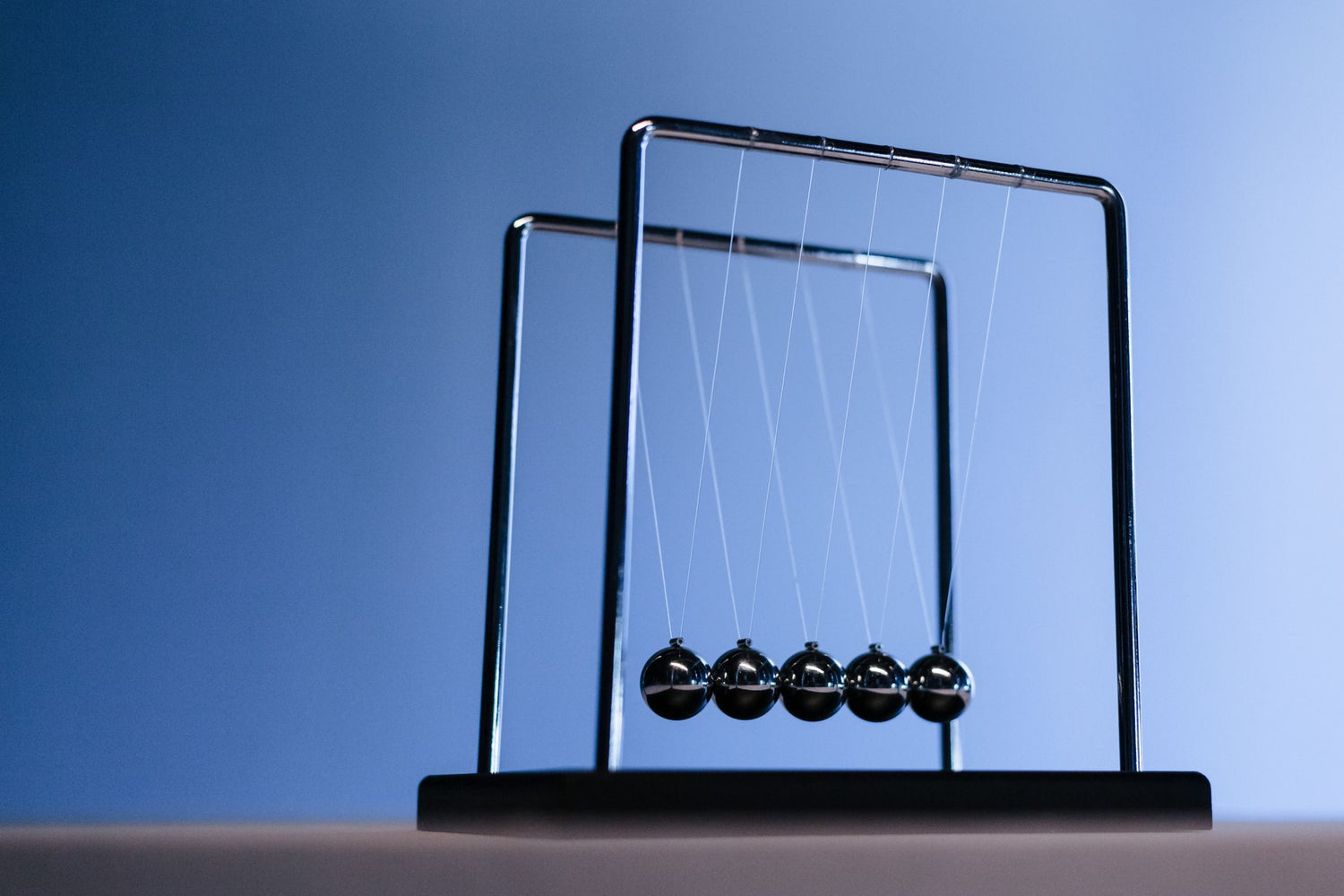
Best Newton's Cradle Balance Balls: How to Choose Yours
Few objects on a desk manage to be simultaneously scientific, meditative, and visually stunning, and yet the Newton's Cradle does all three with effortless grace. That rhythmic click, that hypnotic swing, that perfect demonstration of physics in motion: it is no wonder this iconic instrument has endured for decades as a staple of thoughtful interiors. But with so many models available today, choosing the best Newton's Cradle balance balls for your space requires more than a quick glance at the price tag. This guide is here to help you make the right choice, one that suits both your aesthetic vision and your appreciation for elegant science.
What Makes a Newton's Cradle Truly High Quality?

Before diving into styles and sizes, it is worth understanding what separates a mediocre model from a high quality Newton's Cradle. The most important factor is the precision of the ball alignment. When the balls are not perfectly calibrated in size and weight, the energy transfer becomes uneven, the swing loses its satisfying rhythm, and the visual effect falls flat. A well-crafted Newton's Cradle should sustain its pendulum motion for a noticeable duration without dampening too quickly.
The material of the balls themselves plays a critical role. Solid steel balls are the gold standard, they offer the density and hardness needed for a clean, elastic collision that transfers momentum with minimal energy loss. Chrome-plated steel adds a polished reflective surface that catches light beautifully, making the object as decorative as it is functional. Avoid models with hollow or plastic balls, as these compromise both the swing quality and the longevity of the piece.
The suspension system is equally important. The strings, typically nylon monofilament, must be taut, evenly spaced, and attached at precise angles to ensure each ball hangs in perfect alignment. Any slack or asymmetry in the strings will disrupt the Newton's Cradle pendulum motion and reduce the visual clarity of the physics at work. When evaluating a model, look for clean attachment points and a sturdy frame that holds everything firmly in place over time.
Frame Material: Chrome, Wood, or Acrylic?
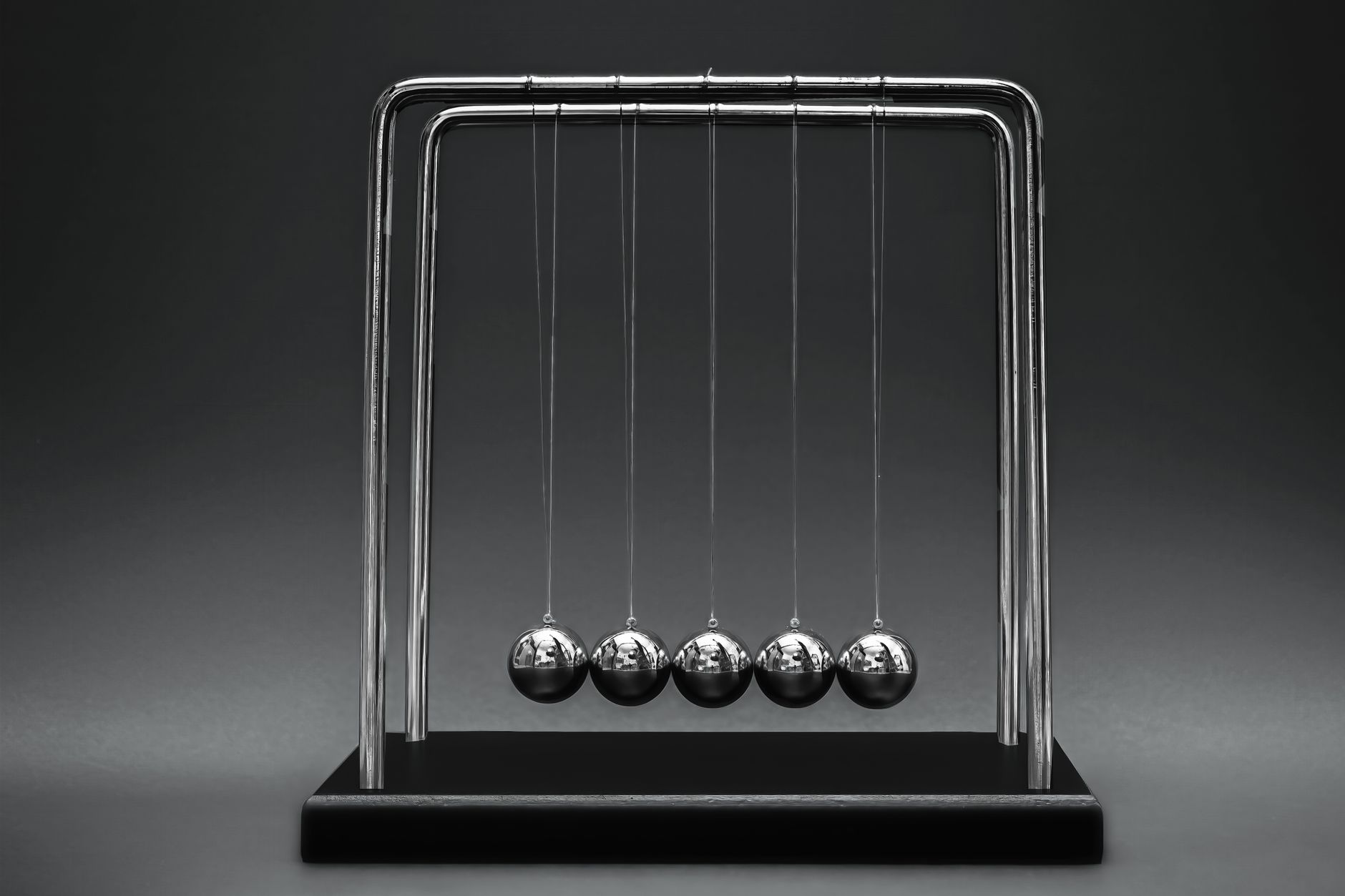
The frame of a Newton's Cradle is not just a structural necessity, it is a major design statement. The three most common frame materials are chrome metal, natural wood, and acrylic, and each one speaks to a very different interior sensibility. Understanding which frame suits your space is the first step toward choosing a model that truly elevates your decor rather than simply occupying space on a shelf.
Chrome frames are the classic choice. Their sleek, mirror-like finish pairs naturally with the polished steel balls, creating a cohesive, high-contrast object that feels both industrial and refined. A chrome Newton's Cradle sits beautifully on a glass desk, a metal shelving unit, or any workspace that leans toward a modern or industrial aesthetic. The reflective surfaces interact with ambient light throughout the day, giving the object a dynamic, almost living quality even when it is at rest.
Wooden frames, on the other hand, bring warmth and organic texture to the equation. A Newton's Cradle with a walnut or bamboo frame feels at home in Scandinavian-inspired interiors, mid-century modern offices, or any space that balances natural materials with clean lines. The contrast between the warm wood base and the cool silver balls creates a visual tension that is deeply satisfying. Acrylic frames offer a third path, nearly invisible, they allow the balls and their motion to take center stage, making them ideal for minimalist spaces where every element must justify its presence.
Size Matters: Finding the Right Scale for Your Space

Newton's Cradles come in a surprisingly wide range of sizes, from compact desktop models measuring just 10 centimeters wide to large statement pieces exceeding 30 centimeters. Choosing the right size is essential, a model that is too small will look insignificant and fail to command attention, while one that is too large may overwhelm a modest desk or shelf. The goal is to find a scale that feels intentional and balanced within its environment.
For a standard office desk or work-from-home setup, a medium-sized model with balls approximately 2.5 to 3 centimeters in diameter tends to strike the ideal balance. It is large enough to be noticed and admired, yet compact enough to coexist with a laptop, a lamp, and other desk accessories without creating visual clutter. The Newton's ball swing arc also needs adequate clearance, ensure there is enough vertical space above the frame for the balls to move freely without obstruction.
For a dedicated display shelf, a bookcase, or an open-plan living area, a larger model becomes appropriate, even desirable. A Newton's Cradle with five or seven balls and a wide chrome frame can serve as a genuine focal point, functioning as kinetic art rather than a simple desk toy. In these settings, the object becomes a conversation starter, a visual anchor, and a testament to the beauty of physical laws made visible.
Number of Balls: Does It Change the Experience?
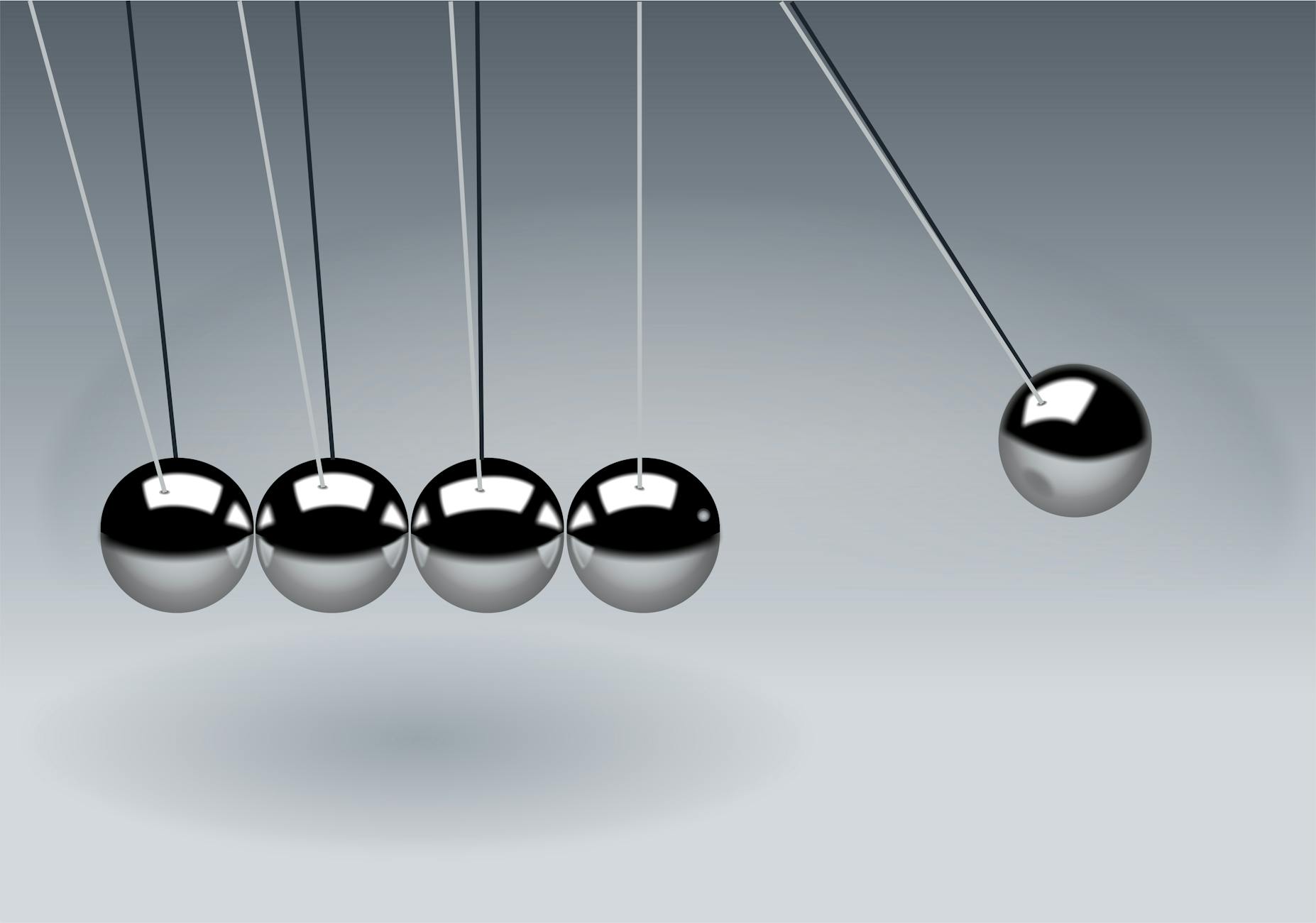
The classic Newton's Cradle features five balls, and this is the configuration we most commonly recommend. Five balls provide the most visually compelling demonstration of momentum transfer, you can release one, two, or three balls at a time, each creating a distinct and satisfying pattern of motion. This versatility makes the five-ball model the most interactive and engaging option for both adults and curious visitors.
Some models feature only three balls, which limits the range of possible interactions and reduces the visual impact of the swing. These smaller configurations are generally better suited for compact spaces where a five-ball model simply would not fit. On the other end of the spectrum, seven-ball models exist and offer an even more dramatic visual effect, though they require a larger frame and more desk real estate. For most buyers, the five-ball Newton's Cradle strikes the perfect balance between functionality, aesthetics, and spatial efficiency.
It is also worth noting that the spacing between the balls matters as much as the number. Balls that are too close together may produce unwanted secondary collisions that muddy the physics demonstration. Balls that are spaced too far apart may lose visual cohesion. A well-engineered model will have balls that just barely touch when at rest, ensuring a clean, precise transfer of energy with every swing.
Matching Your Newton's Cradle to Your Interior Design Style

One of the most rewarding aspects of choosing a Newton's Cradle as a decorative object is how naturally it adapts to different interior styles, provided you select the right model. For a minimalist interior, an acrylic-framed Newton's Cradle with polished steel balls is the ideal choice. Its near-invisible structure keeps the focus on form and motion, aligning perfectly with the minimalist philosophy of removing everything that does not serve a clear purpose.
In an industrial-style space, think exposed brick, metal shelving, and raw wood surfaces, a chrome-framed Newton's Cradle feels entirely at home. The metallic sheen of the frame and balls echoes the material palette of the room while adding a layer of intellectual sophistication. Pair it with other physics-inspired objects, such as pieces from our physical science collection, to create a cohesive, curiosity-driven vignette on a shelf or console table.
For a classic or traditional interior, one that favors rich wood tones, leather accents, and timeless furnishings, a Newton's Cradle with a wooden frame is the natural fit. It reads as a refined gentleman's study piece, evoking the spirit of the great scientific thinkers of the past. Placed on a mahogany desk alongside a leather-bound notebook and a brass lamp, it transforms the workspace into something genuinely memorable. The key in every case is intentionality: the Newton's Cradle should feel chosen, not merely placed.
Where to Buy Newton's Cradle Balance Balls and What to Look For

When you are ready to buy a Newton's Cradle, it is important to prioritize quality over price. The market is flooded with low-cost imitations that look appealing in photographs but disappoint in person, poorly aligned balls, flimsy frames, and strings that lose tension within weeks. Investing in a well-crafted model from a reputable source ensures that your Newton's Cradle remains a source of daily delight for years, not months.
We recommend exploring our curated collection of Newton's Cradle balance balls, where each model has been selected for its build quality, aesthetic appeal, and accuracy of motion. Whether you are drawn to a sleek chrome desktop model or a statement-making wooden-frame version, you will find options that meet both your decorative and scientific standards. Pay close attention to product descriptions that mention ball material, frame construction, and string type, these details reveal the true quality of the piece.
For those seeking a specific recommendation, our chrome steel Newton's Cradle with five balls is a perennial favorite. It combines precision-engineered steel balls with a robust chrome frame, delivering a swing that is as satisfying as it is long-lasting. It is the kind of object that earns its place on a desk not just as a conversation piece, but as a daily reminder that the laws of physics are endlessly, beautifully reliable.
Conclusion
Choosing the best Newton's Cradle balance balls is ultimately an exercise in knowing yourself, your space, your style, and what you want an object to say about you. A thoughtfully chosen Newton's Cradle is not a toy; it is a kinetic sculpture, a physics lesson, and a design statement all at once. Whether you are drawn to the cool precision of chrome, the warmth of wood, or the quiet elegance of acrylic, there is a model that will feel perfectly at home in your space. We invite you to explore our collection, take your time, and choose the Newton's Cradle that speaks to both your intellect and your eye, because the best science decor always does both.



Leave a comment
All comments are moderated before being published.
This site is protected by hCaptcha and the hCaptcha Privacy Policy and Terms of Service apply.