


How Does a Lava Lamp Work? Density, Buoyancy & Convection
Few objects on a shelf can stop a conversation quite like a lava lamp. Those slow, hypnotic blobs of color rising and falling in an endless cycle seem almost alive, and in a sense, they are driven by the same fundamental forces that shape our planet's weather and geology. But what is actually happening inside that glass vessel? The answer lies in a beautiful interplay of heat, density, buoyancy, and convection that any curious mind can appreciate. In this article, we break down the physics of a lava lamp step by step, so you can watch yours with a whole new sense of wonder.
The Ingenious Ingredients: Two Fluids That Refuse to Mix

The first secret of a lava lamp is hidden in its chemistry: the lamp contains two substances that are carefully chosen to be immiscible, meaning they do not dissolve into each other. In most classic lava lamps, the "lava" is a translucent wax compound, and the surrounding liquid is typically a mixture of water and a solvent such as mineral spirits or a similar clear fluid. Just as oil and water refuse to blend no matter how vigorously you shake them, the wax and the liquid in a lava lamp remain permanently separated into distinct phases.
This immiscibility is not an accident, it is the entire foundation of the lamp's behavior. If the two substances were to mix, you would simply end up with a cloudy, homogeneous fluid and no motion whatsoever. The fact that the wax always forms discrete blobs is what gives the lamp its iconic appearance. The boundary between the two phases, called an interface, is where surface tension acts to keep each blob cohesive and rounded rather than fragmenting into a fine mist.
Choosing the right pair of materials also requires a precise match of densities, a concept we will explore in depth in the next section. The formulation of a commercial lava lamp is surprisingly precise chemistry: manufacturers must balance the density of the wax against the density of the liquid so that small changes in temperature tip the balance back and forth. This careful calibration is what transforms a simple bottle of two fluids into a mesmerizing kinetic sculpture.
Density and Buoyancy: The Heart of Lava Lamp Science

To understand lava lamp science, one must first grasp the concept of density. Density is simply the amount of mass packed into a given volume, expressed as mass per unit volume (g/cm³). A material that is denser than the fluid surrounding it will sink; a material that is less dense will float. This is the principle articulated by Archimedes more than two thousand years ago: an object immersed in a fluid experiences an upward buoyant force equal to the weight of the fluid it displaces.
In a lava lamp at rest and at room temperature, the wax sits at the bottom of the vessel. This tells us that the wax is very slightly denser than the surrounding liquid when both are cool. The difference in density is remarkably small, often just a fraction of a percent, but it is enough to keep the wax firmly on the bottom when the lamp is off. This razor-thin margin is precisely engineered, because if the wax were significantly denser, no amount of heating would ever lift it off the floor of the lamp.
When the lamp is switched on and the wax warms up, its density decreases, a phenomenon we will examine in the next section. As soon as the wax becomes slightly less dense than the surrounding liquid, the buoyant force acting on it exceeds its weight, and the blob rises. When it cools near the top of the lamp, its density increases again, the buoyant force drops below its weight, and it sinks. The entire motion of a lava lamp is therefore a continuous, thermally driven dance of density differences. This is also the principle behind our Galileo thermometer collection, where calibrated glass spheres rise and fall in liquid to indicate temperature, a beautiful cousin of the lava lamp concept.
Thermal Expansion: Why Heat Changes Everything

Heat is the engine that powers the lava lamp's motion, and it works through a property called thermal expansion. Almost all materials expand when heated and contract when cooled, because rising temperature causes molecules to vibrate more energetically and push apart from one another. The key insight for lava lamp physics is that different materials expand at different rates. The wax used in a lava lamp expands significantly more than the surrounding liquid when both are heated by the same amount.
This difference in thermal expansion coefficients is what makes the magic happen. When the lamp is cold, the wax is denser than the liquid. As the bulb at the base heats the lamp, both the wax and the liquid expand, but the wax expands faster. At a precise crossover temperature, the expanding wax reaches the same density as the liquid, and then, as it continues to warm, it becomes ever so slightly less dense. At that moment, buoyancy wins, and the blob begins its graceful ascent toward the top of the lamp.
Once a wax blob drifts away from the heat source at the bottom and rises toward the cooler top of the lamp, it begins to lose heat to the surrounding liquid and to the glass walls. As it cools, it contracts, its density increases, and gravity reasserts itself. The blob then sinks back toward the warm base, where the cycle begins again. This self-regulating feedback loop, heat, expand, rise, cool, contract, sink, is what keeps the lamp in perpetual, self-sustaining motion for as long as the bulb remains lit.
Convection Currents: The Invisible Force Behind the Flow

The motion inside a lava lamp is a vivid, visible example of a convection current. Convection is the transfer of heat through the bulk movement of a fluid, driven by density differences created by temperature gradients. Warmer, less dense fluid rises; cooler, denser fluid sinks. This creates a circulating loop, a convection cell, that continuously moves material from the hot zone to the cool zone and back again. In most everyday situations, convection is invisible, but a lava lamp makes it strikingly apparent.
The wax blobs themselves are not the only things moving in a lava lamp. The surrounding liquid also participates in convection: warm liquid near the base rises along with the wax, while cooler liquid near the top descends along the sides of the vessel. This creates a gentle, organized flow pattern throughout the entire lamp. The wax blobs are essentially carried along by, and also contributing to, this broader circulatory system within the glass.
It is worth noting that the lava lamp convection current is a beautifully controlled example of a phenomenon that operates at vastly larger scales in nature. The same principle governs the circulation of air in Earth's atmosphere, the movement of ocean currents, and even the slow churning of rock in Earth's mantle over millions of years. Every time you watch a lava lamp, you are observing the same fundamental process that drives weather systems and continental drift, just compressed into a glass vessel on your desk. For those who love exploring the physics of heat and motion, you may also enjoy browsing our physical science décor collection for more inspiring objects.
The Role of the Bulb and the Base: Engineering the Perfect Gradient
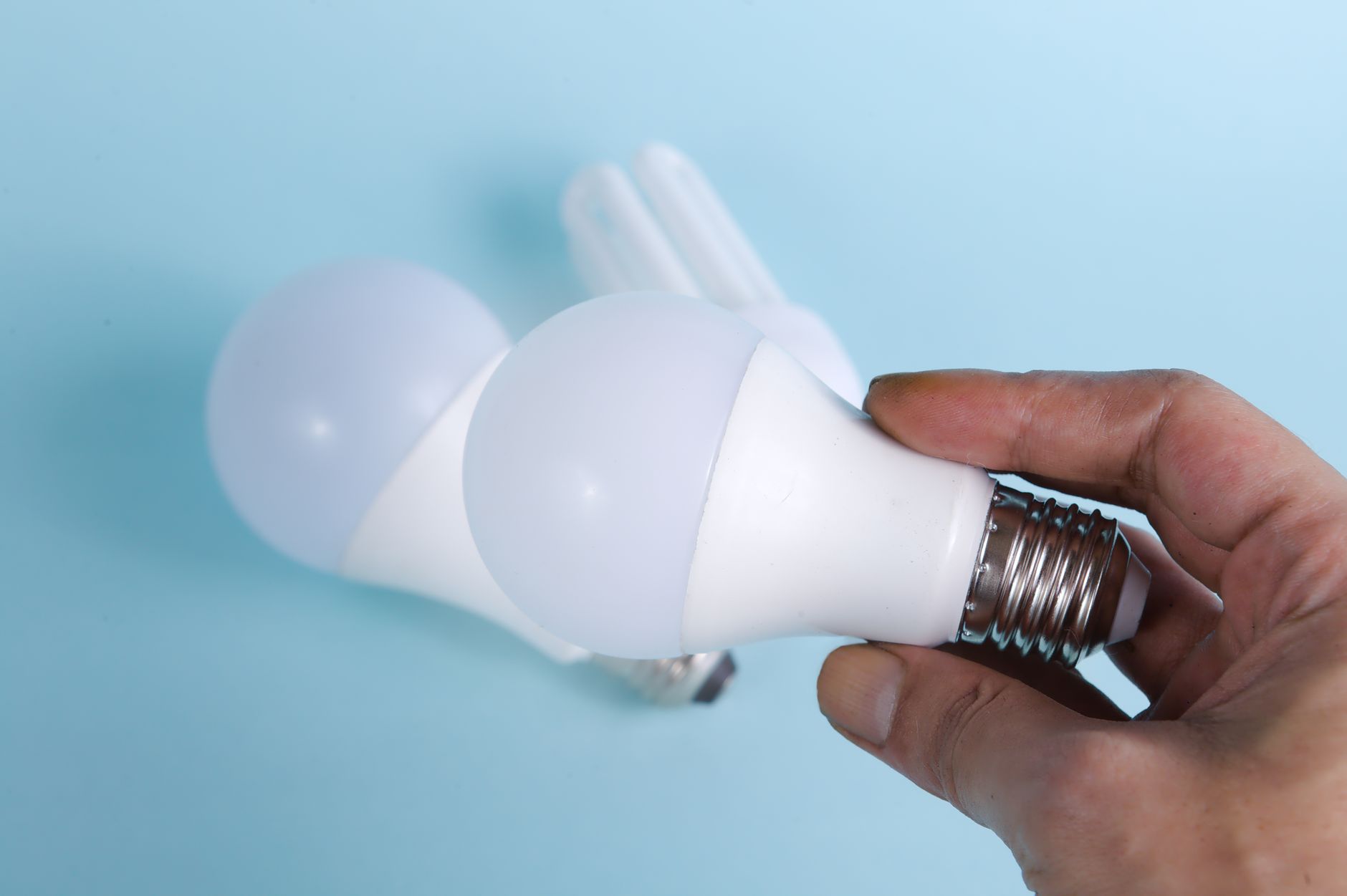
A lava lamp would be nothing more than a static bottle without its carefully designed heat source. The incandescent bulb housed in the base of the lamp serves a dual purpose: it provides the light that illuminates the wax blobs from below, and it generates the precise amount of heat needed to drive the convection cycle. The position of the bulb directly beneath the wax is critical, it ensures that the wax at the bottom of the vessel is always the warmest part of the system, creating the upward temperature gradient that convection requires.
The base also acts as a thermal regulator of sorts. Because the bulb is enclosed within a metal or ceramic housing, heat is conducted through the base and into the liquid at a steady, controlled rate. If the heat source were too powerful, the wax would melt entirely and float as a single mass at the top; if it were too weak, the wax would never reach its crossover density and would remain permanently on the floor. The wattage of the bulb is therefore a precisely matched component of the overall system, not an afterthought.
This is why it is important never to replace a lava lamp bulb with one of a significantly different wattage. A higher-wattage bulb can overheat the lamp, causing the wax to lose its coherent blob structure and turn the liquid permanently cloudy, a condition sometimes called "snowing." Respecting the engineering of the lamp preserves both its beauty and its physics. If you are looking for a premium example of this timeless design, explore our classic motion lava lamp, which balances aesthetics and precision engineering in equal measure.
Lava Lamp Convection in the Real World: From Mantle to Atmosphere

One of the most remarkable things about a lava lamp is how faithfully it mirrors processes that operate on a planetary scale. Earth's mantle, the thick layer of semi-solid rock between the crust and the core, undergoes convection in almost exactly the same way as the wax in a lava lamp. Rock heated by the planet's interior becomes slightly less dense and rises slowly toward the surface; cooler rock near the top sinks back down. This process, operating over hundreds of millions of years, is what drives the movement of tectonic plates and the recycling of Earth's crust.
The atmosphere provides another striking parallel. Warm air near the Earth's surface is less dense than the cool air above it, so it rises, carrying heat and moisture upward. As it rises, it cools, becomes denser, and descends again, completing a convection cell. These atmospheric convection cells are responsible for trade winds, monsoons, thunderstorms, and much of the weather we experience daily. The same physics that makes a lava lamp blob rise on a warm afternoon is responsible for the formation of a summer thunderstorm.
Even the sun operates on convection: the granules visible on the solar surface are the tops of enormous convection cells in which hot plasma rises from the interior, releases energy as light, cools, and sinks back down. From the microscopic to the cosmic, convection driven by density and buoyancy is one of the universe's most universal and elegant mechanisms. The next time you watch a lava lamp, consider that you are holding a miniature model of forces that have shaped planets, weather, and stars across the history of the cosmos.
Conclusion
A lava lamp is far more than a retro decoration, it is a working physics demonstration that elegantly illustrates density, buoyancy, thermal expansion, and convection all at once. The slow rise and fall of each wax blob encodes the same principles that drive Earth's weather, ocean currents, and tectonic activity. Understanding the science behind it does not diminish its beauty; if anything, it deepens the sense of wonder that comes from watching it move. We hope this exploration of lava lamp science has given you a new appreciation for the extraordinary physics hiding in plain sight on your shelf. Browse our lava lamp collection to find the perfect model to bring these principles to life in your own home or office.


Leave a comment
All comments are moderated before being published.
This site is protected by hCaptcha and the hCaptcha Privacy Policy and Terms of Service apply.