


How Does a Galileo Thermometer Work? Density & Buoyancy
Few objects on a desk or windowsill invite as much curiosity as a Galileo thermometer, those elegant glass cylinders filled with colored floating spheres that seem to defy gravity in the most graceful way. At first glance, it looks like pure magic: some bulbs drift lazily to the top while others sink to the bottom, and the cluster in the middle shifts depending on the room temperature. In reality, the device is a beautifully simple demonstration of two of the most fundamental principles in physics: thermal expansion and buoyancy. Join us as we unpack the science behind this centuries-old instrument, from its surprising history to the precise engineering that makes every bulb rise and fall exactly as intended.
A Brief History: Was It Really Galileo's Invention?

Despite carrying his name for centuries, the Galileo thermometer was not actually invented by Galileo Galilei himself. The device we recognize today was developed around 1654 by a group of Italian scientists known as the Accademia del Cimento, the Academy of Experiment, based in Florence. This academy was founded under the patronage of the Medici family and was deeply inspired by Galileo's scientific methods, which is almost certainly how his name became permanently attached to the instrument.
What Galileo did contribute, however, was the underlying scientific concept. Around 1593, he invented an early thermoscope, a rudimentary device that used the expansion of air to indicate temperature changes in water. The Accademia del Cimento took this foundational idea and refined it into a sealed, liquid-filled glass tube containing calibrated floating bulbs, producing something far closer to the elegant instrument we know today. Galileo's thermometer, in its modern form, is therefore a collaborative legacy, born from one genius's insight and perfected by the curious minds who followed him.
This historical nuance matters because it reflects how science truly works: through iteration, collaboration, and refinement over generations. The thermometer's journey from Galileo's open-air thermoscope to the sealed, decorative instrument sitting on your shelf spans more than sixty years of scientific progress. It is a reminder that even the most elegant inventions rarely spring fully formed from a single mind.
What Liquid Is Inside a Galileo Thermometer?

To understand how a Galileo thermometer works, we must first identify its key components. The tall outer cylinder, almost always made of borosilicate glass for clarity and thermal stability, is filled with a carefully chosen liquid. The most common liquid used in the outer tube is a highly purified form of ethanol, or a mixture of ethanol and water, though some manufacturers use other organic solvents with similar thermal properties. The critical requirement is that this liquid must change its density noticeably and predictably as temperature fluctuates.
Inside the outer liquid float a series of sealed glass bulbs, typically between five and eleven in number. Each bulb is filled with a different colored liquid, usually a mixture of water and a food-safe dye, that gives the thermometer its signature jewel-like appearance. The liquid inside the bulbs does not change significantly with temperature; its role is primarily aesthetic and to provide a fixed mass inside each sphere. The real action happens in the outer liquid surrounding the bulbs, whose density shifts as the temperature rises and falls.
The choice of liquid for the outer tube is therefore not arbitrary. It must have a coefficient of thermal expansion large enough to produce measurable density changes across the typical indoor temperature range, roughly 60°F to 80°F (16°C to 27°C). Ethanol-based solutions are ideal because they expand and contract significantly with temperature, making the density shifts large enough to move the bulbs reliably without requiring extreme temperature swings to produce any visible effect.
Archimedes' Principle and the Science of Buoyancy

To truly grasp how a Galileo thermometer works, we need to revisit one of the oldest and most elegant principles in physics: Archimedes' principle. Stated simply, any object submerged in a fluid experiences an upward buoyant force equal to the weight of the fluid it displaces. If that buoyant force is greater than the object's own weight, the object floats; if it is less, the object sinks. This principle, discovered by the ancient Greek mathematician Archimedes around 250 BCE, is the engine that drives every movement inside the thermometer.
Each glass bulb in a Galileo thermometer is manufactured with an extremely precise mass. The bulb's weight, the combination of the glass shell, the colored liquid inside, and any additional metal ballast, is calibrated so that it is almost exactly equal to the weight of the outer liquid it displaces at a specific temperature. At that target temperature, the bulb is in a state of neutral buoyancy: it neither rises nor falls, but simply hovers. This delicate balance is what makes the instrument work as a thermometer rather than just a decorative curiosity.
When the outer liquid's density changes, because the room temperature has shifted, the buoyant force acting on each bulb changes too. A bulb that was neutrally buoyant at 72°F will suddenly find itself either too light to sink or too heavy to float if the temperature moves away from that value. This chain reaction of rising and sinking bulbs, each calibrated to a different temperature, is what allows the thermometer to display the ambient temperature with surprising elegance. The physics involved is the same principle that keeps ships afloat and hot-air balloons aloft.
How Liquid Density Changes With Temperature
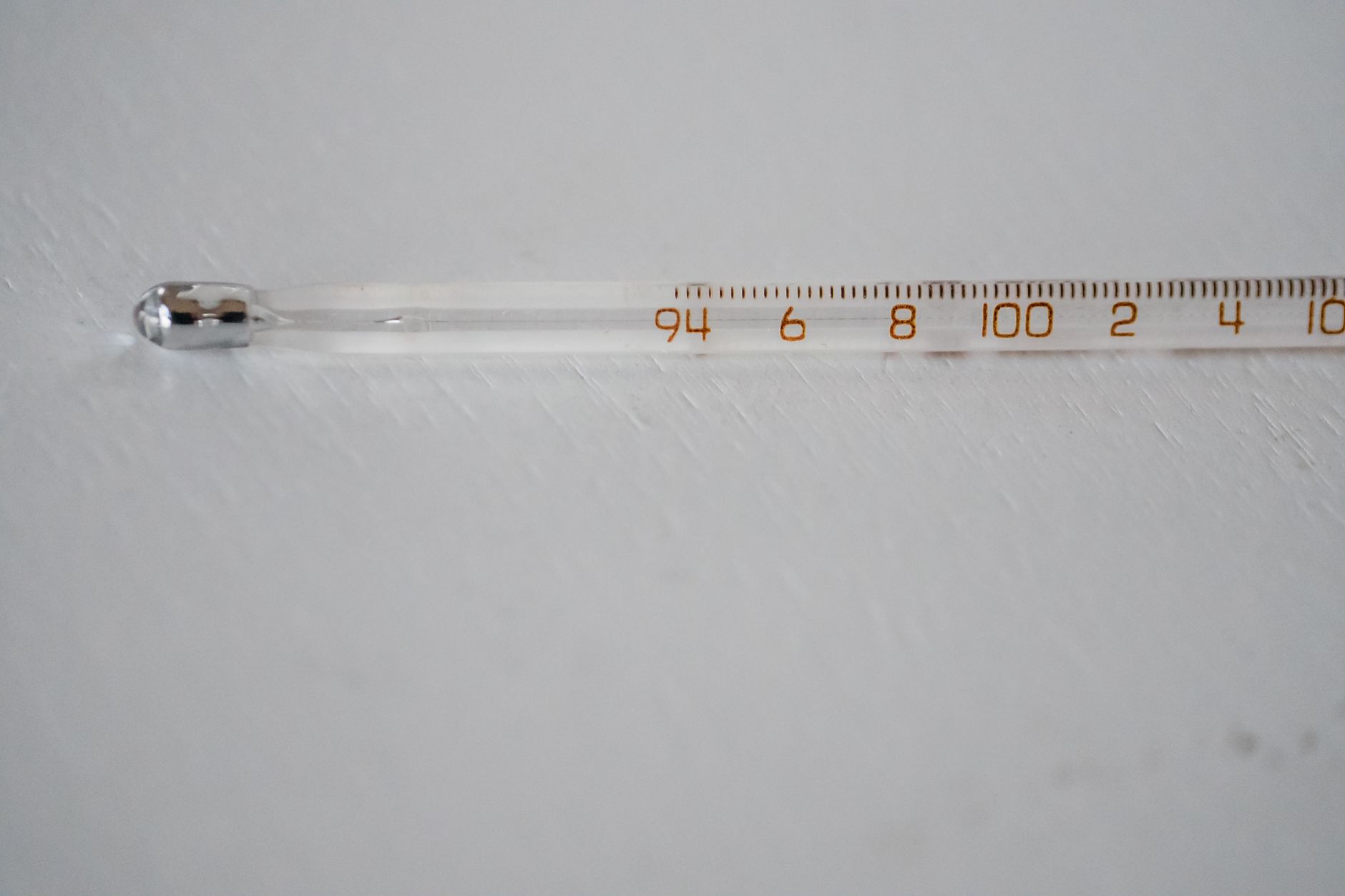
Density is the key variable in a Galileo thermometer, and understanding how it responds to temperature is essential. Density is defined as mass divided by volume. When a liquid is heated, its molecules move faster and spread farther apart, causing the liquid to expand, its volume increases while its mass stays the same. The result is a lower density. Conversely, when a liquid cools, its molecules slow down and pack more tightly together, increasing the density. This relationship between temperature and density is the invisible hand that orchestrates all movement inside the thermometer.
The outer liquid in a Galileo glass thermometer is chosen precisely because it exhibits a strong, linear, and predictable density change across the indoor temperature range. For every degree of temperature increase, the liquid becomes measurably less dense. This means that a bulb calibrated to float at 68°F will sink when the temperature rises to 70°F, because the liquid around it has become lighter, it can no longer support the bulb's weight with sufficient buoyant force. The bulb does not change; the fluid around it does. This is the core insight that makes the device work.
It is worth noting that water, by contrast, would be a poor choice for the outer tube because of its famous density anomaly: water reaches its maximum density at 39.2°F (4°C) and actually becomes less dense as it approaches freezing. This non-linear behavior would make calibration extremely difficult. Ethanol and similar organic liquids do not share this anomaly, which is why they are the preferred medium for Galileo thermometers and why the instrument remains reliably accurate across its intended temperature range.
The Metal Tags: Calibrated Counterweights Explained

Look closely at any quality Galileo thermometer and you will notice that each colored bulb has a small metal tag hanging from it, typically stamped with a temperature in either Fahrenheit, Celsius, or both. These tags are far more than decorative labels, they are precision counterweights that are individually calibrated during the manufacturing process. The tag on each bulb is adjusted in weight so that the total mass of the bulb-plus-tag assembly causes that bulb to sink at temperatures above the printed value and float at temperatures below it.
The calibration process is remarkably precise. Manufacturers test each bulb in a controlled-temperature bath, adding or trimming tiny amounts of metal from the tag until the bulb achieves neutral buoyancy at exactly the right temperature. Even a difference of a few milligrams can shift a bulb's calibration point by a full degree, which is why high-quality Galileo thermometers are noticeably more expensive than mass-produced versions. The tags on cheaper models are often stamped uniformly, which is why their accuracy can be inconsistent.
The tags also serve a secondary purpose: they ensure that the bulbs remain oriented correctly inside the tube, with the tag hanging below the bulb. This keeps the center of mass low and prevents the bulbs from tumbling or clustering randomly. In a well-made thermometer, the bulbs separate into a clear floating group at the top and a sinking group at the bottom, with the temperature indicated by the lowest floating bulb, the one just barely maintaining its position above the cluster of sunken bulbs. This is the bulb whose calibrated temperature corresponds most closely to the current room temperature.
How to Read a Galileo Thermometer, and How Accurate Is It?

Reading a Galileo thermometer correctly takes just a moment of attention once you understand the principle. The bulbs will always separate into two distinct groups: those floating at the top and those resting at the bottom. The temperature is indicated by the tag on the lowest bulb in the floating group, that is, the bulb that is barely managing to stay afloat. If the bulbs are bunched together in the middle and not clearly separating, the thermometer is transitioning between two temperature readings, and the true temperature lies between the two closest tags.
As for accuracy, a well-calibrated Galileo thermometer is accurate to within approximately 2°F (1°C), which makes it a scientifically valid, if approximate, instrument. It will never replace a digital thermometer for precision applications, but it is perfectly adequate for monitoring comfortable room temperatures and is far more accurate than many people assume. Its range is typically limited to the 64°F–80°F (18°C–27°C) band, because outside that range all the bulbs either float or sink together, rendering the device unreadable.
One important practical note: keep your Galileo thermometer away from direct sunlight and drafts. Because the instrument responds to the temperature of the liquid inside it, which must equilibrate with the surrounding air, placing it near a sunny window or an air conditioning vent will cause it to display the temperature of that localized microclimate rather than the true room temperature. Give it fifteen to twenty minutes to stabilize whenever it is moved, and it will reward you with a reading that is both scientifically meaningful and visually captivating. For those who appreciate the intersection of science and beauty, exploring our collection of Galileo thermometers is a wonderful place to start.
Why the Galileo Thermometer Endures as a Scientific Decoration
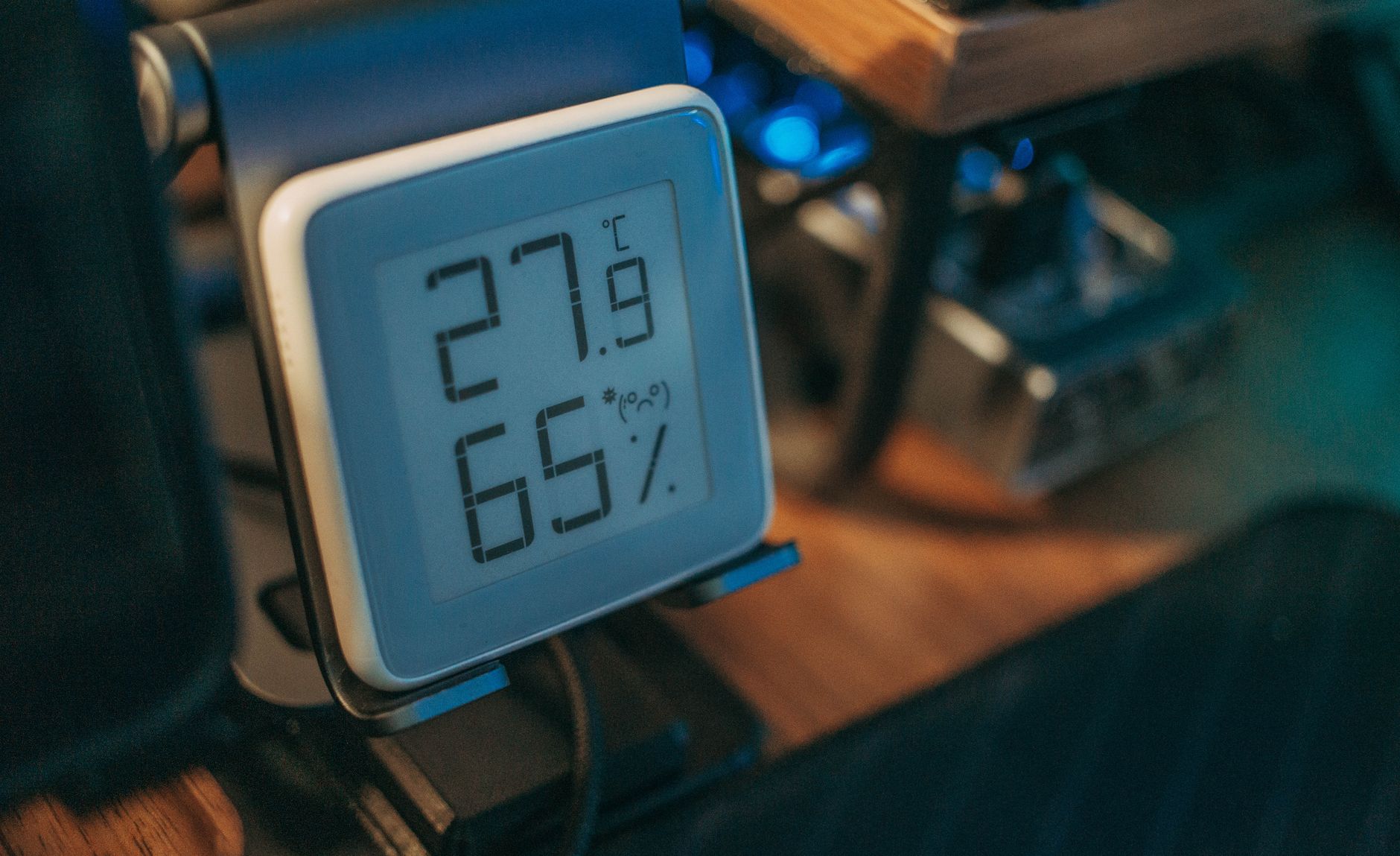
In an age of digital sensors and smart home devices, the Galileo thermometer has not only survived but thrived as a beloved object. Its appeal lies in the fact that it makes invisible physics visible. Every time a bulb drifts silently upward or settles gently to the bottom, it is performing a live demonstration of Archimedes' principle, thermal expansion, and fluid dynamics, concepts that underpin everything from weather forecasting to aerospace engineering. No screen or readout can match the quiet drama of watching colored spheres respond to the warmth of a room.
The device also occupies a rare space in the world of decorative objects: it is genuinely functional. Unlike many ornaments that merely allude to science, a Galileo thermometer actually measures something real and does so through a mechanism that has remained unchanged for nearly four centuries. This combination of historical depth, physical elegance, and practical utility is why it sits comfortably alongside other classic instruments in the broader world of physical science decoration, objects that transform scientific principles into everyday beauty.
Whether displayed in a home office, a classroom, or a living room, the Galileo thermometer serves as a daily reminder that the natural world operates according to precise, discoverable laws. It invites questions, sparks conversations, and rewards curiosity with clear, observable answers. For anyone looking to add a specific showpiece to their space, our large borosilicate Galileo thermometer offers exceptional clarity and calibration precision, making it as impressive a scientific instrument as it is a decorative one.
Conclusion
The Galileo thermometer is one of those rare inventions that becomes more impressive the more you understand it. What appears to be a simple decorative object is in fact a precision instrument built on centuries of scientific insight, from Archimedes' ancient observations about buoyancy to the Florentine experimenters who first sealed colored bulbs in ethanol and watched them dance with the temperature. Every rising bulb is a physics lesson; every sinking sphere is a demonstration of density in action. We hope this deep dive has deepened your appreciation for this timeless instrument and the elegant science it embodies. If you are ready to bring a piece of that science into your own space, browse our full range and find the Galileo thermometer that speaks to your curiosity.



Leave a comment
All comments are moderated before being published.
This site is protected by hCaptcha and the hCaptcha Privacy Policy and Terms of Service apply.