


How Do Bismuth Crystals Form? The Science of Hopper Crystals
Few objects on a collector's shelf stop visitors in their tracks quite like a bismuth crystal. With its geometric staircase structure and shimmering rainbow surface, it looks less like something pulled from the Earth and more like an artifact from another dimension. Yet every iridescent angle and every mirrored step is the direct result of elegant, well-understood physics and chemistry. In this article, we unpack exactly how these remarkable structures form, why they glow with color, and what makes them such compelling scientific display pieces.
What Makes Bismuth So Unusual Among Metals?

Bismuth sits at atomic number 83 on the periodic table, nestled between lead and polonium, and it behaves in ways that consistently surprise people who expect metals to act predictably. One of its most counterintuitive properties is that it expands when it solidifies, the same rare behavior shared by water and a handful of other substances. Most metals contract as they cool from liquid to solid, but bismuth does the opposite, making it exceptionally useful in casting applications and also critically important to understanding how its crystals grow.
Bismuth also has a remarkably low melting point for a metal: just 271.5°C (520.7°F). This means it can be melted on a standard kitchen stovetop using a stainless steel pot, making it one of the most accessible metals for home crystal-growing experiments. Its low thermal conductivity means it loses heat slowly and unevenly, a property that, as we will explore, plays a direct role in the formation of its signature stepped geometry.
Beyond its thermal quirks, bismuth is also diamagnetic, it is repelled by magnetic fields rather than attracted to them, and it is one of the least electrically conductive metals. It is also considered essentially non-toxic compared to its neighbor lead, which is part of why it has replaced lead in many applications from fishing weights to shotgun pellets. These combined properties make bismuth a genuinely unusual element, and one that rewards close study.
The Geometry of Growth: How Hopper Crystals Form

The distinctive stair-stepped shape of bismuth crystals belongs to a category known as hopper crystals, a term that describes any crystal where the edges and corners grow faster than the interior faces. The name comes from the resemblance to an old-fashioned grain hopper, a funnel-like structure that is hollow in the center. Understanding why the edges grow faster requires a brief look at the thermodynamics of crystallization.
When molten bismuth begins to cool, atoms start organizing themselves into a crystalline lattice. The edges and corners of a growing crystal are energetically favored sites for new atoms to attach because they offer more bonding opportunities, an incoming atom at a corner can bond to neighbors on multiple faces simultaneously. The flat center of a crystal face, by contrast, offers fewer bonding sites and so grows more slowly. This differential growth rate causes the characteristic recessed, terraced appearance that makes bismuth crystals so visually dramatic.
The specific geometry of bismuth's hopper crystals is also governed by its crystal system: bismuth crystallizes in the rhombohedral system, which produces the square, right-angled steps we associate with the finished piece. As the crystal grows layer by layer from the outside edges inward, each successive layer is slightly smaller than the one before, creating the iconic staircase effect. The slower the cooling process, the more pronounced and well-defined these steps become, which is why controlled, gradual cooling is the key to producing display-quality specimens.
The Rainbow Effect: Thin-Film Interference and Bismuth Oxide

The colors that shimmer across a bismuth crystal's surface are not pigments, dyes, or coatings applied after the fact. They are a purely physical phenomenon called thin-film interference, and they arise from the same underlying physics that makes oil slicks on a puddle appear rainbow-colored. When bismuth is exposed to air as it cools, a thin layer of bismuth oxide (Bi₂O₃) forms spontaneously on the surface. This oxide layer is transparent but extremely thin, measured in nanometers.
Light striking this oxide layer is partially reflected from the top surface and partially transmitted through to the metallic bismuth beneath, where it reflects again. These two reflected beams travel slightly different distances before reaching your eye, and depending on the thickness of the oxide layer and the wavelength of the light, they either reinforce or cancel each other. Wavelengths that reinforce appear bright; wavelengths that cancel appear absent. The result is that different thicknesses of oxide produce different colors, golds, purples, blues, greens, and reds, all from a single, colorless compound.
The exact colors seen on any given bismuth crystal depend on how quickly the surface was exposed to air during cooling and at what temperature. Crystals removed from the melt at higher temperatures develop thicker oxide layers and tend toward gold and purple hues. Those removed at lower temperatures, where oxidation is slower, may show blues and greens. This sensitivity to cooling conditions means that no two bismuth crystals are ever exactly alike in their color distribution, a fact that makes each specimen genuinely one of a kind.
Why Are Nearly All Rainbow Bismuth Crystals Lab-Grown?

If you have ever searched for bismuth crystals for sale, you may have noticed that the vast majority of specimens described as "rainbow" or "iridescent" are labeled as laboratory-grown rather than natural. This is not a marketing shortcut, it reflects a genuine reality about how bismuth behaves in nature. Natural bismuth does occur in the Earth's crust, typically as a native element in hydrothermal veins alongside ores of silver, cobalt, and nickel. However, natural specimens are almost always dull gray or silver in color and lack the dramatic staircase geometry of lab-grown pieces.
The reason comes back to the conditions required for hopper crystal formation. In nature, bismuth crystallizes under enormous pressure, surrounded by other minerals, and over geological timescales that do not favor the clean, unobstructed growth needed to produce well-defined steps. The iridescent oxide layer also requires rapid exposure to air at just the right temperature, a condition that simply does not occur underground. Lab-grown bismuth crystals, by contrast, are produced in a controlled environment where the melt can be slowly cooled in open air, the crystal extracted at precisely the right moment, and the oxidation allowed to proceed under observation.
Growing bismuth crystals at home or in a laboratory setting is a surprisingly accessible process. The metal is melted in a crucible, allowed to cool until a skin forms on the surface, and then the remaining liquid is carefully poured off, leaving the growing crystal suspended. Timing is everything: pour too early and the crystal is underdeveloped; wait too long and the crystal re-melts or becomes trapped in solidified bismuth. This delicate balance between science and craft is part of what gives each lab-grown specimen its character and value.
Are Bismuth Crystals Fragile? Handling and Display Considerations
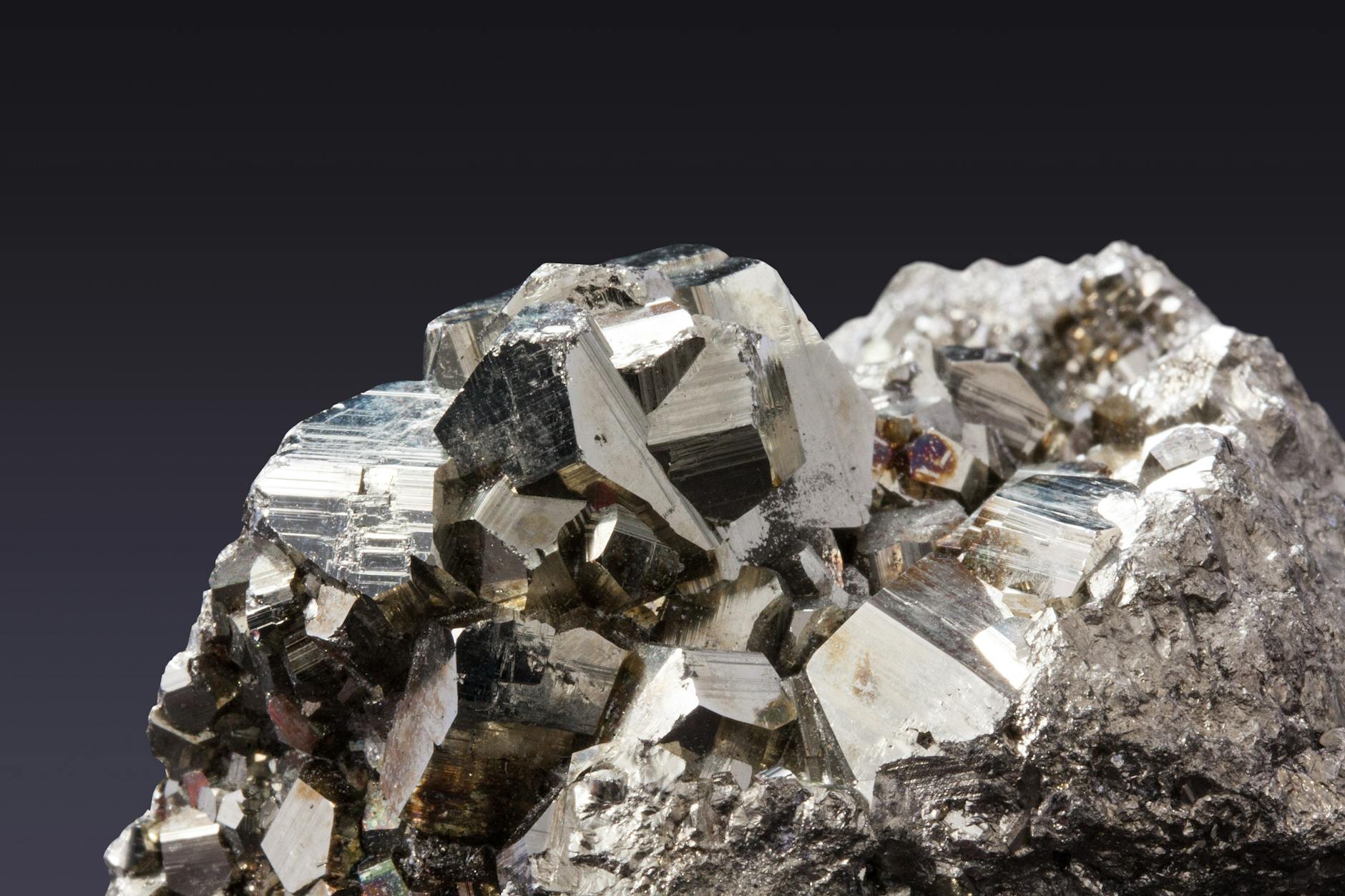
One of the most common practical questions about bismuth crystals concerns their durability. The honest answer is that bismuth crystals are moderately fragile and should be handled with care. Bismuth as a metal is notably brittle compared to most other metals, it lacks the ductility of copper or iron, meaning it does not bend under stress but instead fractures. The thin, stepped walls of a hopper crystal are particularly vulnerable to impact, and a drop onto a hard surface will almost certainly break off some of the delicate terraced edges.
The iridescent oxide layer, while chemically stable under normal indoor conditions, can also be affected by handling. Oils from skin can gradually dull the surface over time, and the colors may shift slightly if the crystal is exposed to high humidity or acidic environments for extended periods. For display purposes, we recommend placing bismuth crystals on a stable base, a small acrylic or wooden stand works well, and positioning them away from high-traffic areas where they might be accidentally knocked. A glass dome or display case provides an additional layer of protection while still allowing the full visual impact to be appreciated.
Despite their fragility, bismuth crystals are remarkably stable under normal room conditions. They will not tarnish dramatically the way silver does, and the colors, once formed, are essentially permanent as long as the oxide layer remains intact. If a crystal does chip or break, the fresh bismuth surface exposed will be a dull silver-gray, a stark contrast to the surrounding iridescence that makes the damage immediately visible. This is another reason why careful display is so important for preserving the aesthetic integrity of these pieces over time.
What Makes Bismuth Crystals Collectible Scientific Display Pieces?

Bismuth crystals occupy a rare and appealing niche: they are simultaneously genuine scientific specimens and objects of striking visual beauty. Unlike many decorative items that merely reference science in their aesthetic, a bismuth crystal is the science, every color, every angle, and every step is a direct, visible expression of physical and chemical laws. This authenticity resonates strongly with collectors who want their display pieces to carry intellectual weight as well as visual impact. For those who appreciate science-themed décor, bismuth crystals sit alongside objects like our collection of crystals and gemstones as tangible connections to the natural world.
Part of what drives collectibility is the sheer variety achievable within a single material. Because the color distribution, step definition, and overall shape of each crystal depend on dozens of variables during growth, cooling rate, ambient temperature, air circulation, the exact moment of extraction, no two bismuth crystals are identical. Collectors can build a display of a dozen specimens and find genuine visual diversity across all of them. Size also varies considerably, from small cabinet pieces a few centimeters across to impressive statement specimens that can span 15 centimeters or more and weigh several hundred grams.
Bismuth crystals also serve as excellent conversation starters and educational tools. Placed on a desk or shelf, they naturally invite questions: What is that? How does it get those colors? Why does it look like stairs? Each question opens a door to a genuinely fascinating explanation rooted in real physics and chemistry. For anyone interested in the broader world of geology and mineralogy, we invite you to explore our geology collection, where bismuth crystals sit alongside a curated range of specimens that celebrate the science of the Earth. For those who want a specific statement piece, our large rainbow bismuth crystal is a particularly striking example of what controlled crystallization can achieve.
Conclusion
Bismuth crystals are a perfect illustration of a truth that scientists and designers both appreciate: the most beautiful things are often the most honest ones. Every iridescent color is a direct consequence of light physics; every geometric step is the inevitable result of crystallization thermodynamics; every unique specimen is shaped by the precise conditions of its creation. There is no artifice here, only nature, guided by careful hands, doing what it does best. We hope this exploration of the science behind bismuth crystals has deepened your appreciation for these extraordinary objects and the elegant principles that bring them into being. If you are ready to add one to your own collection or give one as a gift that genuinely sparks curiosity, browse our selection and find the specimen that speaks to you.


Leave a comment
All comments are moderated before being published.
This site is protected by hCaptcha and the hCaptcha Privacy Policy and Terms of Service apply.