

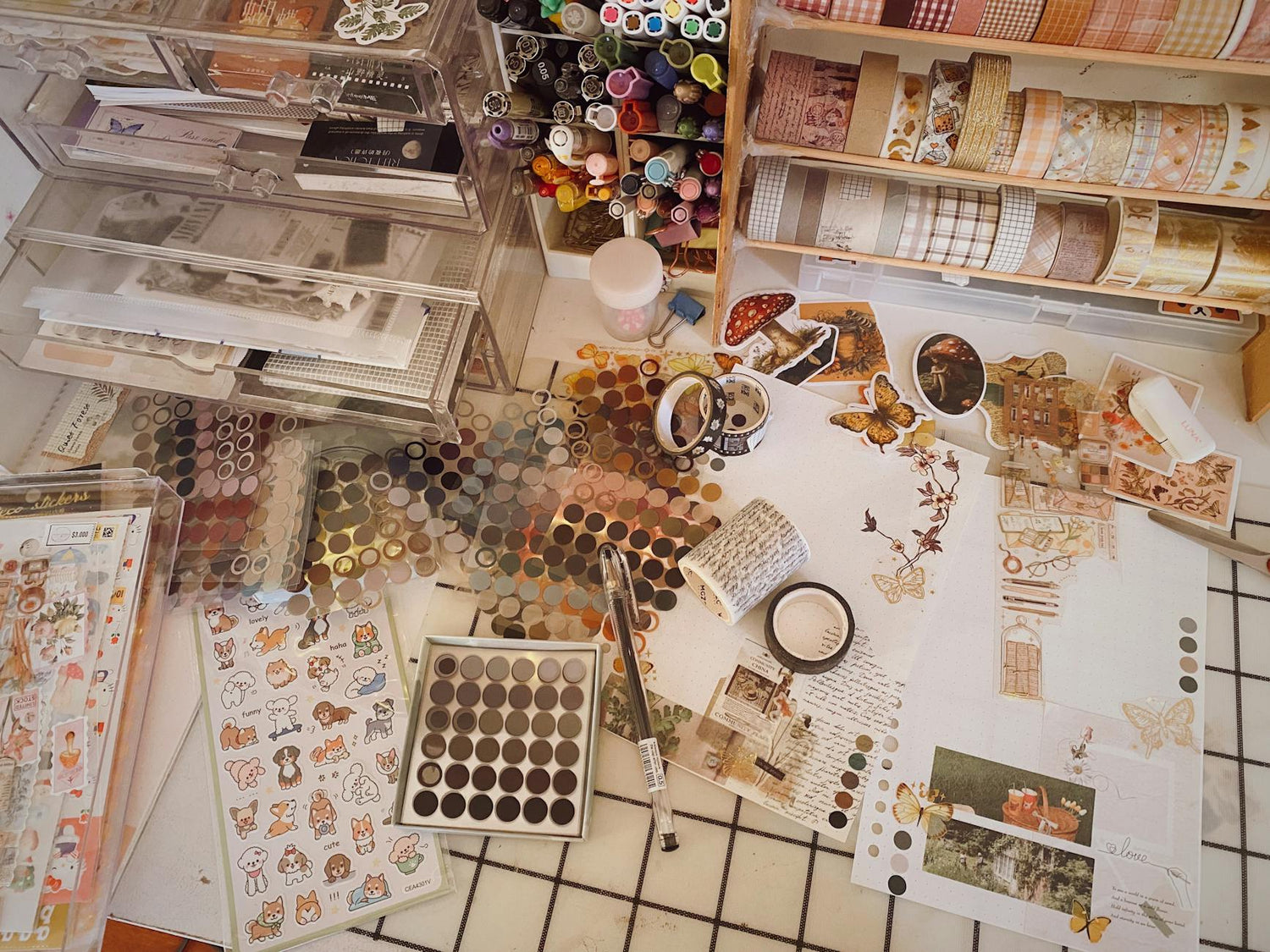
Science Stickers: The Ultimate Guide to Decorating Your Walls
If you have ever looked at a blank wall and thought it deserved something more than a coat of paint, you are not alone. Science stickers are one of the most versatile, affordable, and visually striking ways to transform any room into a space that celebrates curiosity and discovery. Whether you are designing a playful bedroom for a young explorer or a sophisticated home office for a seasoned researcher, the right sticker can say everything about who you are. In this guide, we walk you through every step of the process, from choosing a scientific discipline to layering stickers with posters for a complete, gallery-worthy wall.
Why Science Stickers Are the Smartest Decorating Choice

Decorating with science stickers offers a rare combination of flexibility and personality that few other wall treatments can match. Unlike paint or wallpaper, stickers can be repositioned, replaced, or removed entirely without damaging your walls, a major advantage for renters, students, and anyone who likes to refresh their space regularly. They are also available in an enormous range of sizes, from tiny molecular formulas to large-format constellation maps that can anchor an entire wall.
From an interior design perspective, science stickers work because they introduce both pattern and meaning into a space. A well-placed DNA helix or a detailed solar system diagram does not just fill empty space, it tells a story about the person who lives there. Cool science stickers can function as conversation starters, educational tools, and genuine works of art all at once. That triple role is something very few decorative elements can claim.
There is also a practical dimension worth noting. Science stickers are among the most budget-friendly ways to achieve a high-impact look, especially when you layer them thoughtfully with other elements. We will explore exactly how to do that throughout this guide, so keep reading to discover how a few well-chosen stickers can completely redefine the character of a room.
Choosing the Right Scientific Discipline for Your Space

The first decision you will face is choosing which branch of science to celebrate on your walls. This choice should reflect both your personal interests and the mood you want to create in the room. Astronomy stickers, planets, star maps, nebulae, and rocket ships, bring a sense of wonder and expansiveness that works beautifully in bedrooms, living rooms, and children's play areas. Their deep blues, purples, and blacks naturally evoke calm and imagination.
Chemistry stickers, featuring molecular structures, periodic table elements, and laboratory glassware, tend to feel more graphic and precise. They are an excellent fit for home offices, studios, and kitchens, where their clean lines and intellectual associations reinforce a sense of focus and creativity. If you are drawn to the organic and living world, biology-themed stickers, cell diagrams, botanical illustrations, and anatomical sketches, bring warmth and complexity to any wall. For a full immersive experience in this discipline, explore our biology-themed decor collection, which pairs perfectly with botanical sticker arrangements.
Physics stickers deserve a special mention for their graphic versatility. Wave functions, circuit diagrams, and force vectors have an almost architectural quality that suits minimalist and industrial interiors especially well. The key is to commit to one primary discipline per room, then use stickers from related fields as subtle accents, this creates visual coherence without making the space feel like a textbook.
Room-by-Room Styling Guide for Science Wall Decor

Every room in your home presents a unique opportunity to use science wall decor in a way that feels intentional and curated. In a child's bedroom, the priority is wonder and engagement. Science stickers for kids should be large, colorful, and packed with detail that rewards a second look, think oversized planet clusters, friendly atom diagrams, or glow-in-the-dark constellation sets arranged across the ceiling. Pair them with a bright rug and a small bookshelf of illustrated science books to complete the effect.
In a home office or study, the approach shifts toward sophistication. Here, a restrained arrangement of monochromatic stickers, black or white line drawings of mathematical equations, circuit schematics, or anatomical cross-sections, creates a focused, intelligent atmosphere without overwhelming the space. Consider placing them asymmetrically around a central framed print or science poster to build a layered gallery wall. The contrast between the fixed, framed piece and the more spontaneous sticker arrangement gives the wall visual energy.
Living rooms and hallways benefit from a more curated, gallery-style approach. Choose two or three large science stickers with a unified color palette and arrange them along a single wall at eye level. Fun science stickers with a retro or mid-century aesthetic, think Sputnik-era space illustrations or vintage botanical prints, work especially well in common areas because they appeal to guests of all ages and backgrounds. The hallway, often an overlooked space, is perfect for a linear arrangement of small stickers that guide the eye from room to room.
How to Pair Science Stickers with Posters for a Complete Look

One of the most effective techniques in science-themed interior design is combining stickers with framed or unframed science posters to create a layered, gallery-style wall. Stickers provide spontaneity and texture, while posters provide structure and focal points, together, they balance each other beautifully. Start by selecting your anchor poster, ideally a large-format print with strong visual hierarchy, such as a detailed star chart, a periodic table, or a cross-section of the human body.
Once your poster is in place, use smaller stickers to extend its visual language outward across the wall. For example, if your anchor poster features a solar system diagram, surround it with individual planet stickers, constellation line drawings, and small rocket silhouettes at varying distances. This technique, sometimes called "sticker scattering," creates the impression that the poster's world is spilling out beyond its frame, which is both visually dynamic and scientifically poetic. Browse our science posters collection to find anchor prints that pair seamlessly with sticker arrangements.
Color coordination is essential when mixing posters and stickers. If your poster uses a warm, sepia-toned palette, choose stickers in amber, gold, and terracotta to maintain harmony. For cool-toned, space-themed posters, stick to navy, silver, and white stickers. The goal is not uniformity but coherence, a wall where every element feels like it belongs to the same visual conversation, even if each piece was chosen independently.
Color Schemes and Layout Tips for Science Themed Wall Decor

Color is arguably the most powerful tool in any decorator's toolkit, and science themed wall decor gives you a rich palette to work with. For a dramatic, immersive look, build around deep space colors: midnight blue, charcoal, and soft white. These tones work especially well in rooms with low natural light, where they create a cozy, enveloping atmosphere. Astronomy and physics stickers in white or metallic finishes pop beautifully against these dark backgrounds.
If you prefer a lighter, more energetic aesthetic, consider a laboratory-inspired palette of clean white, lime green, and electric blue. This combination suits chemistry and biology stickers particularly well and feels fresh and modern in kitchens, bathrooms, and children's rooms. For a warmer, more vintage feel, earth tones, ochre, rust, sage, and cream, pair wonderfully with botanical biology stickers or antique-style anatomy illustrations.
In terms of layout, there are three fundamental approaches worth knowing. The cluster method groups stickers tightly in one area for maximum impact; the scatter method distributes them loosely across a large surface for an organic, spontaneous feel; and the border method uses stickers to frame a window, door, or piece of furniture, drawing attention to architectural features. Each method works best in different rooms, and you can always combine two techniques on the same wall for added complexity.
Completing Your Science Decor Setup Beyond the Walls
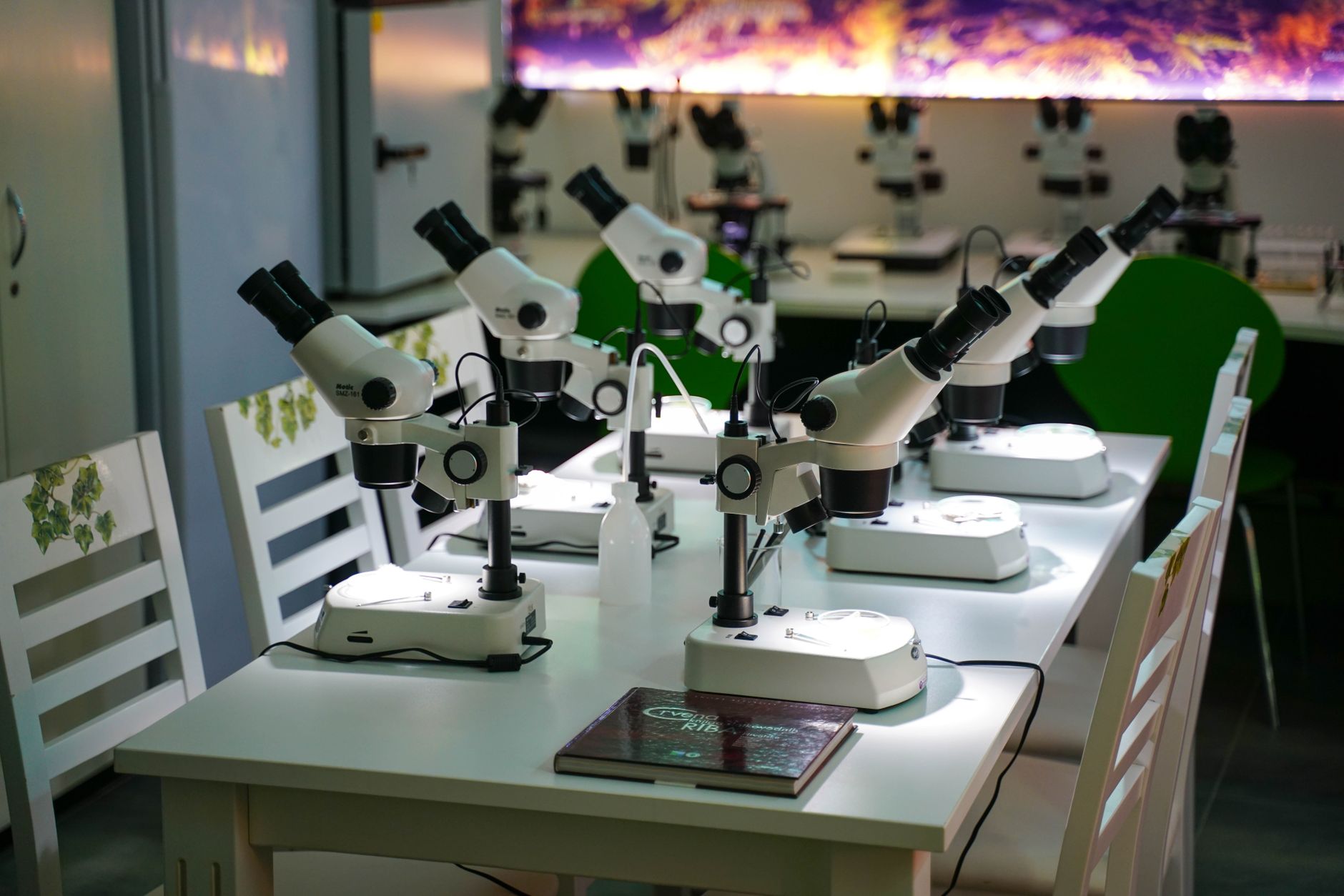
Science stickers are a powerful starting point, but the most memorable rooms are those where the theme extends beyond the walls into three-dimensional space. Pairing your sticker arrangement with a physical science object on a nearby shelf or desk creates a dialogue between the two-dimensional and the three-dimensional that elevates the entire space. A beautifully designed desk accessory can anchor the room's scientific identity in a way that stickers alone cannot.
One particularly elegant pairing is placing astronomy stickers above a shelf that holds a galaxy projector, which casts real star patterns across the ceiling at night. During the day, the stickers carry the astronomical theme; after dark, the projector transforms the room entirely. This kind of layered, time-sensitive decor creates a living environment that changes with the light, one of the hallmarks of truly thoughtful interior design.
Do not overlook the role of lighting in your science decor setup. Warm, directional lighting highlights the texture and detail of both stickers and physical objects, while cool, diffused lighting reinforces a laboratory or space-station atmosphere. The combination of science stickers, science posters, and a carefully chosen science object creates a cohesive, immersive environment that goes far beyond simple decoration, it becomes a genuine expression of intellectual identity and personal passion.
Conclusion
Science stickers are far more than a simple decorating shortcut, they are a flexible, expressive medium that can transform any room into a celebration of human curiosity and discovery. Whether you are creating a wonder-filled space for a young scientist, a focused environment for deep work, or a stylish living room that sparks conversation, the right stickers, paired with posters and physical decor objects, make all the difference. The key is to approach your walls with the same methodical creativity you would bring to any scientific endeavor: observe, hypothesize, experiment, and refine. We invite you to explore our full range of science stickers and start designing the wall you have always imagined.


Leave a comment
All comments are moderated before being published.
This site is protected by hCaptcha and the hCaptcha Privacy Policy and Terms of Service apply.