


How Does a Floating Lamp Work? The Science Behind It
There is something almost magical about a lamp that hovers in mid-air, glowing softly without any visible support. It defies our everyday intuition, making it one of the most captivating objects you can place in a home or office. Yet behind this seemingly impossible feat lies a beautifully elegant branch of physics. In this article, we break down exactly how a floating lamp works, from the fundamental laws of magnetism to the clever engineering that makes it all possible.
The Basic Principle: What Is Magnetic Levitation?

Magnetic levitation, often shortened to "maglev," is the process by which an object is suspended in the air using magnetic forces alone, with no physical contact required. At its core, the principle relies on the interaction between magnetic fields, specifically, the fact that like poles of a magnet repel each other while opposite poles attract. When these forces are balanced precisely against the downward pull of gravity, an object can appear to float effortlessly in space.
In the context of a magnetic levitation lamp, the floating element, whether it is a glowing bulb, a decorative orb, or a miniature planet, contains a permanent magnet inside it. The base of the lamp contains either another set of permanent magnets or, more commonly, a set of electromagnets. The interplay between these magnetic fields is what keeps the floating piece suspended at a fixed distance from the base.
This technology is the same fundamental principle used in high-speed maglev trains and industrial levitation systems. However, miniaturizing it into a beautiful desktop object requires solving a particularly tricky physics problem, one that took scientists and engineers considerable ingenuity to overcome. Understanding that problem is essential to appreciating just how clever these lamps truly are.
Earnshaw's Theorem: Why Levitation Shouldn't Be Possible
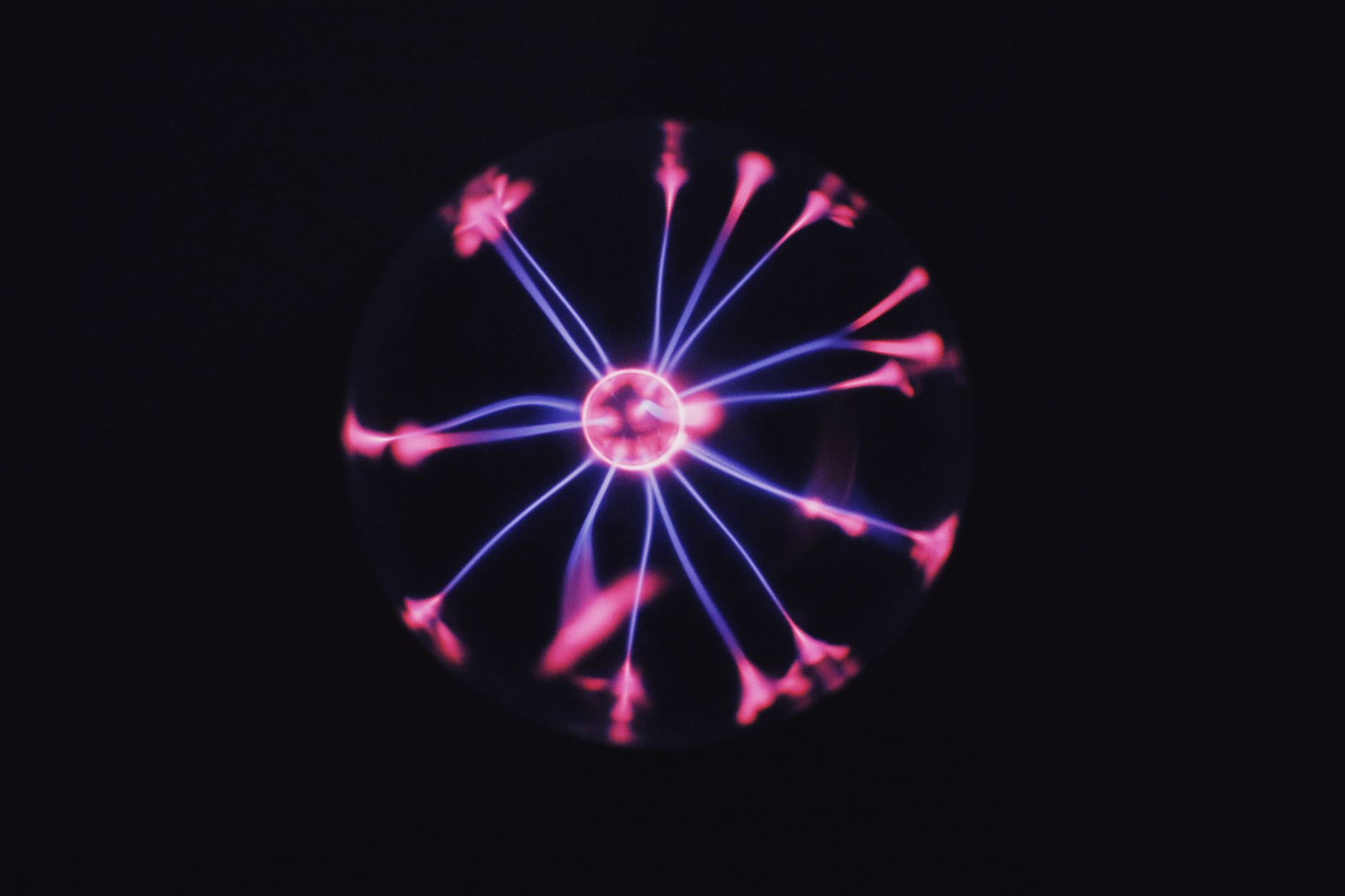
Here is where things get genuinely fascinating. In 1842, British mathematician Samuel Earnshaw proved a theorem that, on the surface, seems to make magnetic levitation completely impossible. Earnshaw's theorem states that no static arrangement of permanent magnets can hold a ferromagnetic object in stable equilibrium in all directions simultaneously. In simpler terms, if you try to levitate an object using only fixed magnets, it will always find a way to slip, tilt, or fly off in some direction.
Think of it this way: imagine trying to balance a marble on top of another marble. You might achieve a fleeting moment of balance, but any tiny nudge will send it rolling away. A purely passive magnetic system behaves in the same way, it is inherently unstable. This is why early attempts to create levitating toys and decorative objects using only permanent magnets were frustrating and unsuccessful without additional intervention.
Earnshaw's theorem does, however, leave several important loopholes. Stable levitation is possible when you introduce dynamic elements, such as spinning objects (as in the case of the Levitron toy), superconductors, or, most relevantly for floating lamps, active electromagnetic feedback systems. It is this last approach that powers virtually every modern magnetic floating lamp on the market today.
The Active Feedback System: The Brain of the Floating Lamp

The key to making a floating lamp magnetic levitation system work reliably is an active electronic control loop. Inside the base of the lamp, there is a set of electromagnets, coils of wire through which an electric current flows, generating a controllable magnetic field. Unlike permanent magnets, the strength of an electromagnet can be adjusted in real time by varying the amount of current passing through it.
Alongside these electromagnets, the base contains a series of Hall effect sensors. These are tiny electronic components that detect the precise position of the floating element by measuring the strength of the magnetic field at any given moment. If the floating piece drifts even slightly downward, the sensors detect the change and instantly signal the control circuit to increase the current, and therefore the magnetic force, to push it back up. If it drifts upward, the current is reduced. This process happens dozens of times per second, creating a continuous, invisible balancing act.
This feedback loop is the true engineering marvel inside every magnetic floating lamp. It transforms what would otherwise be an unstable system into one that feels perfectly serene and solid. The electronics are sophisticated enough to compensate for minor disturbances, a gentle breeze from an air conditioning unit, a vibration from footsteps nearby, keeping the floating object locked in its sweet spot with remarkable precision.
Wireless Power Transfer: How the Bulb Glows Without Wires
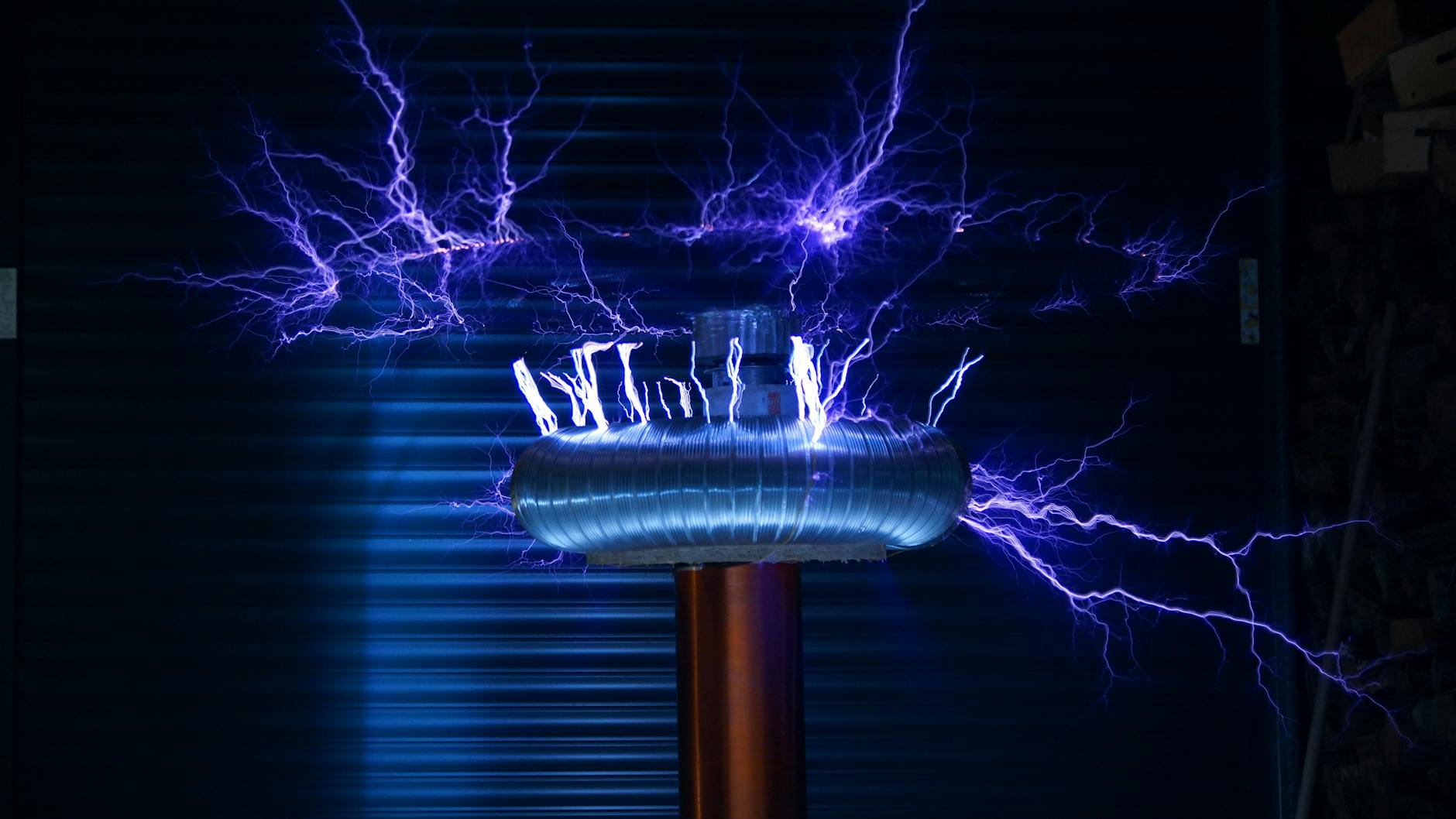
Levitation alone is impressive, but the truly astonishing part of a floating lamp is that the bulb or orb actually lights up, with no wires connecting it to any power source. This is made possible through a technology called inductive wireless power transfer, the same principle used in wireless phone chargers. An alternating current passing through a coil in the base creates a fluctuating magnetic field, which in turn induces an electric current in a receiving coil embedded inside the floating element.
This process of electromagnetic induction was first described by Michael Faraday in 1831, and it remains one of the most elegant demonstrations of how electricity and magnetism are deeply intertwined. In a floating lamp, the coils in the base and the floating piece are tuned to resonate at the same frequency, maximizing the efficiency of energy transfer across the air gap. The result is that enough electrical power is transmitted wirelessly to illuminate an LED bulb inside the floating orb.
It is worth noting that the same magnetic field used for levitation also plays a role in this wireless energy transfer, the two systems are cleverly integrated within a single device. This elegant overlap of functions is a testament to thoughtful engineering design. For anyone who appreciates the intersection of science and aesthetics, a floating lamp is a genuinely remarkable object to own and display. You can explore a wonderful range of these objects in our magnetism-themed décor collection, which brings together some of the finest magnetically inspired pieces available.
Floating Planet Lamps and Globe Designs: Science Meets Decoration

One of the most popular applications of magnetic levitation lamp technology is the floating planet lamp, a beautifully crafted orb designed to resemble Earth, the Moon, or another celestial body, hovering serenely above its base. These objects combine the physics we have described with high-quality surface printing, soft LED illumination, and carefully balanced internal magnets to create something that is as much a work of art as it is a scientific curiosity.
The design of a floating globe lamp presents unique engineering challenges. The orb must be weighted and balanced with extreme precision so that its center of gravity aligns perfectly with the magnetic equilibrium point maintained by the feedback system. Even a small imbalance, caused by uneven surface material or an off-center internal component, can cause the object to rotate unpredictably or fail to levitate stably. High-quality floating globe lamps are the result of meticulous manufacturing and careful calibration.
For those who love space and astronomy, a floating planet lamp is an especially meaningful decorative piece. It captures the wonder of a world suspended in the void, which, when you think about it, is exactly what every planet in our solar system is doing. If you are drawn to this cosmic aesthetic, our dedicated floating planet moon lamp is one of our most beloved pieces, combining the science of levitation with the beauty of lunar topography in stunning detail.
How Does a Levitating Lamp Work in Practice? Setting It Up

Understanding the theory is one thing, but how does a levitating lamp work when you actually place it in your home? The setup process is simpler than you might expect, though it does require a small amount of patience. Most floating lamps come with a base unit that plugs into a standard electrical outlet. Once powered on, the electromagnets and feedback sensors activate, creating the invisible magnetic "cradle" in which the floating element will sit.
To levitate the orb or bulb, you hold it a few centimeters below the sweet spot and slowly raise it until you feel the magnetic force begin to take hold. At a certain point, usually within a range of one to three centimeters from the base, the feedback system locks onto the object and holds it in place automatically. Many users describe the sensation of releasing the floating piece as one of the most satisfying moments they have experienced with a decorative object.
It is important to keep the lamp away from large metallic objects or other strong magnets, as these can interfere with the sensors and destabilize the levitation. Similarly, placing the lamp on a stable, level surface ensures the feedback system does not have to work harder than necessary. With proper placement, a quality floating lamp will operate continuously and silently for years. If you are looking to add one of these extraordinary objects to your space, browsing our collection of floating globes is an excellent place to begin your search.
Conclusion
A floating lamp is far more than a novelty, it is a living demonstration of some of the most elegant principles in physics, from Earnshaw's theorem and electromagnetic feedback to Faraday's law of induction. Every time you look at a glowing orb hovering silently above its base, you are witnessing centuries of scientific discovery made tangible and beautiful. It is the kind of object that invites questions, sparks conversations, and reminds us that the natural world is full of wonders waiting to be understood. If you are ready to bring a piece of that wonder into your home, explore our full range of magnetic levitation lamps and science-inspired décor, and let physics become part of your everyday surroundings.



Leave a comment
All comments are moderated before being published.
This site is protected by hCaptcha and the hCaptcha Privacy Policy and Terms of Service apply.